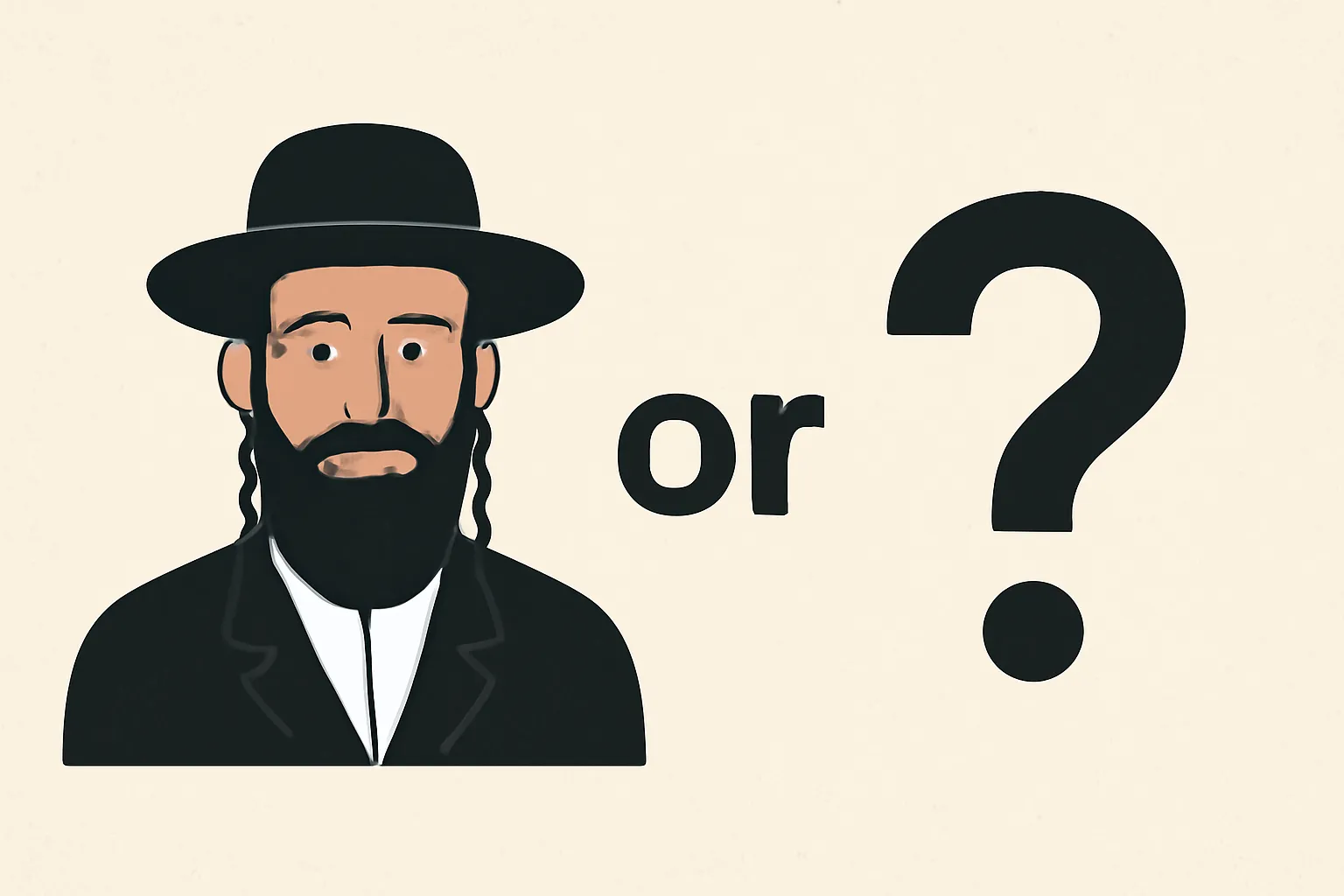
One of the most persistent questions about Jewish identity is: Is a Jew a race or a religion? The inquiry sits at the crossroads of history, theology, anthropology, sociology, and lived experience. Answering it requires more than a quick label, because Jewish life has long blended faith, culture, ethnicity, language, and nationality in complex and shifting ways. In this article, we explore the question from multiple angles to illuminate how Jewish identity functions in practice, why people disagree about it, and how Jews themselves describe what it means to be Jewish.
To understand what constitutes Jewish identity, it helps to disentangle some terms that are often conflated in everyday speech. While the meanings of race, religion, and ethnicity or peoplehood can vary by context, certain distinctions are widely recognized in scholarship and in many communities.
Religion typically refers to a set of beliefs, rituals, and moral codes centered on the divine or sacred narratives. In Judaism, this includes belief in God, observance of commandments (mitzvot), Sabbath and festival practices, prayer, dietary laws, and study of sacred texts such as the Torah and Talmud.
Race is a social construct historically used to categorize people by physical attributes and assumed inherited traits. Modern science rejects racial hierarchies as biologically meaningful, instead viewing human diversity as a spectrum shaped by culture, environment, and history. In discussions about Jewish identity, the idea that Jews constitute a single biological race is generally rejected by scholars today.
Ethnicity or peoplehood refers to a shared sense of belonging based on common ancestry, language, culture, history, and sometimes a sense of destiny or mission. Jewish identity has long been understood as including an ethnic or peoplehood dimension alongside religious beliefs and practices.
Many scholars and many Jews themselves use a multi-layered framework: a person might identify as Jewish for religious reasons, cultural reasons, historical reasons, or national or ethnic reasons, or a combination of these. That is why the phrase “Jewish identity is not monolithic” recurs in discussions about the topic. The important point is that Jewishness can be a confluence of faith, kinship, culture, and shared history, rather than a single category with a single criterion.
Judaism as faith, culture, and peoplehood
Judaism has long been described and practiced as both a religion and a form of ethno-cultural identity. The two dimensions reinforce each other but are not identical. In everyday life, someone may be a practicing Jew who follows Jewish law and attends synagogue; someone else may identify as culturally Jewish—valuing Jewish history, language, and traditions without strict observance; and a third person may identify primarily with Jewish nationality or peoplehood, emphasizing shared history and communal life.
Religious dimensions
From a religious perspective, Judaism is centered on a covenantal relationship with God, revealed through sacred texts and evolving rabbinic interpretation. Core elements often highlighted include:
The belief in one God and the ethical commitments that flow from that belief
Observance of commandments (mitzvot) and life-cycle rituals (birth, coming-of-age, marriage, mourning)
Study of Torah, Talmud, and later rabbinic literature
Participation in communal worship, sabbath observance, and festival observances
Cultural and linguistic dimensions
Even when religious observance is attenuated, many people identify with a rich Jewish culture that includes language (Hebrew, Yiddish, Ladino, and other Jewish languages), music, literature, humor, foodways, and shared storytelling. The term Jewish culture captures how people pass down memories, ethical values, and practices that survive across generations—sometimes detached from formal religious belief.
Peoplehood and national consciousness
Many observers describe Judaism as a form of peoplehood or a nation-like identity that transcends single generations or single places. This sense of peoplehood is strengthened by shared history—from ancient times through diasporas and exiles—plus a continuous connection to the land and the modern state of Israel for many Jews around the world. The Law of Return in Israel, which grants eligibility for citizenship to Jews and to those with Jewish ancestry or who convert, reflects a recognition of Jewish identity as a form of national belonging in addition to religious or cultural identity.
Historical perspectives: how the concept has evolved
Historical understandings of who is a Jew have shifted across eras, reflecting changes in religion, law, politics, and social policy. In many periods, Jewish identity was defined primarily by religion and practice, while in others it took on greater emphasis on ethnicity and peoplehood.
In ancient and medieval times, Jewish identity was often framed around adherence to the Torah, participation in the community, and lineage statements that were recorded in rabbinic law.
In the modern era, especially in Europe and North America, debates about assimilation, secularism, and antisemitism led to new ways of articulating Jewish identity that could be compatible with citizenship and modern national life while preserving tradition.
In Israel and among diasporic communities, the question of whether Jews constitute a race has receded in favor of a more nuanced understanding that includes religion, culture, and nationality. Yet, public discourse can still surface older, essentializing narratives about race or biology in harmful ways.
Scholars today emphasize that the concept of a single racial category for Jews is not supported by genetics or anthropological evidence. While some genetic studies identify common ancestry signals among Jews from different communities, they also reveal significant diversity reflecting long histories of migration, conversion, and intermarriage. The academic consensus is that Jewish identity is not reducible to biology or race; it is a complex social and historical construct that includes religious, cultural, and ethnic dimensions.
Who counts as Jewish? Birth, conversion, and community acceptance
The question “How does one become Jewish?” has many answers depending on religious denomination, community norms, and legal frameworks. Two primary routes are often discussed: birth within a Jewish family and formal conversion. Each route has its own requirements, interpretations, and social meanings.
Birthright and matrilineal descent: In traditional Jewish law (halakha), Jewish status is typically transmitted through the mother. A child born to a Jewish mother is considered Jewish by birth. This criterion creates a basis for inherited Jewish identity tied to family lineage.
Conversion (giyur): People born to non-Jewish parents can become Jewish through a formal process of conversion. The requirements vary across denominations:
Orthodox communities typically require study of Judaism, commitment to observing mitzvot, circumcision for males (if not already circumcised), and immersion in the mikveh (ritual bath).
Conservative and Reform communities may have different standards for eligibility, process, and recognition of conversions.
Some communities emphasize the social and communal aspects of acceptance—joining a community, participating in life-cycle events, and being recognized as part of the Jewish people.
Adoption of Jewish identity through affiliation: Some individuals identify as Jewish through long-standing cultural affiliation, affiliation with Jewish institutions, and a sense of belonging, even without formal religious observance or complete acceptance of halakhic standards.
These pathways reflect a broader reality: Jewish identity is negotiated within communities, and recognition can differ across synagogues, movements, and nations. The practical effect is that someone who is culturally Jewish or who has undergone conversion may be considered Jewish by some groups but not by others, depending on the legal and religious criteria that communities follow.
Diversity within Jewry: community varieties and global reach
There is significant diversity among Jews, shaped by geography, history, culture, and tradition. This diversity demonstrates that Jewish identity cannot be captured by a single stereotype or a single criterion. Some major strands and communities include:
Ashkenazi Jews—Historically linked to Central and Eastern Europe, with distinctive liturgical practices, languages (Yiddish), and cultural traditions.
Sephardi and Mizrahi Jews—Sephardic Jews trace their heritage to the Iberian Peninsula and Mediterranean regions; Mizrahi Jews come from Middle Eastern and North African communities. Each group carries its own religious customs, languages (Ladino, Judeo-Arabic, etc.), and musical traditions.
Ethiopian Jews (Beta Israel)—With ancient roots and unique religious practices, Ethiopian Jews have a distinct cultural and liturgical heritage that integrates Jewish law with local tradition.
Other Jewish communities—Ry Jewish communities in Central Asia, Iraq, Afghanistan, Yemen, and various diasporas in the Americas and Europe have contributed to a rich tapestry of ritual practice, language, and art.
Secular or cultural Jews—Many individuals identify as Jewish culturally or ethnically while holding secular beliefs or practicing little or no ritual. For them, Jewish identity can be about memory, family histories, shared values, and community life rather than religious observance.
These diverse expressions show that there is not a single “Jewish phenotype” or uniform set of beliefs. Rather, Jewish life is plural, with communities adapting to local contexts while maintaining a common sense of history and belonging that ties people across borders.
Contemporary debates: race, religion, and public discourse
In contemporary discourse, the question “Is a Jew a race or a religion?” often surfaces in debates about antisemitism, civil rights, and national identity. Several key themes emerge in these discussions:
Acknowledging antisemitism: Antisemitic ideologies have historically defined Jews by race or biological traits, which is scientifically unfounded and morally wrong. Recognizing Jewish identity as multi-dimensional helps resist such reductive caricatures.
Legal and political definitions: Some nations use criteria for Jewish belonging in law or policy (for example, in matters of citizenship, marriage, or religious status). These legal definitions interact with religious and cultural understandings of who is Jewish.
Cultural integration and secular identity: In many places, Jews participate fully in civil life while maintaining a sense of peoplehood and culture that is not dependent on religious observance. This dynamic challenges simplistic binaries between race and religion.
Dialogues within Jewish communities: Different Jewish movements—Orthodox, Conservative, Reform, Reconstructionist, and secular humanist—have varying formulations of who is considered Jewish, how conversions are recognized, and what constitutes Jewish education.
In public conversation, it is common to hear claims about Jews representing a “race,” a term that many scholars and community leaders reject as overly simplistic and scientifically inaccurate. A more nuanced view emphasizes ethnic and cultural diversity, and recognizes Judaism as a lived tradition that includes but is not limited to faith.
Global perspectives on Jewish identity
Across the world, Jewish communities articulate identity in ways that reflect their histories and surroundings. In each context, the balance among religion, ethnicity, and national belonging may shift, but the sense of a shared story remains a unifying thread:
North America often emphasizes personal autonomy, diverse levels of observance, and strong support networks for both religious and secular Jewish life.
Europe carries a long memory of persecution and a contemporary emphasis on education, remembrance, and community resilience, alongside vibrant religious life in many communities.
Israel presents a unique convergence of religion, nationality, and culture, where Jewish identity intertwines with civic status and state institutions, creating a landscape where faith and national belonging frequently intersect.
Africa, Asia, and the Pacific host growing and aging Jewish communities with varied practices, languages, and religious affiliations, contributing to the global mosaic of Judaism.
In all these contexts, it is common to encounter a spectrum of self-identification—from deeply religious to culturally secular to nationally oriented—demonstrating that Jewish identity remains adaptable and multifaceted across borders and generations.
Practical implications for education, family, and community life
Understanding whether a Jew is defined by race or religion has practical implications for how families teach children, how communities celebrate life events, and how institutions respond to interfaith marriages, adoption, or conversion. A few guiding considerations include:
Education: Jewish schools and community programs often teach a blend of religious literacy, cultural history, Hebrew language, and ethics. Students learn about the Torah, Jewish law, Jewish history, and the diverse ways Jewish communities express their identity.
Family life: Jewish identity may be transmitted through family traditions, rituals, and celebration of holidays, even when religious observance is light. This often involves shared meals during Shabbat, festival foods, and storytelling about ancestors and migrations.
Interfaith and intercultural contexts: In multifaith families, decisions about religious identity, upbringing, and inclusion in Jewish life can require careful navigation, dialogue, and mutual respect for different beliefs and practices.
Conversion and belonging: For those pursuing formal conversion, communities vary in their expectations, timelines, and recognition. This process is not merely a procedural step but also a journey of learning, commitment, and communal acceptance.
Ultimately, the question of race versus religion should be understood as a prompt to acknowledge the layered realities of Jewish life. A robust understanding respects both religious practice and the cultural, historical, and personal dimensions of Jewish identity.
Differing narratives within Judaism about who is “truly Jewish”
Some debates center on who qualifies for certain roles within Jewish life, who is eligible to marry in a given community, or who can participate in ritual leadership. These conversations reflect the diversity of Jewish law and custom across movements, rather than evidence of a single, uniform identity.
Religious authority and convert denominations: Halakhic definitions of Jewishness may differ among Orthodox, Conservative, and Reform communities. Each tradition has its own criteria for ritual status and community membership.
Intermarriage and identity: Intermarriage challenges traditional boundaries in some communities, prompting discussions about inclusive belonging, Jewish continuity, and how to welcome mixed families while preserving core practices.
Cultural continuation: Some people emphasize the preservation of Jewish languages, stories, and arts as a form of identity that is less about theological agreement and more about shared heritage.
These debates illustrate that there is no single gatekeeper of Jewish identity. Instead, Jewish life operates with a plurality of norms, reflecting the history of the Jewish people, their geographic dispersion, and their ongoing conversations about what it means to belong.
Key takeaways about identity and diversity
To summarize the complex question, here are several core points that recur across scholarly and community discussions:
Jewish identity is multi-dimensional: religion, ethnicity, culture, language, and national belonging often intertwine, and people may identify with some dimensions more than others.
There is no single Jewish race: Biological concepts of race do not adequately capture Jewish diversity, and genetics show a range of ancestries among Jews. Jewish identity is better understood through history, culture, and community life.
Birth and conversion matter, but recognition varies: Traditional halakhic criteria emphasize matrilineal descent, but many communities recognize conversions and adopt inclusive approaches to belonging.
Community-specific norms shape belonging: Different Jewish movements and communities have their own criteria for what constitutes Jewish status, ritual participation, and leadership roles.
Secular and cultural expressions of Judaism are legitimate: A large portion of Jews identify culturally or secularly, underscoring that Jewishness is not solely a matter of belief or ritual practice.
Global diversity enriches the Jewish experience: Ashkenazi, Sephardi, Mizrahi, Ethiopian, and other Jewish communities contribute distinctive liturgies, foods, languages, music, and customs, while maintaining shared historical narratives.
Glossary of key terms for readers
For readers who want quick references, here is a concise glossary of terms that frequently appear in discussions about Jewish identity:
Halakha: Jewish law and legal rulings that guide everyday behavior and ritual practice.
Giyur: The process of conversion to Judaism.
Am/People: A Hebrew term used to refer to the Jewish people as a community or nation.
Law of Return: Israeli law granting eligibility for citizenship to Jews and those with Jewish ancestry or who convert.
Ashkenazi, Sephardi, Mizrahi: Major historical-cultural streams within Jewry, reflecting different geographic origins and traditions.
Secular Jew: A person who identifies as Jewish culturally or ethnically without a religious adherence to Jewish law.
Final reflections: embracing a nuanced understanding
The central question—Is a Jew a race or a religion?—lends itself to a deeper conversation about how human belonging is formed. The answer is not a simple binary. Jewish identity has historically included a mix of religious belief, kinship, language, ritual practice, and national or cultural belonging. This plurality is a feature, not a flaw, of a long and complex history that has produced a rich, resilient, and diverse community. Recognizing that Jewish identity can look different from one person to another—and that those differences can coexist within a single community—helps foster greater understanding and respect across lines of belief, culture, and origin. In a global world of interwoven identities, appreciating the layered nature of Jewish identity can deepen conversations about faith, history, and human diversity.
If you are navigating discussions about Jewish identity, consider these practical guidance points:
Acknowledge complexity: Don’t assume a single definition of who is Jewish. Recognize religious, cultural, ethnic, and national dimensions.
Respect self-identification: People may define themselves differently at different times in life—respect their own declared identity.
Differentiate belief from belonging: Religious practice and belief are meaningful for many Jews, but belonging can be rooted in family, culture, and community as well.
Be mindful of history and context: The meanings of race, religion, and ethnicity have evolved. Context matters for interpretation and conversation.
Ultimately, the question of whether a Jew is defined by race or by religion—functively, by history or by faith—has many valid angles. It invites us to listen to diverse voices within Jewish communities, to study the rich sources of Jewish law and history, and to appreciate the lived realities of Jews around the world. In recognizing the layered, dynamic nature of Jewish identity, we gain a more accurate, compassionate, and nuanced understanding of what it means to be Jewish in the 21st century.

 Por Laura Jara