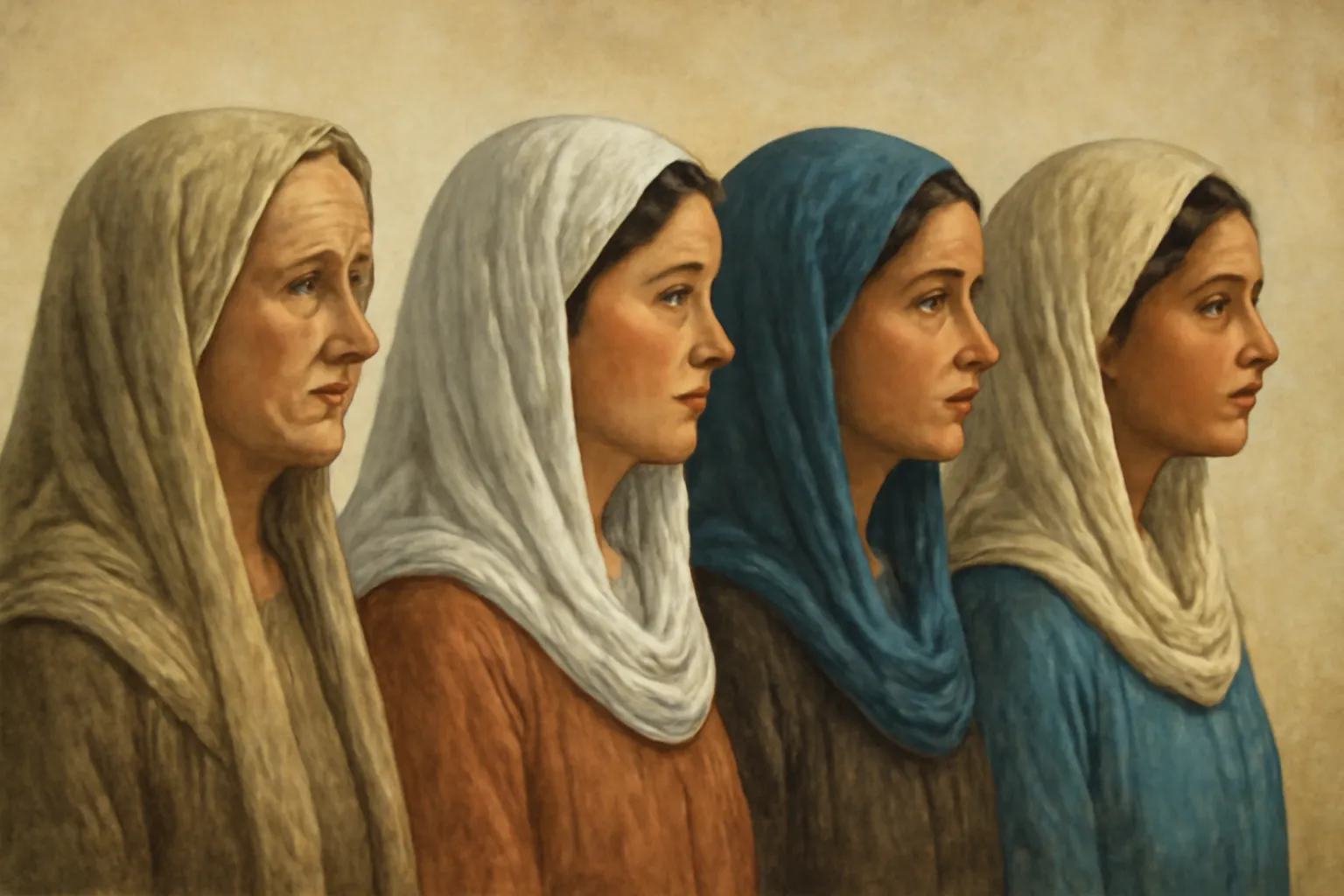
The topic of bible head coverings sits at the intersection of biblical interpretation,
cultural history, theology, and practical worship life. Across centuries and denominations,
Christians have understood the practice of women and men wearing some form of head covering—
whether a veil, scarf, hood, or other garment—as a meaningful symbol with roots in ancient
customs and in the apostolic teaching found in the New Testament. This article offers a
comprehensive overview of the subject, examining the biblical texts, the historical context,
theological interpretations, and contemporary practice. It aims to present the material
clearly, while acknowledging the diversity of beliefs about what, if anything, should be required today.
Terminology and Variations
One of the first challenges in discussing bible head coverings is the vocabulary.
The Christian tradition has used a range of terms to describe the practice, sometimes
overlapping in meaning and sometimes carrying distinct nuances. Here are several
key terms and their common usages:
Head covering — a broad, generic term for any garment worn on the head for religious, cultural, or modesty reasons.
Veil — a fabric that covers the head and often the face; in biblical contexts it is frequently associated with modesty, propriety, or ceremonial symbolism.
Kerchief or scarf — a square or rectangular piece of cloth tied or draped over the head; commonly used in many cultures and in certain church settings.
Shawl or mantle — a larger piece of fabric that can cover the head and shoulders; found in various historical and liturgical contexts.
Turban — a wrapped head covering that appears in some religious and cultural settings; in biblical studies it is typically discussed as a cultural form rather than a universal prescription.
Hood — a garment with a covering that may be worn over the head in some churches or traditions for modesty and decorum.
In many discussions, practitioners also differentiate between a cultural backdrop and a theological principle.
Some traditions view the head covering as a cultural expression that belonged to the first-century
Corinthian church, while others see enduring theological significance behind the practice. Debate
often centers on what is timeless in Scripture and what is contextual to a particular era or culture.
Biblical Foundations
The biblical case for bible head coverings rests primarily on passages in the letters
of the Apostle Paul, especially in 1 Corinthians. However, there are also relevant
Old Testament and broader biblical themes that inform how readers understand the practice.
1 Corinthians 11: The central text
The passage most often cited in discussions of head coverings is 1 Corinthians 11:2-16.
In this text, Paul addresses attitudes toward authority, honor, and order in worship.
The key verses discuss a contrast between men and women, with statements about a
woman covering her head and a man not covering his head when praying or prophesying.
In many readers’ eyes, the core ideas include honor and order in worship,
the symbol of authority” or the “glory” of God in creation, and the notion that
cultural signs can communicate spiritual truths. Some interpret the passage as
mandating a long-standing, universal practice; others see it as describing a specific
cultural custom in the Corinthian church that reflected broader first-century norms.
The Old Testament provides cultural background for modesty, purity, and head coverings in
various contexts. For example, there are episodes that reflect women veiling their faces or
heads in certain social settings, and there are priestly garments with distinctive headpieces in
Israel’s worship. While these Old Testament examples are not a direct, one-to-one precedent for
New Testament practice, they illuminate the cultural expectations and religious symbolism of
covering the head as a sign of reverence, submission, or consecration in worship.
Understanding the historical milieu helps readers discern how bible head coverings functioned
in daily life and in religious communities. The practice existed within a broader matrix of modesty norms,
gender roles, and public worship customs that varied by location and era.
Ancient Near Eastern and Jewish customs
In many ancient Near Eastern and Jewish settings, women often wore coverings in public or
in the presence of men who were not close family. Veils and head coverings could signal
marital status, modesty, or respect. In those contexts, a head covering was a visible sign
of propriety and social identity. For Christian communities in the first century,
such signs might carry overt social meaning: to some, they reflected harmony with creation
order and divine intention; to others, they communicated readiness for worship as a
gathered body.
Greco-Roman influences and evolving practice
The early Christian world did not exist in isolation. It interacted with Greco-Roman
fashion and civic norms, many of which included headdresses, veils, or head coverings
with various social signals. Over time, as Christianity spread into different regions
and cultures, the practice of head coverings became more diverse in appearance—
not necessarily in meaning, but in how communities expressed the practice in daily life
and worship.
Theological Interpretations
Across Christian traditions, theologians have offered several frameworks for understanding
the significance of head coverings. These interpretations often influence whether a given
tradition views the practice as a timeless command, a cultural gesture, or a symbolic sign
with enduring spiritual meaning.
Complementarian and traditional readings
In complementarian or traditional viewpoints, the head covering is seen as a visible
expression of gender roles within the created order and within worship. Proponents argue that the
practice teaches and reinforces a pattern of male leadership and female submission in specific
contexts, such as corporate worship. They may emphasize that the sign is primarily about
reflecting divine glory and order, and that its practice can convey a reliable message about
relational structure to observers and angels.
Egalitarian or symbolic interpretations
In egalitarian or symbolic interpretations, readers stress that the biblical text uses
cultural language to communicate broader spiritual truths such as dignity, humility, and
reverence before God. They may argue that the essential principle is modesty and a
respectful demeanor in worship, rather than enforcing a strict, universal requirement for a
specific garment. In this view, the form of the covering is less important than the
underlying attitudes—humility before God and respect within the Christian community.
Practices by Tradition in the History of the Church
Throughout church history, different Christian traditions have emphasized head coverings to
varying degrees. The practice has waxed and waned in response to cultural norms, ecclesial
structures, and theological emphases. Below is a survey of major patterns across traditions.
Catholic and Orthodox practice
In many Catholic and Orthodox communities, women historically wore some form of head covering
during liturgical worship and private prayer. In the Roman Catholic Church, the canonical expectations
regarding mandatory veiling have shifted over centuries and are no longer universally required in all
jurisdictions, though the custom persists in some places and in certain contemplative or traditional
communities. In the Orthodox churches, women commonly cover the head with a scarf or veil during liturgy
as a sign of reverence and modesty.
Protestant and Evangelical approaches
Protestant and Evangelical traditions display a wide spectrum. Some churches encourage or require
women to wear head coverings in corporate worship, especially among Anabaptist–influenced groups
(such as Mennonite, Old Order Amish, and some Brethren congregations) and in certain classical revival
settings. Others view head coverings as an optional practice rooted in cultural expression, and many
contemporary churches do not require any covering as part of worship. In these communities, modesty and
respectful dress remain the broader moral aims, while the literal sign of a head covering is not mandated.
In modern Christian discourse, questions about the relevance of bible head coverings often center on
whether the practice is a universal command or a contingent, culture-bound sign. Several common
themes emerge in contemporary dialogue:
Cultural translation: Is the sign of head covering primarily a cultural translation of a biblical principle, or does it convey an unchanging spiritual truth?
Modesty and dignity: Do head coverings symbolize modesty, humility, and respect in worship, regardless of form?
Gender and leadership: How do practices around head coverings relate to current understandings of gender roles within the church?
Practical worship life: How should individuals discern personal or family practice within their denomination, local church, and culture?
Practical Guidance for Individuals and Families
For readers who want to reflect on or apply the topic in a practical way, here are some guiding questions and steps:
Consult your denomination or local church: Church doctrine and practice vary widely. Start with the guidance of your pastor, elders, or catechetical leaders.
Consider the context: In some settings, a head covering may be a daily or liturgical habit, while in others it may be a rare or no-longer-practiced tradition.
Choose a form that is respectful and comfortable: If you decide to wear a covering, select a style and material that suit your climate, health, and personal modesty standards. Common options include light scarves, prayer shawls, or more formal veils, depending on tradition.
Educate children and family members: If you are teaching younger generations within the home, explain the purposes historically and the variety of modern practices, emphasizing love, unity, and reverence in worship.
Be sensitive to broader fellowship: Some communities may have strong expectations; others may welcome personal discernment. Strive for charity and clarity in your family’s approach.
Frequently Asked Questions
The following questions address common inquiries readers have when exploring bible head coverings in
contemporary life. The answers reflect a spectrum of perspectives found in Christian theology and practice.
Q: Does 1 Corinthians 11 require women to wear a veil today?
A: Many scholars and church traditions interpret 1 Corinthians 11 as addressing a sacred principle in a
specific historical and cultural moment. Others view the passage as timeless in its broader exhortation to order
and reverence in worship. The result is a range of approaches:
Some traditions maintain a universal command, encouraging women to wear a head covering during worship.
Others see the directive as culturally mediated for the Corinthian church and therefore not obligatory for all churches in all eras.
Still others emphasize the underlying principles—modesty, order, reverence—while permitting varied practical expressions.
Q: Are men required to wear a head covering in church?
In the Pauline passage, the text is often read as instructing men not to cover their heads during prayer or
prophesying. In practice, many contemporary communities place more emphasis on respect shown by removing hats
or head coverings in church, particularly in traditional or liturgical settings. Some groups, however, keep a simple
practice of men removing head coverings during public worship as a sign of reverence.
Q: Is head covering about equality or hierarchy?
The topic intersects with deeper debates about gender, power, and equality. Some interpret the sign as a symbolic
reminder of unequal roles in a fallen creation, while others stress that in Christ all believers share equal standing
before God despite different outward signs. Understanding the broader theological commitments of a given tradition
helps clarify how head coverings function within that community.
To avoid misunderstandings, here are a few clarifying points about head coverings in Christian thought:
Not a guarantee of salvation: Wearing or not wearing a head covering does not affect one’s standing before God in salvation.
Not a universal requirement across all churches: Many communities practice no head covering today and still uphold biblical fidelity in worship.
Not a magical sign: The symbol is meaningful as a sign of reverence or order, not as an automatic guarantee of spiritual status.
Not interchangeable with cultural superiority: The practice should never be used to judge or exclude others within the body of Christ.
Historical Case Studies: How the Practice Evolved
Examining concrete historical patterns can illuminate how bible head coverings shifted over time.
Below are concise snapshots of three broad eras.
Early Christian and medieval periods: In many communities, women wore head coverings in worship and in public life; men often took off hats indoors as a general sign of respect in secular and sacred settings.
Reformation and post-Reformation: Diverse responses emerged. Some reformers urged a return to scriptural simplicity, while others retained traditional dress as a sign of continuity with the church fathers or local customs.
Modern era: In many Western churches, public head coverings declined in frequency, reflecting broader cultural shifts. Yet, pockets of tradition persisted, especially among Anabaptist, Orthodox, and some conservative Catholic communities.
Practical Recommendations by Tradition
If you are exploring head coverings for yourself or your family, consider these practical recommendations aligned with
traditional practices in various communities:
For Orthodox and many Catholic readers: If you participate in liturgy, you may encounter policies or customs that encourage or require a head covering for women and a modest standard of dress for all. Follow the guidance of your parish leadership.
For Protestant readers: In churches with historic roots or strong modesty norms, a head covering may be part of worship etiquette. In more contemporary congregations, you may treat the topic as optional and focus on reverent posture and sincerity.
For families choosing at home: Decide together what reflects your conscience, culture, and spiritual commitments—whether that means a scarf, shawl, or simply a posture of humility during prayer and worship.
For teachers and leaders: Be explicit about the symbolism you intend to teach—modesty, order, unity, or reverence—so that the sign communicates clearly and lovingly to all participants.
Conclusion: Navigating Bible Head Coverings with Wisdom
The topic of bible head coverings is not primarily about external form, but about what those forms communicate
to the gathered people of God and to the world around them. Whether a community views head coverings as a timeless command,
a culturally conditioned instruction, or a flexible symbol, the central aims remain consistent: to honor God,
to maintain reverence in worship, and to cultivate humility and unity within the body of Christ.

 Por Laura Jara