Old Testament Women | Symbolic Figures | Wisdom Literature
The Wise Woman of Tekoa: A Biblical Model of Wisdom and Courage
📅 9th century BC, during the reign of King David · 📜 Her name 'Tekoa' refers to a locality in Judah; the wise woman herself is unnamed, but 'Tekoa' may be derived from a Hebrew root meaning 'a boring or dug-out place,' symbolizing depth or hidden wisdom.
WisdomCourageProphetic MessengerWomen of the Bible
Then the wise woman said, 'Let your servant now speak a word to my lord the king: Do not let my lord impute guilt to me, or remember how your servant did wrong on the day my lord the king left Jerusalem. The king should hear the words of his servant.'— 2 Samuel 14:18
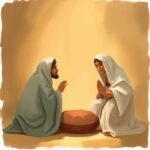
The Wise Woman of Tekoa is a legendary figure who exemplifies wisdom and courage in a time of crisis. Her story unfolds when Joab, King David’s commander, seeks to reconcile a rebellious son and avenge a wrong within the Ittai family. Disguised as a humble widow, she approaches King David with a carefully crafted parable, acting as a mediator to save her city from destruction. She eloquently pleads for mercy, illustrating her wisdom in navigating political and personal conflicts. Her speech persuades David to accept a compromise, preserving both justice and mercy. Her story highlights the importance of wisdom, tact, and moral courage, demonstrating how even ordinary citizens can influence leadership and uphold righteousness amidst complex circumstances.
In ancient Judah, women’s roles were traditionally centered around home and family, yet some displayed remarkable wisdom and social influence. The story of the Wise Woman of Tekoa reflects the cultural value placed on wisdom and rhetoric, especially in times of national crisis. Women seldom had direct political power, but in this narrative, her eloquence and tact defy typical gender roles, showcasing how women could serve as moral and social mediators. Her approach underscores the significance of wisdom over violence and emphasizes that moral courage could be wielded by even ordinary women to shape leadership decisions. This story should be viewed within a patriarchal society, where her role as a wise mediator indicates social resilience and moral authority.
👨👩👧 Family Connections
Although her family background is not specified, she was a resident of Tekoa, a town in Judah. Her story involves acting as a mediator rather than familial ties; she is identified solely through her wise counsel.
✨ Character Traits
WisdomCourageDiscretionDiplomacy
⛪ Theological Significance
The Wise Woman of Tekoa embodies divine wisdom and moral discernment, illustrating that God’s wisdom can manifest in anyone, regardless of gender or social status. Her ability to seek reconciliation and promote justice prefigures Christ’s role as a peacemaker and mediator. Her story underscores themes of humility, wisdom, and the responsible exercise of influence. In salvation history, she exemplifies how God uses ordinary people to accomplish divine purposes. Her act of wise diplomacy points toward the biblical ideal of seeking peace and justice, foreshadowing Christ’s ministry of reconciliation, and emphasizing that divine wisdom can inspire courageous actions that uphold righteousness and mercy.
Wisdom and tact can resolve conflicts more effectively than violence or coercion. Few qualities are as powerful in fostering peace as discernment and moral courage.
📖 Lesson 2
Even ordinary individuals can influence leaders when they speak with humility, truth, and moral clarity. Courageous advocacy can preserve communities and uphold justice.
📖 Lesson 3
Trust in God’s wisdom enables believers to navigate complex situations. Relying on divine guidance can lead to courageous and righteous decisions.
🔗 Connections to Other Biblical Women
The Wise Woman of Tekoa shares similarities with other biblical women who served as mediators or wisdom figures, such as Deborah the prophetess and Abigail. Unlike militant or solely domestic figures, she exemplifies social influence through wisdom and diplomacy. Her story contrasts with women like Jezebel, who wielded power through manipulation, highlighting that wisdom and moral courage can be wielded positively. Her discreet intervention underscores the biblical theme that women often embody wisdom behind the scenes, playing vital roles in divine and communal restoration.
📜 Scripture References
Reference
2 Samuel 14:1-20
❓ Frequently Asked Questions
Who was the Wise Woman of Tekoa?
She was a respected woman from Tekoa who used her wisdom and tact to mediate a crisis and persuade King David to show mercy, as recorded in 2 Samuel 14.
What did the Wise Woman of Tekoa do?
She approached King David disguised as a widow, told a parable, and urged him to avoid destroying her city by highlighting principles of mercy, ultimately influencing his decision.
Why is her story important?
Her story demonstrates the power of wisdom, moral courage, and effective communication, illustrating how individuals can influence leadership and promote justice within society.
✨ Did You Know?
The story of the Wise Woman of Tekoa is one of the few biblical examples where a woman successfully acts as a mediator in political affairs. Historically, her rhetorical skills and moral influence challenge stereotypes about women’s roles in ancient society, showcasing their potential for leadership and diplomacy.

 Por Mario Acevedo