The festival commonly known in modern Jewish practice as Rosh Hashanah is a term that comes from later rabbinic and traditional usage, meaning the “head of the year”. In the wording of Scripture itself, the holiday is not called Rosh Hashanah; instead the biblical text refers to this time as Yom Teruah, the Day of Trumpets, and identifies it by its position on the calendar: the first day of the seventh month. The primary biblical references to this day come with the command to blow the shofar and to observe a holy convocation. Because the notion of a civil new year is deeply embedded in rabbinic tradition, the scriptural frame centers on worship, remembrance, and the sovereign rule of God rather than on a secular new-year focus.
The study of Yom Teruah or the Feast/Day of Trumpets in Scripture invites us to notice how language shifts across biblical genres: from the Mosaic law’s concrete prescriptions in Leviticus and Numbers to the prophetic and psalmic reflections on God’s kingship, and finally to the later Christian reflections that see trumpet imagery as a sign of cosmic events. This article traces those strands, highlighting the terms that occur in Scripture, the meanings attached to the trumpet, and the ways scholars and readers understand the season within the broader biblical narrative.
Yom Teruah: The Day of Trumpets in the Torah
In the biblical books of Leviticus and Numbers, the Day of Trumpets appears as a distinct festival within the calendar. The law directs a holy convocation on the first day of the seventh month, with expectations of rest and offerings. The ritual centerpiece is the blowing of trumpets (the shofar), which serves as a calling to assembly and worship.
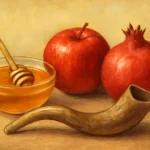
Yom Teruah — Hebrew for the Day of Trumpets, a festival marked by trumpet blasts and communal gathering.
Feast of Trumpets — a title that appears in some English translations to capture the festival’s liturgical nature described in Leviticus 23:24.
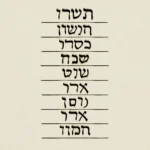
First day of the seventh month — the temporal frame given in Leviticus 23:24 and Numbers 29:1, anchoring the day in the calendar.
Holy convocation — the command to assemble for sacred purposes, with no ordinary labor permitted on that day.
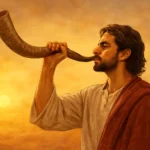
Blowing of trumpets / shofar — the ritual act that marks the day and signals remembrance, alert, and worship.
In Leviticus 23:23-25, the text instructs:
“And the LORD spoke to Moses, saying, ‘Speak to the people of Israel, saying, In the seventh month, on the first day of the month, you shall have a holy convocation; you shall do no ordinary work, and you shall offer a burnt offering to the LORD.’” (paraphrase of the core commands).
The same motif occurs in Numbers 29:1, which reiterates the instruction: the first day of the seventh month is to be a holy convocation with the blowing of the horns as a defining feature. In both cases, the day is framed by the divine command to gather, to restrain ordinary labor, and to offer thanksgiving and atonement through ritual offerings.
Scriptural Descriptions and Their Meanings
The liturgical frame: sabbath-rest, convocations, and offerings
The biblical instructions emphasize a pattern that recurs in the annual cycle: a day set apart from ordinary life for worship, prayer, and remembering God’s gracious acts. The header notions include:
Holy convocation — a sacred assembly that brings the people before God for instruction, confession, and praise.
Rest — the day is described as one in which “you shall do no ordinary work,” reflecting the sanctity of the moment and the shift from routine to divine encounter.
Offerings — a sacrifice framework accompanies the day, aligning worship with thanksgiving and petition.
Blowing the trumpets — a symbolic act that inaugurates the day’s spiritual mood: wakefulness, remembrance, and anticipation of God’s works.
The trumpet blast as a sign: symbolism and memory
The shofar or trumpet blast functions as a potent symbol across Scripture. It is designed to rouse, to warn, and to signal a gathering before the divine throne. In prophetic and wisdom literature, the trumpet becomes an instrument of revelation and a herald of important moment in God’s redemptive timeline. The sound is not neutral; it carries memory of deliverance, covenant faithfulness, and the expectation of divine rule.
The imagery of a trumpet blast in Scripture often conveys:
Awakening to spiritual reality and moral accountability.
Gathering of the community for worship, instruction, or a crisis of obedience.
Warning or call to repentance, inviting alignment with the will of God.
Recognition of God’s kingship over creation, as the trumpet can announce the coming of a sovereign ruler.
The Day of Trumpets and the Kingship of God
One of the consistent themes tied to this season is the acknowledgment of God’s kingship over heaven and earth. In biblical poetry and prophetic literature, the trumpet serves as a public proclamation of God’s sovereignty. The Day of Trumpets is thus not merely a ceremonial occasion; it is a liturgical opportunity to confess the Lord as King, to submit to His reign, and to invite His blessing for the coming year.
The association with kingship is reinforced by the overall biblical arc where trumpets herald the presence and intervention of the divine King. The sound of the trumpet appears in contexts of deliverance (as in Exodus and Joshua narratives), battles, and covenant renewal ceremonies. Adoption of this language in the Psalms and prophetic books helps readers perceive Yom Teruah as a moment of cosmic significance, not just a routine festival.
Connections to Creation, Covenant, and Worship
While the explicit phrase Rosh Hashanah is not found in the biblical text, the festival’s place within the creation narrative and covenantal worship becomes evident when we read the relevant passages in their literary and historical settings. Several strands are worth tracing:
Creation and time: the idea that God arranged time and appointed holy days is woven through the Pentateuch and the Psalms. The notion of a sacred time marked by ritual acts aligns Yom Teruah with the broader theological claim that time itself is under God’s sovereignty.
Covenant renewal: trumpets function as a means to re-state dependence on the divine covenant, to celebrate deliverance, and to pledge obedience in the subsequent season. The idea of renewal sits alongside the physical act of gathering and offering.
Worship imagery: the day emphasizes worship, instruction, confession, and trust in God’s rule. The call to assemble and to observe the day in holiness highlights the central role of worship in the people of God’s life together.
A number of scholars highlight that Psalm 81:3, which calls the people to “blow the trumpet at the new moon, at the full moon, on our feast day,” ties the trumpet imagery to the regular cycle of timekeeping and sacred gatherings. Although this verse does not name Yom Teruah explicitly, it resonates with the calendar-minded cadence of the autumn festival, where the ram’s horn signaling a congregational assembly shapes communal memory and worship.
New Testament Echoes and Early Christian Perspective
The imagery of trumpets and trumpet-like announcements appears in the New Testament with distinct but related purposes. While the New Testament does not prescribe a Christian observance of Yom Teruah, it uses trumpet language in ways that illuminate understandings of divine revelation, the return of Christ, and the triumph of God’s kingdom.
In 1 Corinthians 15:52, Paul speaks of a mysterious moment when “the trumpet will sound, and the dead will be raised imperishable.” In 1 Thessalonians 4:16, a similar trumpet-voice accompanies the return of Christ: “the Lord himself will descend from heaven with a shout, with the voice of the archangel, and with the trumpet of God.” These passages connect trumpet imagery to the culmination of salvation history, echoing the sense in which the Day of Trumpets in the Hebrew Bible announces a climactic divine intervention.
The language of the “last trumpet” and the trumpet of God in Scripture has always drawn readers to think about sovereignty, judgment, restoration, and the hope of resurrection. Some readers see a continuity from Yom Teruah’s sovereign-call to assemble toward a future consummation when God will gather all things under his rule. Others treat these images as distinct eschatological motifs that are fulfilled in the Christian witness to Jesus as Messiah and Lord.
Terminology and Thematic Variations in Scripture
Across Scripture, several terms and phrases describe the same seasonal phenomenon from different angles. Understanding these variations helps readers grasp the layered meanings attached to this time.
Yom Teruah (Day of Trumpets) — the primary biblical designation in the Torah for the day marked by trumpet blasts.
Feast of Trumpets — a common English rendering that captures the day’s liturgical character and its placement in the festival calendar.
First day of the seventh month — a precise canonical label that anchors the festival within the biblical year.
Memorial of blowing of trumpets — a phrase emphasizing the ceremonial act as a memorial and reminder of God’s acts, found in the legal description of the day.
Day of Shofar/Trumpet blast — a description that foregrounds the audible signal that calls Israel to assembly.
Rosh Hashanah — while not a scriptural term, this label appears in later Jewish tradition to describe the same season as a civil new year and a time of repentance and renewal, showing how biblical patterns were interpreted and applied in later centuries.
Practical Guide to Studying Yom Teruah in Scripture
For readers who want to explore the biblical material with depth and care, here is a practical approach that respects the distinct voices of the biblical authors and the later interpretive traditions.
Identify the primary Law texts: Start with Leviticus 23 and Numbers 29 to outline the core commands, timing, and ritual specifics for the Day of Trumpets.
Note the recurring motifs: Holy convocation, rest, offerings, and the trumpet blast recur in these passages and set the frame for the festival’s meaning.
Cross-reference prophetic and psalmic voices: Look for references to God’s kingship, judgment, deliverance, and worship that illuminate how the festival is read in broader biblical theology.
Distinguish terminology: Track terms like Yom Teruah, Feast of Trumpets, and the tenets of the calendar (the seventh month) to avoid conflating the biblical text with later rabbinic naming.
Compare covenants and acts of salvation: Consider how trumpet imagery accompanies acts of deliverance (e.g., crossing the Red Sea) and covenant renewal, and how those patterns inform the festival’s meaning.
Engage with New Testament echoes: If your focus includes Christian interpretation, examine how the trumpet motifs are employed in 1 Corinthians 15 and 1 Thessalonians 4 and how they point to the return of Christ and the renewal of creation.
Common Misconceptions and Clarifications
Rosh Hashanah is not a biblical phrase in the canonical texts of the Hebrew Bible. The term arises in later Jewish tradition to describe the autumn festival as the “head of the year.” The biblical frame uses Yom Teruah and the first day of the seventh month.
The Day of Trumpets is not merely a calendar marker; it is a theologically rich call to worship, repentance, and allegiance to God as King. The ritual signals a season of spiritual readiness, not simply a date on the calendar.
While the shofar has a central ceremonial role in the Day of Trumpets, its symbolism spans blessing, warning, and revelation across Scripture, making it a multifaceted sign rather than a single symbol.
In Christian interpretation, trumpet language often points toward eschatological expectations and the return of Christ, rather than a direct parallel to the Jewish autumn festival. Readers should appreciate both continuity and distinctiveness in the biblical witness.
The biblical portrayal of the Day of Trumpets invites consideration of several overarching theological ideas:
Divine sovereignty: the trumpet proclaims God’s authority over time, history, and the people. It is a public acknowledgement that the Creator governs the yearly cycle and the fates of nations.
Corporate renewal: the day functions as a moment for the community to return to its God, re-align its aims, and recommit to the covenant path. It has a restorative quality, shaping communal memory toward fidelity.
Hope and expectation: the trumpet evokes an expectation of divine action—deliverance, present help, or future fulfillment—within the steadfast hope that God’s purposes prevail.
Worship as response: the festival’s demands—assembly, abstention from ordinary labor, and sacrifices—underscore that worship is a deliberate, communal response to God’s character and deeds.
Rosh Hashanah in Scripture: A Synthesis of Terms, Themes, and Meanings
When readers bring together the biblical design of Yom Teruah with the later designation of Rosh Hashanah, a coherent picture emerges: the autumn festival in Scripture is a concrete moment in time when Israel publicly acknowledges God’s rule, recalls past acts of salvation, and anticipates future acts of redemption. This is accomplished through:
Public gathering on a divinely appointed day, with a sacred assembly and rest from ordinary work.
Significant boundary within the calendar that marks a yearly rhythm and shapes its spiritual priorities.
Audible signaling through the shofar, which connects past deliverances with present worship and future hope.
Liturgical remembrance that anchors the people as they proclaim God’s kingship and call for obedience to His laws.
For those seeking a helpful next step, consider a study plan that blends careful exegesis with historical context:
Begin with Leviticus 23 and Numbers 29 to establish the core commands and ritual framework for Yom Teruah.
Read Psalm 81 and other passages that feature trumpet imagery to explore how the sound functions symbolically.
Survey New Testament trumpet language in 1 Corinthians 15 and 1 Thessalonians 4 to see how early Christian writers drew on the imagery for eschatological hope.
Consult commentaries that address the historical development of the term Rosh Hashanah and distinguish it from the scriptural term Yom Teruah.
Engage with traditional Jewish sources that discuss the shift from the biblical day to the later concept of the civil new year, noting both overlaps and distinctions in meaning.
In studying Rosh Hashanah in Scripture, readers gain an enriched understanding of how a single day—rooted in ancient law and liturgy—continues to speak across centuries about God’s sovereignty, the call to communal repentance, and the hopeful horizon of divine restoration. By tracing the thread from Yom Teruah to its later cultural designation as the head of the year, we see a vibrant example of how biblical language shapes enduring religious memory and practice.

 Por Laura Jara