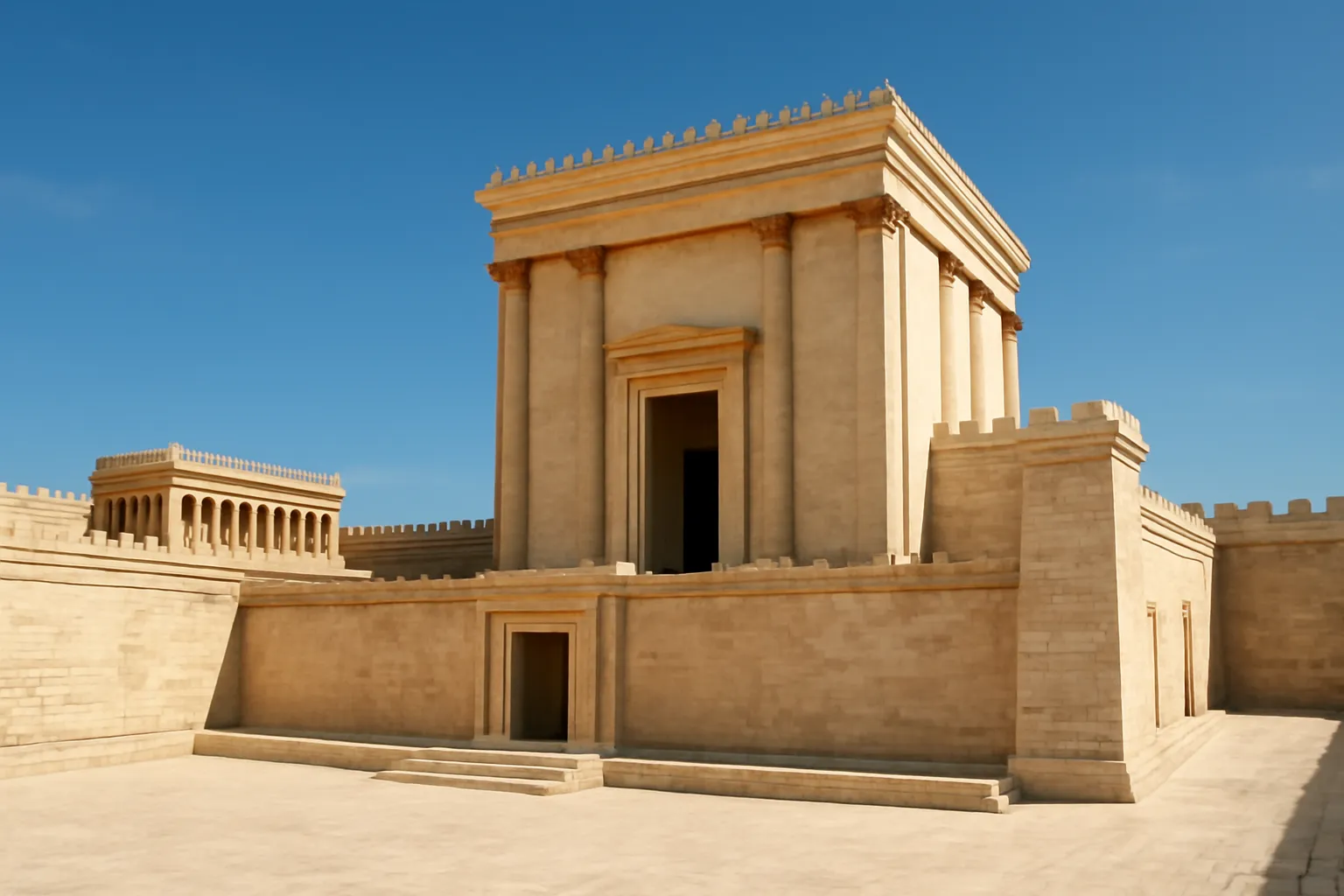
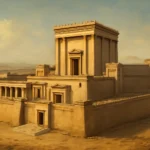
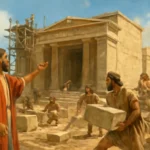
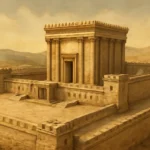
The idea of a future Third Temple in Jerusalem sits atop a long and complex history that began with the legendary First Temple built by King Solomon in the middle of the ancient Israelites’ kingdom. Legend and scripture place the location on or near the Temple Mount, a site that has long been associated with divine encounter and ritual center for Jewish worship. The First Temple era lasted several centuries before the city and its sanctuary were destroyed by the Babylonians in 586 BCE, an event that sent Jewish communities into exile and reshaped religious memory for generations.
After the Babylonian exile, a return under Persian rule led to the construction of a rebuilt sanctuary, commonly known as the Second Temple. This reconstruction began around 516 BCE and endured for nearly five centuries. The Second Temple era culminated in a dramatic expansion and renovation under Herod the Great starting in the late first century BCE. This monumental project, sometimes described as a grand remodel, made the Second Temple complex larger and more splendid, drawing pilgrims from across the Jewish world and serving as the focal point of Jewish worship.
In 70 CE, the Roman destruction of the Second Temple ended the era of temple-based sacrificial worship as it had been known in antiquity. The Western Wall, a surviving portion of the surrounding retaining walls, remains a potent symbol of the ancient sanctuary and a place of prayer for many visitors today. Since then, Judaism has maintained a strong religious memory of the temple, combined with evolving ritual practice and temple-related scholarship, even as the geographic focus of ritual life shifted to synagogues and study.
A vision of the Third Temple: concept and development
The Third Temple concept is not a single, monolithic blueprint but a spectrum of ideas within Jewish thought and adjacent religious discourses. For many Jews, the prospect of a future temple is intertwined with messianic expectations and the hope of a restored Davidic kingdom. In some streams, the emphasis is on rebuilding the temple as a divine mandate that would reestablish sacrificial worship, a central ritual that connects the community to the biblical laws described in the Torah.
Others approach the idea less as an immediate political project and more as a symbolic or spiritual renewal—an eventuality that would occur in a prophesied era characterized by cosmic harmony and universal recognition of ethical monotheism. The distinction between a literal temple with functioning priestly rites and a metaphorical or eschatological temple has been a subject of debate among scholars, theologians, and lay adherents for centuries. In contemporary discussions, the term third temple in jerusalem is used to describe a range of possibilities, from a rebuilt sanctuary with full ceremonial institutions to a revived scholarly and ritual framework that does not necessarily imply immediate construction.
Key dates and turning points
c. 960–930 BCE: Solomon built the First Temple in Jerusalem, establishing a central sanctuary.
586 BCE: Destruction of the First Temple by the Babylonians and start of the exile.
516 BCE: Construction of the Second Temple completed under Persian sponsorship.
20–18 BCE: Herod initiates a massive expansion and renovation of the Second Temple complex.
70 CE: Roman destruction of the Second Temple; beginning of a long era without a standing temple.
Modern era: Emergence of organized religious groups and scholars who discuss, advocate, or analyze the possibility of a future sanctuary in Jerusalem.
Theological significance across traditions
The idea of a Third Temple in Jerusalem sits at the intersection of religious doctrine, sacred history, and communal memory. In Jewish thought, the temple represents more than architecture; it embodies ideal worship, sacrificial procedures, and the priestly order. The biblical books and rabbinic literature preserve a rich vocabulary around temple service, including the roles of the Kohanim (priests), the Leviim (Levites), and the ritual duties performed on annual holy days.
In Judaism, the temple is frequently linked to the sacrificial system described in the Torah, the discovery of purity laws, and the reestablishment of a centralized offering cult. Yet, many scholars and rabbinic authorities have also contended that prayer, study, and ethical living can fulfill crucial religious aims in the absence of a physical sanctuary. Thus, the Third Temple conversation often involves both concrete preparation for possible restoration and careful contemplation about how worship and community life would function in a new era.
In Christianity, expectations about a rebuilt temple have appeared in various eschatological frameworks. Some strands have linked Jesus’ teachings to temple symbolism and the idea of a renewed people of God, while others emphasize spiritual temples, such as communities of believers or a transformed human heart, rather than a literal rebuilt edifice. The historical memory of the Second Temple remains deeply influential in Christian exegesis and in how some Christians visualize Jerusalem’s future.
In Islam, the Temple Mount is anchored by the presence of the Dome of the Rock and the Al-Aqsa Mosque, which Muslims regard as sacred and historically significant. The Mount is revered as a site associated with the Prophet Muhammad’s Night Journey in Islamic tradition. For many Muslims, the sanctity of this site and the architectural ensemble on top of the hill is non-negotiable, which makes any discussion of a Third Temple on that same platform exceptionally delicate and deeply political. The status of the site has been a central element of the broader interfaith dynamics in Jerusalem for centuries.
Political, legal, and social dimensions
The question of a future sanctuary on the Temple Mount intersects with national identity, sovereignty, and international diplomacy. The status quo arrangements in Jerusalem have been the subject of intense political negotiation and international attention. After 1967, Israel established a civil regime over the old city while leaving the religious administration and custodianship of the Temple Mount to Jordanian authorities, a system described by many as a custodial arrangement that aims to maintain peace and access for worshippers of different faiths.
Critics and observers caution that even talk of a Third Temple revival could destabilize a fragile balance in Jerusalem and provoke political backlash across regional actors. Conversely, supporters argue that the restoration of a sacred site in accordance with Jewish law should be treated as a legitimate religious urge and a matter of civil and national expression. The debates often involve questions about sovereignty, access, and the legal status of holy sites in a city with a long history of contested claims.
Custodianship and access: a delicate equilibrium
The management of religious sites on the Temple Mount has long been described as a delicate equilibrium among competing claims. While the location holds universal significance for Judaism, it is also protected as a Muslim holy place by international understandings and regional practice. Access restrictions, prayer arrangements, and policing policies have evolved over time and continue to be closely watched by scholars, policymakers, and faith communities around the world. These dimensions shape the feasibility and timing of any future restoration plans.
In the contemporary landscape, various organizations and groups have emerged to advocate, study, or prepare for the eventual possibility of a Third Temple in Jerusalem. While not all agree on the inevitability or the exact form such a temple would take, the presence of these initiatives demonstrates a durable interest in the topic.
The Temple Institute in Jerusalem is one of the most well-known organizations dedicated to temple restoration concepts. It has produced numerous ceremonial objects, teaching materials, and interpretive models of ancient ritual life, aiming to revive liturgical knowledge and ritual readiness in expectation of a future sanctuary.
Temple Mount movements and various faith-based advocacy groups have lobbied for policy changes, access reforms, or renewed public attention to the temple question. These movements often frame their activities as expressions of religious freedom, cultural heritage, or national destiny.
In some circles, there is talk about reestablishing a contemporary Sanhedrin or a learned council that would provide religious leadership and jurisprudence for a possible temple era. This revivalist impulse reflects a long-standing desire to connect present-day Jewish life with ancient institutional memory.
It is important to note that the existence of these groups does not translate into immediate political feasibility. The practical, legal, and safety-related challenges surrounding any actual construction are immense. Critics warn that even symbolic steps could have wide-ranging consequences in the Middle East and beyond.
A central question surrounding the prospect of a Third Temple in Jerusalem concerns what such a structure would look like, whether it could be built at the current Temple Mount site, and how the design would conform to or diverge from biblical descriptions. The architecture of the ancient temples was complex, with sections such as the Holy of Holies, the main sanctuary, altars, courtyards, and the priestly precincts. If a future sanctuary were to be constructed, architects and scholars would debate whether to follow historical models, adapt to modern accessibility standards, or reinterpret ritual space to reflect post-Second Temple Judaism.
Excavation and preservation challenges also loom large. The Temple Mount lies within a highly sensitive urban and religious context where archaeology is constrained by religious sensibilities, security concerns, and international diplomacy. Disturbances to ancient strata could provoke intense reactions, leading to a broader conflict or loss of life. For scholars, this means that any meaningful encounter with the past must be conducted with careful coordination among stakeholders, with transparent methods, and with an explicit commitment to non-disruptive science.
Some proposals discuss the theoretical relocation of ceremonial functions to a separate, purpose-built complex if political conditions permitted. Others argue for a purely spiritual or symbolic approach that preserves sacred memory without concrete architectural reconstruction on the contested site. These discussions reveal how the question of a future sanctuary blends ritual longing with practical restraint.
The idea of a Third Temple in Jerusalem resonates differently across religious communities worldwide. Some Jewish scholars emphasize traditional texts, zoning laws, and ritual purity regulations as essential to imagining any future temple. Others highlight the need for ethical leadership, inclusive worship practices, and the protection of minority rights in a multi-faith city.
Interfaith dialogue often centers on Jerusalem’s religious plurality and the shared desire for peace. The possibility of a rebuilt temple touches not only Jewish liturgy but also Christian eschatology and Islamic reverence for sacred geography. Many observers emphasize that any meaningful progress in this domain would require unprecedented cooperation, mutual understanding, and durable conflict-resolution mechanisms. In this sense, the debate about a future sanctuary in the Holy City becomes a case study in how sacred space, memory, and political power interact in a volatile context.
The discourse surrounding a potential Third Temple is filled with strong opinions, historical scars, and future hopes. Supporters often argue that restoring a central sanctuary would fulfill a biblical narrative, reestablish a focal point of prayer, and reconstitute an ancient priesthood that some believe is divinely sanctioned to perform sacred rites. Critics warn that such a project might inflame sectarian tensions, endanger lives, and threaten the fragile balance that currently allows diverse communities to live, worship, and coexist in one of the world’s most volatile urban spaces.
Among the ethical questions are issues of inclusivity and religious freedom: who would be allowed to participate in any temple-related rites, and how would non-Jewish residents and visitors be accommodated in a city that is holy to multiple faiths? Another crucial concern is historical memory: how should a future sanctuary relate to the past, and how can communities honor the Second Temple era without erasing the complexities of modern life?
Legislative and security considerations also play a decisive role. The status of the Temple Mount and the legal instruments governing access, property, and worship are not merely academic; they influence daily life for thousands of people. For policymakers, religious leaders, and scholars, the central challenge is to separate genuine religious aspiration from destabilizing political provocations while preserving human safety and intercommunal trust.
Most discussions about the Third Temple in Jerusalam are not about rapid construction plans but rather about long-range visions that can coexist with present-day realities. Some scholars imagine a future in which a reimagined temple exists as a symbol of reconciliation—an architectural or spiritual center that foregrounds sound governance, ritual integrity, and mutual respect among Jewish, Muslim, and Christian communities. Others advocate for a more cautious approach, in which temple theology is preserved through education, ritual study, and cultural memory rather than immediate physical reconstruction.
In any case, practical steps commonly discussed include:
Enhancing interdisciplinary dialogue among theologians, historians, political scientists, and community leaders.
Preserving the sanctity and accessibility of holy sites while ensuring safety and non-discrimination for visitors of all faiths.
Developing scholarly research that contextualizes ancient worship practices within modern ethical frameworks.
Encouraging educational programs that explore the long arc of temple tradition without inflaming tensions on the ground.
Those who want to delve deeper into the topic may consult a range of sources that explore the history, theology, politics, and archaeology of the temple idea. Reading in parallel about the First Temple, Second Temple, and the post-destruction religious imagination helps illuminate why the question persists in Jewish imagination, Christian commentary, and Islamic scholarship alike.
Because the subject sits at the crossroads of faith, politics, and memory, it is essential to approach it with a critical eye and a spirit of respectful inquiry. The following categories of study can be productive entry points:
Historical overviews of ancient Israelite religion and the dynasty of Davidic kings.
Rabbinic literature on temple service, purity laws, and prayer in the absence of sacrificial rites.
Theological writings addressing eschatology, messianism, and sanctified space across Judaism, Christianity, and Islam.
Primary sources related to the Temple Mount’s modern governance, security arrangements, and legal status.
Contemporary analyses of interfaith diplomacy and peace-building in Jerusalem and the broader Middle East.
By engaging with this range of perspectives, readers can gain a nuanced understanding of why the topic remains a persistent and provocative element of religious imagination, and what it would mean for the city of Jerusalem, the region, and the world if a future sanctuary ever moves from concept to reality.
To help orient readers, here are concise definitions of essential terms frequently used in discussions about the temple question:
Temple Mount: The elevated platform in Jerusalem that houses the Dome of the Rock and the Al-Aqsa Mosque; traditionally associated with the location of the biblical Temples.
Third Temple: A hypothetical, future sanctuary envisioned by some Jewish groups and scholars, capable of resuming the ritual and ceremonial functions of the biblical temple era.
Kohanim: Priests descended from Aaron, with ceremonial duties in the temple in ancient times.
Leviim: Members of the Levite tribe who assisted in temple service and music.
Sanhedrin: An ancient Jewish council; in modern discourse, some revivalists describe a contemporary or ceremonial body intended to guide religious law and practice.
The narrative of a possible Third Temple in Jerusalem continues to be a powerful lens for exploring questions of identity, memory, and the ethics of sacred space. Whether envisioned as a literal rebuilding, a symbolic renewal, or a topic of scholarly debate, the conversation surrounding this topic reflects enduring human concerns: how a community remembers its past, how it prays in the present, and how it imagines its future in a city that holds profound significance for billions of people.

 Por Laura Jara