Baptism in the Baptist Church: Meaning and How It’s Performed
Baptism holds a central place in the Baptist church as a distinctive practice that communicates theological conviction and public allegiance to Jesus Christ. Within Baptist life, baptism is not merely a rite of passage or a cultural tradition; it is an ordinance instituted by Christ and given to the church for instructing and welcoming new believers into the fellowship of faith. This article offers a thorough exploration of baptism in the Baptist church, including its meaning, the practice of believer’s baptism, the mode of baptism, how the ceremony unfolds, and how it relates to church life and mission. It also considers historical roots, common questions, and variations across Baptist communities.
Whether you are exploring Baptist beliefs for the first time, preparing for baptism, or seeking a deeper understanding of how baptism fits into church discipline and growth, the following sections provide a comprehensive overview of baptism in Baptist practice.
Meaning and Theological Significance
In the Baptist tradition, baptism is a symbolic act that expresses profound truths about the Christian life. It is deeply connected to the gospel, discipleship, and the community of faith. The core meanings often highlighted in Baptist teaching include:
Identification with Christ: Baptism publicly identifies the believer with Jesus, who is both the example and the source of salvation.
Death to sin and new life: The immersion and emergence from the water symbolize Christ’s death, burial, and resurrection, and the believer’s new life in Him.
Public confession of faith: Baptism is a public declaration that the person has trusted in Christ for salvation and seeks to follow Him as Lord.
Entrance into the local church: Baptism marks a believer’s entry into the visible church, where membership and accountability are linked to spiritual growth and service.
Obedience to Christ: Baptism is understood as an act of obedience to Christ’s command and a step in the process of discipleship.
In many Baptist churches, baptism is framed as an ordinance rather than a sacrement. The term ordinance emphasizes that baptism is a practice established by Christ for the church to observe, rather than a means of imparting grace in and of itself. This distinction helps explain why Baptists often stress faith before baptism and reserve baptism for those who can articulate a personal confession of faith.
Believer’s Baptism: The Core Principle
A defining hallmark of baptism in the Baptist church is the commitment to believer’s baptism, also known as credible confession baptism in some traditions. This stands in contrast to infant baptism and other forms of baptism associated with child dedication or covenant theology. The Baptist approach rests on several convictions:
Personal faith: Baptism follows a conscious decision to trust in Jesus Christ as Savior and Lord. It is not a ceremonial act performed on a child or an infant who cannot yet profess faith.
Voluntary reception: The candidate demonstrates repentance and faith, understanding the significance of the act, and willingly submits to baptism as an act of obedience.
Symbolic meaning: The act serves as a symbol of interior transformation—death to sin and the new life found in Christ—rather than a salvific act that saves apart from faith.
Community endorsement: Baptism is typically performed within the context of a local church body, affirming the believer’s membership and responsibilities within a faith community.
Different Baptists may phrase these convictions with nuance, but the underlying principle remains: baptism in the Baptist church is for believers who profess faith and desire to identify publicly with Christ and His church through baptism by immersion.
Common alternatives and clarifications
Believer’s baptism by immersion: The most typical practice is full immersion in water, symbolizing the death, burial, and resurrection of Jesus and the believer’s new life.
Infant baptism and other forms are generally not practiced in the Baptist tradition; however, some families may observe related ceremonies like infant dedication as a separate act of commitment, not baptism.
Public profession of faith: Baptism is closely linked to a public profession of faith, which often accompanies a period of teaching and catechesis before the baptismal act.
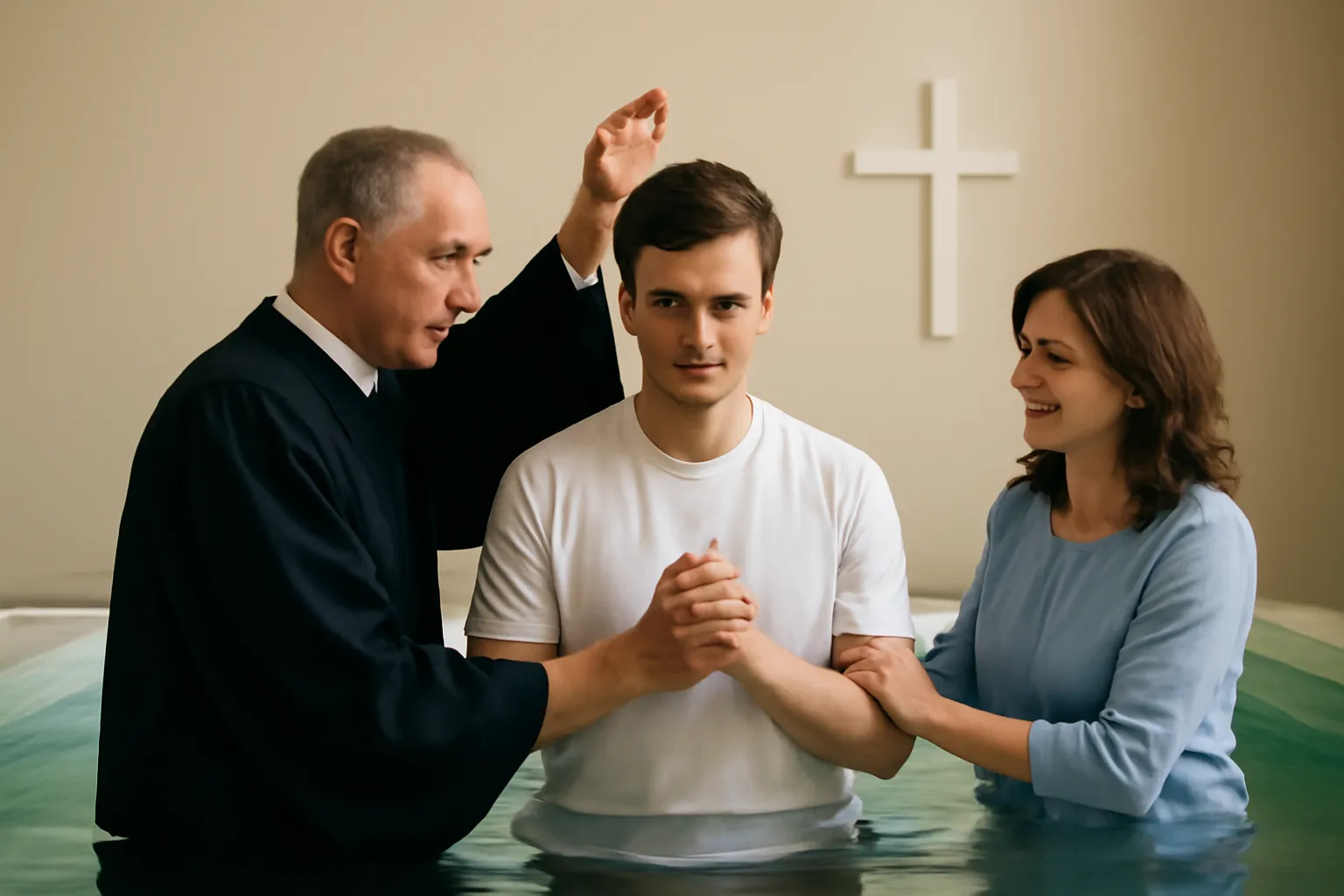
Across the baptist churches, the prevailing method for baptism is immersion in water. This mode is chosen because it most vividly represents the death, burial, and resurrection of Christ as well as the believer’s identification with that event. The language surrounding baptism often uses imagery drawn from baptismal immersion:
The candidate is fully submerged in water, under the water and then raised back up, symbolizing death to sin and new life in Christ.
Water acts as a visible, tangible sign of the inward transformation that has already occurred through faith.
Full immersion is seen as the most faithful representation of the biblical narrative of baptism in the New Testament, where immersion is the norm in early Christian practice.
While immersion is the standard, some Baptist churches discuss or practice deviations in exceptional situations—such as if the person’s medical or physical condition makes immersion impractical. In such cases, churches will often prioritize the symbolic meaning and pastoral sensitivity, while remaining clear that immersion is the preferred mode when possible. The important point for Baptist theology is not the exact method in every circumstance, but the confession of faith and obedience that baptism represents.
Impressive distinctions in practice
Full immersion as the ideal model for baptism in Baptist teaching.
Affusion or pouring may be used in rare circumstantial concessions but is not widely adopted as a normative Baptist practice.
In outdoor settings, river baptism or baptism in a church baptistry are common venues, illustrating the flexibility and practicality of the practice in public worship.
Who Is Eligible for Baptism in the Baptist Church?
Baptist churches typically require that candidates for baptism be able to articulate a personal faith in Christ and understand the meaning of baptism as a response to that faith. The eligibility criteria often include:
Professed faith in Jesus Christ: A clear, personal trust in Jesus as Savior and Lord.
Repentance and acceptance of the gospel: An awareness of sin, a turning away from it, and a commitment to live under Christ’s lordship.
Understanding of baptism’s meaning: An informed desire to participate in the baptismal rite as an act of obedience and public confession.
Participation in pre-baptism instruction (when offered): Some churches provide classes or counseling that explain the significance of baptism and the responsibilities of church membership.
Because Baptists emphasize personal faith, infants and very young children are not typically baptized. Instead, families may engage in other meaningful rituals such as child dedication or baptism when a child has reached an age or stage of understanding to respond to the gospel with their own confession. Parents and church leaders often work together to discern the appropriate timing for baptism in a given context.
The Ceremony: How Baptism Is Performed
The baptismal ceremony in the Baptist church unfolds in a manner that centers on the gospel, testimony, and community witness. While local practices can differ, most baptisms share a common sequence of elements that emphasize both personal faith and corporate discipleship.
Preparation and Teaching
Pre-baptism instruction: Many churches provide teaching on the meaning of baptism, the gospel, and the responsibilities of church membership, often in the form of a class or counseling session.
Testimony or personal confession: The candidate may share a personal testimony of faith, often including how they came to trust in Christ and what baptism means to them.
Pastoral guidance: A pastor or ministry leader helps the candidate prepare for the step and ensures understanding of the symbolism and implications of the act.
The Baptismal Act
Public setting: Baptism typically occurs as part of a worship service or a designated Baptism service, making the moment visible to the congregation.
Immersion in water: The candidate is fully immersed in water, either in a baptismal pool within the church or in a natural body of water, symbolizing burial and resurrection with Christ.
Pronouncement: The officiant or pastor pronounces the baptism, often with a brief statement about the believer’s profession of faith and the significance of the act.
Congregational welcome: After baptism, the new believer is welcomed into the church family, signifying acceptance and accountability within the local body.
Encouragement to engage: The congregation is invited to support the new believer’s growth, baptism being a starting point for lifelong discipleship.
Connection to baptismal identity: The act is often followed by a time of song, prayer, and the distribution of information about church membership and next steps in discipleship.
Aftercare and Integration
New member integration: New believers may undergo orientation or membership processes that outline the church’s mission, governance, and opportunities for service.
Ongoing discipleship: Baptism is seen as the beginning of a journey of sanctification, with teaching, Bible study, small groups, and mentorship designed to foster spiritual growth.
Baptism and Church Membership
In the Baptist understanding, baptism and church membership are closely linked. The act of baptism is not only a personal symbol but also a public invitation to participate in the life and responsibilities of the local church. The typical flow includes:
Profession of faith leading to baptism.
Formal membership in the local church after baptism, which involves agreeing to the church’s beliefs, governance, and community standards.
Participation in ministries: Baptism leads to involvement in teaching, worship, service, and evangelism within the church body.
Accountability and care: As new members, believers are encouraged to grow through pastoral care, accountability relationships, and biblical fellowship.
Because the Baptist church emphasizes the autonomy of the local congregation, policies about membership and baptism can vary from one church to another. Some churches require baptism before church membership; others require baptism as a prerequisite for certain leadership roles or for participation in the Lord’s Supper. The overarching logic is that baptism creates a visible link between the believer and the community of faith, reinforcing shared doctrine and practice.
Baptism in History and Tradition
The Baptist tradition emerged from a long history of reforming movements that emphasized believer’s baptism and church autonomy. While Baptists today represent a broad family of churches, several historical currents shaped baptismal practice:
Early Baptist awakening: In the 17th century, Baptists emerged in England and Holland as reformers who rejected infant baptism as a criterion for church membership and emphasized adult confession of faith and believer’s baptism by immersion.
Key figures: Ministers such as John Smyth and Thomas Helwys were instrumental in forming early Baptist congregations, articulating the conviction that baptism should follow personal faith and be conducted by immersion for believers.
Confessions and catechesis: Over time, Baptist churches developed confessional statements and catechetical materials that clarified beliefs about the meaning of baptism and the responsibilities of believers within the church.
Global spread: Missionary movements and the decentralization of church governance allowed Baptists to establish congregations worldwide, each adapting to local cultures while maintaining the core principle of believer’s baptism by immersion.
In historical memory, baptism in the Baptist church is often tied to the Reformation commitment to the priesthood of all believers and to the conviction that faith must be a conscious, voluntary response to the gospel. This historical perspective helps explain why Baptist communities place emphasis on personal faith, congregational autonomy, and the practice of baptism by immersion as a public witness to the gospel.
Variations Across Denominations and Local Churches
While there is a strong consensus around the central tenets of baptism in Baptist churches, local churches may vary in emphasis and practical details. Some common variations include:
Frequency of baptismal services: Some churches hold regular baptism services, while others schedule baptism as needed when candidates are ready, often aligning with special worship days or revival weekends.
Venue options: Baptisms can occur in a church baptistry, a portable pool, or a natural setting such as a river or lake, depending on the local context and outreach opportunities.
Pre-baptism instruction: The extent and format of preparation vary; some churches offer formal classes, while others provide informal counseling or rely on a pastor’s guidance.
Membership practices: Policies regarding baptism and membership can differ, especially in churches with varying interpretations of governance and discipline.
These variations reflect the Baptist emphasis on local church autonomy, the primacy of Scripture, and a practical response to the needs of different communities. Yet across these differences, the shared conviction remains: baptism in the Baptist church is a believer’s act of obedience grounded in faith in Christ and serves as a public witness to the gospel within the life of the church.
As with any theological topic, questions naturally arise about how baptism is understood and practiced. Here are some frequently asked questions and clear Baptist perspectives:
Is baptism necessary for salvation? In mainstream Baptist theology, baptism is not the means of salvation but a response to salvation already received by grace through faith in Jesus Christ. Faith precedes baptism, and baptism follows faith as a public declaration.
Can infants be baptized in Baptist churches? Most Baptist churches practice believer’s baptism and do not baptize infants. They teach that baptism should follow a personal decision to trust in Christ. Some churches offer child dedication or baptism for older children who have professed faith, rather than infant baptism.
What if someone cannot be immersed due to health concerns? Church leaders may consider alternatives, keeping the symbolic meaning in view, and often prioritize immersion as the theological ideal while showing pastoral sensitivity in exceptional cases.
Is baptism a ritual for church membership only? While baptism commonly precedes or accompanies church membership, the primary aim is obedience to Christ and public witness, not merely a formal credential.
What about baptism in other traditions? Other Christian traditions practice baptism in different modes and at different ages. Baptist theology emphasizes the believer’s confession and immersion, while other traditions may emphasize infant baptism, infant faith, or different symbolic acts.
In the Baptist church, baptism is a meaningful, theologically rich practice that marks the believer’s personal response to the gospel, publicly identifies the individual with Christ and the local church, and initiates a lifelong journey of discipleship. The emphasis on believer’s baptism by immersion reflects a conviction that faith must be conscious and voluntary, and that the outward sign should correspond to an inward transformation. Though the details may vary from one congregation to another, the essence of baptist practice remains consistent: the baptismal act is deeply rooted in Scripture, shaped by historical reform, and oriented toward the mission of the church to make disciples of all nations.
As you consider baptism in the Baptist church, you may want to reflect on questions such as: Do I understand and personally trust in Jesus as Savior and Lord? Am I prepared to confess that faith before the church? Is immersion in water the most faithful symbol of the gospel I have received? If you are exploring, you may find it helpful to talk with a pastor or a trusted church leader who can provide guidance, teach the biblical meaning of baptism, and walk with you through the steps toward this important public confession of faith.
Ultimately, baptism in the Baptist church is about the community of believers bearing witness to the good news of Jesus Christ—together, they celebrate transformation, teach one another to obey, and advance the mission of God in the world through baptismal obedience and lifelong discipleship.

 Por Laura Jara