Introduction: Understanding Baptism through a Practical Study
Baptism is one of the most enduring and sometimes debated rites in Christian practice. For many, it marks the moment of faith, initiation into the church, and a public confession of belief. For others, it represents a symbolic act connected to history, theology, and personal devotion. This article—titled Baptism Study: A Practical Guide to Understanding Baptism—offers a comprehensive, accessible path to exploring baptism in its biblical foundations, historical development, and contemporary practice. The focus here is not only to define what baptism is, but also to guide readers through a structured baptism study that leads to clearer understanding, informed conversation, and thoughtful discernment.
Throughout this guide you will encounter variations of the phrase baptism study, such as baptismal study, baptism studies, study of baptism, and baptism exploration. These interchangeable expressions help capture the breadth of inquiry—from devotional reflection to critical historical analysis. The goal is practical: to equip readers with tools, questions, and resources that deepen knowledge while respecting diverse theological convictions.
What is Baptism?
At its core, baptism is a ritual act that uses water as a means of symbolizing spiritual realities. In many Christian traditions, baptism is viewed as a response to faith, an outward sign of an inward transformation, or a covenantal rite that unites the believer with the community of Christ. In others, it is also a sacramental or ceremonial initiation that conveys grace in and through the church.
A practical way to approach the question is to distinguish between three related, but not identical, facets:
Symbolic meaning: Water represents cleansing, death to the old self, and new life in Christ.
Public profession: Baptism proclaims faith and allegiance before witnesses.
Covenantal identity: Baptism marks entrance into the people of God and a shared mission.
Biblical Foundations for Baptism
A robust baptism study begins with primary sources—biblical texts that Christians have traditionally read as foundational for the practice. The New Testament contains several passages that inform practice, symbolism, and theology. These passages are often cited in discussions about who should be baptized, how baptism should be performed, and why it matters.
Key Passages for a Look at Baptism
Matthew 28:19-20 (the Great Commission): Jesus instructs his followers to baptize «in the name of the Father and of the Son and of the Holy Spirit,» linking baptism to discipleship and baptismal authority.
Acts 2:38 (Peter’s exhortation): Repent and be baptized for the forgiveness of sins and the gift of the Holy Spirit—often cited in discussions of repentance, forgiveness, and initiation.
Romans 6:3-4 (dying and rising with Christ): Baptism as participation in Christ’s death and resurrection—symbolizing burial of the old self and new life.
Colossians 2:12 (buried with him in baptism): Emphasizes baptism as spiritual burial and resurrection, tied to faith in God, with a focus on grace and faith.
1 Peter 3:21 (baptism as appeal to God for a good conscience): Interpreted by some as emphasizing the internal disposition accompanying the ritual act.
Symbolism and Theology in Scripture
Water as a sign of cleansing and purification
Dying to sin and rising to new life as a central image in Romans 6 and Colossians 2
The Spirit and the Father’s name in baptism, highlighting the Trinitarian frame of understanding
Initiation into community: Baptism often occurs within the wider ecclesial setting, linking personal faith to corporate life
Modes and Meanings: Immersion, Sprinkling, and Pouring
A practical study of baptism must consider how the rite is performed, because mode has historical, theological, and symbolic significance. Across Christian traditions, three primary modes have developed: immersion, pouring, and sprinkling. Each mode carries different emphases and is connected to particular theological interpretations.
Common Baptism Modes
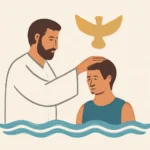
Immersion: The person is fully submerged in water. Often associated with a vivid identification with Christ’s death and resurrection; common in Baptist and some evangelical traditions.
Pouring: Water is poured over the candidate’s head. This mode is symbolic of blessing, cleansing, or the outpouring of the Spirit; frequently used in Methodist, Anglican, and Reformed contexts.
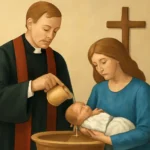
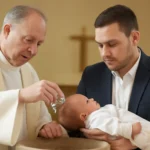
Sprinkling (or aspersion): Water is sprinkled on the person. Historically significant in various traditions and sometimes used for infant baptism when immersion is impractical.
The important takeaway for a baptism study is not only which mode a tradition uses, but why that mode aligns with its interpretation of the scriptural passages and theological commitments. Some readers prefer a symbolic reading of immersion as a holistic picture of dying to self and rising to new life, while others emphasize the Spirit’s presence and grace that can accompany different modes.
Infant Baptism vs Believer Baptism
A central axis in the study of baptism concerns eligibility and the relationship between baptism and personal faith. The debate often centers on whether baptism should be reserved for those who profess faith (believer baptism) or offered to infants within a covenantal framework (infant baptism). Each position is supported by different scriptural interpretations, historical patterns, and ecclesial commitments.
Rationale: Emphasizes personal faith and repentance as prerequisites for baptism; baptism follows a conscious decision to follow Christ.
Common practice: Often paired with a profession of faith, followed by a period of instruction or catechesis.
Denominational examples: Prominent in many Protestant and evangelical communities (e.g., Baptists, some Pentecostal and non-denominational churches).
Rationale: Sees baptism as the initiation into the covenant community, paralleling Old Testament circumcision as a sign of inclusion in God’s people.
Common practice: Infants receive baptism, followed later by personal profession of faith or confirmation.
Denominational examples: Widespread in Roman Catholic, Orthodox, Anglican, and many Lutheran and Reformed churches.
When engaging in a baptism study on infant versus believer baptism, it helps to explore:
The covenant theology that underpins each view
Relevant New Testament passages and their interpretations
Historical patterns and how they evolved in different church contexts
Pastoral implications for families, communities, and personal faith formation
Historical Perspectives and Denominational Variations
The practice and understanding of baptism have evolved across centuries and cultures. A practical baptism study benefits from appreciating this history, not to settle all differences but to understand why different churches do what they do. Early Christians often practiced baptism in a post-conversion context, with baptismal rites attached to ongoing discipleship. Over time, the rite acquired varied theological meanings and liturgical forms.
Early church: Baptism was typically linked to a conversion experience and a catechetical process; immersion was common in many regions due to the available water sources.
Medieval period: The rite often became integrated with other sacraments and liturgical cycles; infant baptism gained prominence in Western Europe.
Reformation: Debates about mode, mode significance, and the nature of baptism intensified, resulting in divergent practices among Reformers and non-Reformers.
Modern era: Contemporary denominations articulate a spectrum—from strong emphasis on believer baptism to a reaffirmation of infant baptism as a covenant sign.
A Practical Guide to Studying Baptism
This section provides a concrete, step-by-step approach to conducting a baptism study that is both rigorous and accessible. The goal is not to prescribe a single correct answer but to equip you with tools to examine Scripture, tradition, and practice thoughtfully.
Define your purpose: Are you studying baptism for personal faith, pastoral decision, historical curiosity, or inter-denominational dialogue? Clarifying your aim helps select sources and questions.
Gather primary and secondary sources: Read biblical texts (Old and New Testament, as relevant) and consult reputable commentaries, systematic theologies, historical surveys, and church documents. Include voices from traditions you’re not part of.
Create a list of core questions: What is baptism supposed to accomplish? Who should be baptized? What is the role of faith, repentance, and grace? How does baptism relate to other Christian practices?
Read the scripture with a hermeneutical lens: Consider immediate context, literary genre, and covenantal frameworks. Note repeated motifs, symbolism, and the role of the Holy Spirit.
Compare modes and their implications: Record how immersion, pouring, and sprinkling appear in practice, and how each mode relates to doctrinal commitments in different traditions.
Assess historical development: Track how baptism was practiced in early centuries, how Reformation debates shaped modern practices, and how contemporary churches position themselves.
Engage in dialogue: Discuss findings with mentors, pastors, scholars, or study groups. Respectful dialogue often reveals assumptions and broadens understanding.
Formulate conclusions with humility: Acknowledge what is clear, what remains debated, and how your conclusions align with your faith community.
Study Tools and Resources
Scripture study aids: A good study Bible, concordances, and cross-reference tools to explore related passages.
Historical sources: Writings from early church fathers, leather-bound tradition records, and ecumenical council summaries where relevant.
Systematic theologies: Chapters on baptism, salvation, grace, and the church to understand broader doctrinal contexts.
Denominational statements: Official catechisms, confessions, and doctrinal summaries that articulate distinctive stances.
Academic articles: Scholarly articles that examine baptism from historical-critical, theological, and sociological perspectives.
Practical Application: How to Prepare for Baptism or Engage in a Baptism Conversation
For individuals preparing to be baptized or families navigating infant baptism questions, a practical baptism study translates into concrete steps. The following guidelines are designed to be applicable in church settings, catechetical programs, or personal devotional routines.
Preparation Tips for Individuals and Families
Clarify intent: Understand your personal reasons for seeking baptism and how it relates to your faith journey.
Participate in instruction: Engage with a catechism class, Bible study, or mentorship that addresses faith, repentance, and discipleship.
Reflect on the symbolism: Consider what water, cleansing, and new life mean in your own spiritual story.
Consent and care for children: For infant baptism, involve parents and godparents in understanding the vows being made on behalf of the child.
Ask clarifying questions: What does the church believe baptism accomplish? Is it a sign, a means of grace, or both?
Discuss integration with faith and life: How will baptism shape your ongoing discipleship, worship, and service?
Consider pastoral implications: How does the community support a new believer in growth after baptism? What commitments are expected?
Common Questions and Answers in a Baptism Study
Below are some frequently asked questions that often arise in the context of a baptism study. The aim is to present concise, biblically informed, and theologically reflective responses.
Q: Is baptism required for salvation?
The relationship between baptism and salvation is debated across traditions. In many biblical interpretations, baptism is closely linked to faith and repentance, but the precise role—whether it is strictly required for salvation or primarily a public confession and initiation—varies by tradition. A prudent approach in a study is to distinguish between the grace of God, the offer of salvation, and the ritual act of baptism, while recognizing that baptism often serves as a crucial sign of faith and community incorporation.
Q: Can infants be baptized?
Infant baptism is widely practiced in several historic Christian traditions. Proponents argue that baptism inaugurates the child into the covenant community and parallels Old Testament practices of inclusion. Opponents emphasize personal faith and repentance as prerequisites. In a structured baptism study, examine covenants, church history, and pastoral considerations to form a well-reasoned stance aligned with your community.
Q: What about adult baptism for those who were baptized as infants?
Some traditions practice a reaffirmation, confirmation, or adult baptism for those who seek to make a personal profession of faith later in life. In a study, it can be helpful to distinguish between sacramental grace and personal commitment, discussing how different churches handle re-affirmation and the ongoing formation of faith.
Q: How does baptism relate to the Holy Spirit?
The relationship between baptism and the Holy Spirit is central to many debates. Some traditions view baptism as closely tied to Spirit reception (often connected to the event described in Acts). Others emphasize Spirit baptism as a separate experience that can occur at or after baptism. In a careful study, note the variety of interpretations while examining biblical texts and the theological commitments of each tradition.
Ethical and Practical Considerations
A thoughtful baptism study also includes ethical and pastoral considerations. These include respecting conscience, recognizing denominational identities, and honoring local church governance. In diverse communities, it’s important to maintain clarity about what baptism signifies while remaining compassionate toward differing convictions.
Mutual respect: Understand that baptism is deeply meaningful for many people and traditions, even when beliefs differ.
Worship context: Baptism is often a joyous occasion within the church’s worship life; consider its place in corporate praise and witness.
Pastoral care: Post-baptism discipleship, mentoring, and community support are essential for growth in faith.
Resources and References for a Thorough Baptism Study
A strong study relies on credible resources. The following categories offer a broad spectrum of perspectives, from devotional guides to scholarly works. When exploring baptism studies, diversifying your sources helps you see how different communities understand the rite.
Recommended Readings and Tools
Biblical commentaries: Look for volumes that address baptism in the New Testament, including discussions of the role of faith, repentance, and grace.
Systematic theologies: Chapters on baptism, salvation, grace, the church, and sacraments provide doctrinal clarity.
Church histories: Books that trace baptismal practices from the early church to modern times reveal how traditions emerged.
Denominational documents: Official catechisms and doctrinal statements clarify the position of particular communities.
Scholarly articles and journals: Articles on baptismal theology, historical development, and liturgical practice offer nuanced insights.
Pastoral resources: Catechism guides, baptism preparation guides, and church handouts can be useful for practical implementation.
Conclusion: A Lifelong Journey in Baptism Study
A comprehensive meditation on baptism—whether you pursue a baptism study as a personal project, within a church community, or as part of academic inquiry—offers a meaningful way to understand the Christian rite across dimensions of scripture, history, and practice. By examining biblical foundations, exploring modes and meanings, and considering historical and denominational variations, you can arrive at a well-informed perspective that honors your own faith commitments while respecting others. The practical steps outlined in this guide are designed to be adaptable, allowing you to tailor a study plan to your context, learning style, and spiritual goals.
Remember that the goal of a baptism study is not merely to conclude a debate but to deepen your understanding of what baptism signifies in the life of faith, community, and mission. Whether you are preparing for baptism, evaluating church practice, or engaging in inter-denominational dialogue, the process invites honesty, curiosity, and humility. May your study be fruitful, constructive, and transformative as you walk toward greater insight into this ancient and enduring Christian rite.

 Por Laura Jara