Introduction: The Curious Tale of Balaam and the Talking Donkey
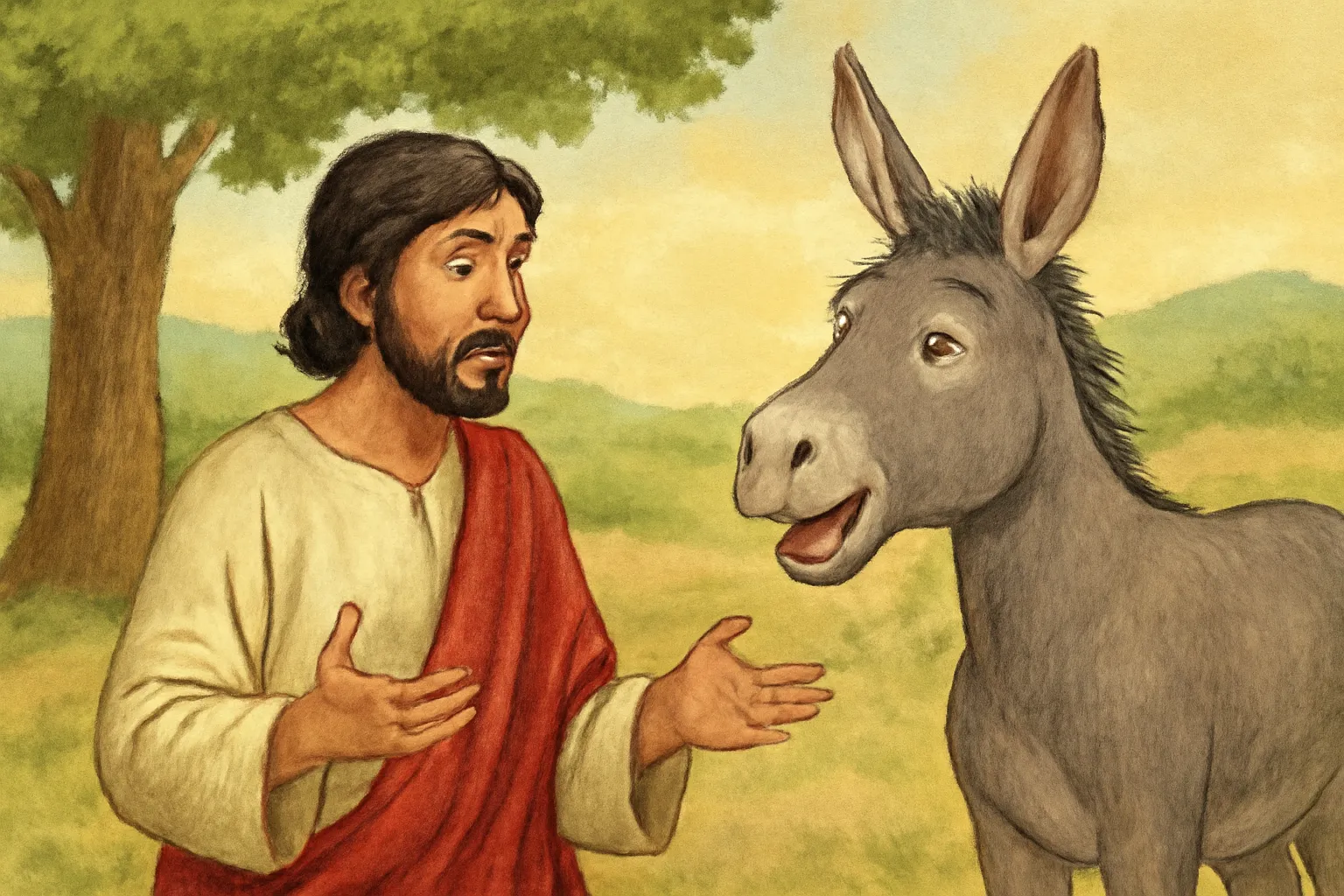
Among the many stories tucked into the tapestry of the Bible, one stands out for its striking blend of the miraculous with the everyday: the encounter between balaam, a non-Israelite prophet for hire, and a seemingly ordinary donkey who suddenly speaks. This episode, often called bible story with a talking donkey, is found in Numbers 22–24, a narrative that has fascinated readers for centuries. It raises questions about divine sovereignty, human motive, and the ways in which God can use unlikely vessels to convey truth.
In popular retellings, people speak of the talking donkey as a quirky incident or a humorous interlude. Yet for scholars and faithful readers, the moment is a carefully constructed hinge in which the author invites us to reassess perception, obedience, and prophecy. In this article, we will explore the story in depth, examine the narrative’s structure, consider historical and theological contexts, and reflect on how this event has been understood in various traditions. We will also look at other biblical motifs that resemble the talking donkey device to broaden the semantic landscape of this famous tale.
Outline of the Narrative in Numbers 22
The core sequence is compact but rich in meaning. A Moabite king named Balak fears the advancing people of Israel and seeks a prophetic blessing or curse that might blunt their progress. He summons Balaam, a famed figure who speaks for hire, hoping to secure a political advantage through divine connection. Before Balak can finish his plan, a dramatic disruption occurs: an angel of the LORD stands in Balaam’s path, unseen by Balaam but visible to his donkey. The donkey, noticing danger the man cannot perceive, tries to avoid the angelic threat, and only after the donkey’s repeated resistance and a divine intervention does Balaam realize he is in the presence of a holy being. Then, in a turning point of the narrative, the donkey speaks, delivering a warning and a message that corrects Balaam’s perspective. What follows is a sequence of oracular pronouncements from Balaam that alternately threaten and bless, culminating in a set of prophecies that underscore the sovereignty of God over human agendas.
The episode unfolds in a way that destabilizes simple assumptions: the person who seeks to manipulate outcomes discovers that the divine will remains intact regardless of human effort and cunning. The talking donkey is not a mere animal prop used for comic relief; it is a prophetic signpost guiding readers toward a deeper understanding of divine communication and the conditions under which prophecy operates.
Key Characters and Their Roles
The narrative centers on a few pivotal figures, each carrying symbolic and theological significance.
Balaam: A seer who speaks with divine authority, but whose motives are tested by ambition, wealth, and political pressures. He embodies the tension between genuine prophetic capacity and susceptibility to external incentives.
Balak: The Moabite king who seeks to neutralize Israel’s threat by obtaining a curse, hoping a curse will render Israel vulnerable. Balak represents political fear and strategic overreach, contrasted with the integrity of prophetic truth.
The Angel of the LORD: A divine envoy who stands as a gatekeeper in Balaam’s journey, representing the invisible divine presence that guides, warns, and disciplines. The angel’s sword-wielding threat reveals the gravity of disobedience and the seriousness with which God guards the path of his messengers.
The Donkey: An unlikely and unsung hero of the story, the donkey becomes a voice of moral perception and a medium through which God communicates truth. The animal’s refusal to move forward becomes a catalyst for Balaam’s revelation and for the reader’s understanding.
The moment when the donkey speaks is often described as one of the most striking in biblical narrative. It prompts readers to ask: Why use a talking donkey to convey a divine message? There are several layers to this device:
Disruption of perception: Balaam cannot see the angel or the danger, but the donkey can. By giving the donkey a voice, the text jolts readers out of complacency and invites them to question what they think they know about perception, reality, and spiritual discernment.
Ethical correction: The donkey’s warning and subsequent speaking voice serve as a form of moral correction for Balaam, reminding him that wealth and ambition do not outrun divine command.
Divine pedagogy: The speaking animal is a tool through which God teaches the prophet humility, attentiveness, and submission to a larger purpose beyond personal gain.
Prophetic authority redefined: The donkey does not prophesy in the sense of forecasting a political outcome; its speech is a corrective sign that real prophecy must align with God’s will regardless of human schemes.
In this sense, the talking donkey is more than a plot device; it is a theological signal that human power and cunning do not guarantee control over God’s plan. The scene also invites readers to reflect on the role of animals and creation in bearing moral and spiritual witness.
Theological Themes and Lessons from the Encounter
The Numbers 22 story, with its dramatic turn, illuminates several enduring themes that scholars and theologians continue to explore.
Sovereignty of God versus Human Ambition
A central thread is the supremacy of God’s will over the strategies of people. Balak’s attempt to curse Israel fails precisely because the divine purposes cannot be undone by political maneuvering. The donkey’s interruption and the angel’s warning highlight that God protects the people he has chosen and that human plans cannot override that divine mandate.
Divine Communication and the Limits of Human Perception
The story underscores that spiritual truths are often inaccessible to those outside God’s purposes. Balaam’s failure to perceive the divine danger until the donkey speaks demonstrates that prophetic insight must be grounded in humility and obedience to God’s directives, not merely in a desire for financial gain or public stature.
Prophecy as a Moral Test
In the passages that follow the donkey’s speech, Balaam pronounces blessings on Israel, reversing his initial intent to curse. This reversal is not mere happenstance; it exposes a moral test: will Balaam align with God’s purposes or pursue a self-serving agenda? The narrative suggests that true prophetic authority is validated by its fidelity to divine will, even when it contradicts personal profit.
Ethics of Power, Wealth, and Authority
The encounter raises questions about the ethics of power. Balaam’s willingness to take Balak’s reward temptingly parallels broader concerns about how financial incentives can influence religious leadership and the neutrality of prophetic utterance. The text invites readers to distinguish between genuine revelation and instrumental use of divine words for political ends.
Historical and Cultural Context
To appreciate the Numbers 22 narrative, it helps to situate it within its ancient Near Eastern milieu. The Moabites, Israelites, and other regional communities carried deeply held beliefs about prophecy, omens, and divine intervention. Seers and prophets operated in a world where divine signs could be perceived through dreams, visions, or unusual events in ordinary life. The use of an animal as a vehicle for a divine message resonates with broader cultural patterns in which the natural world serves as a conduit of divine instruction or warning.
Moreover, the concept of a divinely appointed journey—where a prophet’s path is redirected by a supernatural force—reflects an ancient worldview in which divine sovereignty is acknowledged as overarching and inscrutable. The angel of the LORD appears as a figure who enforces boundaries on human ambition, testing the moral fiber of the prophet at a pivotal moment.
Interpreting the Narrative Across Traditions
The story has been read, taught, and preached in various religious and scholarly traditions, each offering its own emphasis.
Judaism: Traditional Jewish exegesis often emphasizes the integrity of prophecy and the necessity of aligning with God’s will. The donkey’s role is understood as a serious sign that even a humble creature can discern danger that a prophet himself cannot perceive.
Christianity: Some Christian readings highlight the mercy and patient discipline of God toward those who stumble in moral tests. The event is sometimes viewed as a prefiguration of Christ’s teaching that spiritual sight comes through submission to the Father’s will.
Rabbinic and patristic interpretations: Commentaries have explored the symbolism of the talking animal and the “blessing” pattern that emerges after a failed curse. The donkey’s speech is sometimes read as a corrective grace, enabling a more faithful articulation of blessing over condemnation.
Across these traditions, the core message remains robust: human plans are provisional in the face of divine sovereignty, and true insight depends on humility before God.
Broader Semantics: Variations of Bible Stories with Talking Donkeys and Similar Devices
While the Balaam narrative is the most famous example of a bible story with a talking donkey, biblical scholarship often notes related devices where animals or unusual voices function as agents of divine communication or moral critique. These variations broaden the semantic terrain and illuminate how sacred writers use animal voices to challenge human hubris and awaken ethical obedience.
Animals as moral teachers: In various scriptural narratives, animals embody wisdom or warning. Though not all are talking, their actions signal moral truth—such as the way certain animals respond to divine intervention in critical moments of the story.
Speaking serpents and beasts: The Bible includes other moments where the natural world becomes a channel of revelation, including the speaking serpent in Genesis. These episodes invite readers to consider animal agency as a sign of moral or spiritual truth, not as mere novelty.
Prophetic vocation and signs: In several books, prophetic figures encounter signs and wonders that redefine their understanding of God’s purposes. The idea that perception must be corrected by divine intervention resonates with Balaam’s experience when the donkey speaks and the angel appears.
Similar Narrative Devices in Nearby Texts
Across biblical literature, narrative devices that pivot on a remarkable interruption—whether a miraculous appearance, a voice from creation, or a sudden reversal of fortune—serve to reframe the reader’s assumptions. These devices often function to:
Expose the limitations of human wisdom.
Reaffirm God’s sovereignty over the world’s rulers and plans.
Invite readers to read signs with humility and discernment.
Practical Applications: What Balaam’s Encounter Teaches Today
The timeless insights from the bible story with a speaking donkey translate into practical lessons for people living in any era.
Humility before divine will: The episode warns against measuring outcomes by personal desire or material reward. True discernment comes from aligning with a higher purpose, even when it contradicts personal interests.
Critical self-examination: Balaam’s internal conflict reveals the danger of spiritual compromise. The story invites readers to examine motives—why they seek certain outcomes, and whether they are willing to obey if obedience costs them something.
Perception and faith: The donkey’s sightedness contrasts Balaam’s blurred perception. The lesson is not anti-intellect but anti-situational blindness: spiritual insight requires willingness to see what God reveals, even when it challenges one’s plans.
Use of prophetic authority: The narrative calls readers to consider what makes a speaker trustworthy. Prophetic authority is validated not by cleverness or power but by fidelity to God’s will and the call to bless where God blesses and to refrain from cursing where God forbids it.
From a literary standpoint, the Numbers 22–24 cycle features a tight chiastic structure, where events and speeches reflect and reinforce each other. The donkey’s speech serves as a pivot that turns Balaam from a profit-seeker toward a genuine instrument of divine blessing. The text repeatedly foregrounds the contrast between human planning and divine governance, inviting readers to follow a path of obedience rather than calculation.
Modern readers may notice stylistic echoes—such as dialogue interruptions, sudden shifts in perspective, and a blend of narrative tension with prophecy—that make this story accessible across generations. The use of a talking animal underscores the seriousness of the moment while also enabling a relatable entry point into deeply theological themes.
Historical Footnotes: Key Textual Moments to Notice
The moment the angel of the LORD stands in Balaam’s way carries a summons to pause, reevaluate, and seek divine permission before proceeding.
The donkey’s refusal to move, paired with Balaam’s inability to see the danger, functions as a narrative device that clarifies who truly governs the situation: the God who commands even talking animals.
Balaam’s eventual blessing is not merely a reversal; it is a revelation of the real order of things, where blessings and curses are subject to God’s design rather than to human calculation.
The bible story with a talking donkey in Numbers 22–24 remains compelling not just for its dramatic moment, but for what it teaches about obedience, perception, and divine sovereignty. The donkey’s voice—far from being a gimmick—acts as a moral and theological compass, guiding Balaam (and the reader) toward a deeper understanding of God’s purposes. In a world where ambition can easily outpace conscience, the narrative offers a reminder that real prophetic power is bound to fidelity to the divine will. Across traditions, readers continue to encounter the same call: to listen, to discern, and to yield to a wisdom greater than human plans.
Glossary and Quick Reference
For quick orientation, here are brief definitions of some central terms and phrases used in this article.
Numbers 22–24: The biblical chapters that recount Balaam’s encounter with Balak, the warning by the angel of the LORD, the talking donkey, and Balaam’s oracles.
Balak: The Moabite king who seeks to influence Israel through curses or blessings that would serve his political aims.
Balaam: A prophet for hire who encounters both material temptation and a deeper spiritual challenge in this narrative.
Angel of the LORD: A divine messenger who tests and directs Balaam, revealing the divine presence behind events.
Prophetic blessing: A moment in which Balaam pronounces a blessing rather than a curse, aligning with God’s purposes for Israel.
Further Reading Suggestions
If you would like to explore this topic more deeply, consider the following approaches:
Compare different Bible translations of Numbers 22 to observe how translators render the donkey’s speech and the divine interactions.
Read traditional commentaries from Jewish, Christian, and Rabbinic sources to understand diverse interpretations of Balaam’s motives and the donkey’s role.
Study other biblical motifs involving divine interruption in human plans, and reflect on how these moments emphasize divine sovereignty over human purposes.

 Por Laura Jara