Understanding the Advent Wreath Meaning: Symbolism, History, and Traditions
The Advent wreath is a cherished symbol in many Christian homes and churches as the season of Advent unfolds. Its purpose extends beyond simply marking the weeks leading to Christmas; it serves as a visual meditation on waiting, preparation, and the illumination that comes with faith. In this article, we explore the Advent wreath meaning, the core symbolism embedded in its structure, the historical development of the tradition, and the ways it is observed around the world. Whether you encounter it in a sanctuary, a classroom, or a family living room, the wreath invites contemplation about hope, anticipation, and the arrival of light in a season often described as dark or challenging.
The Symbolism Behind the Advent Wreath
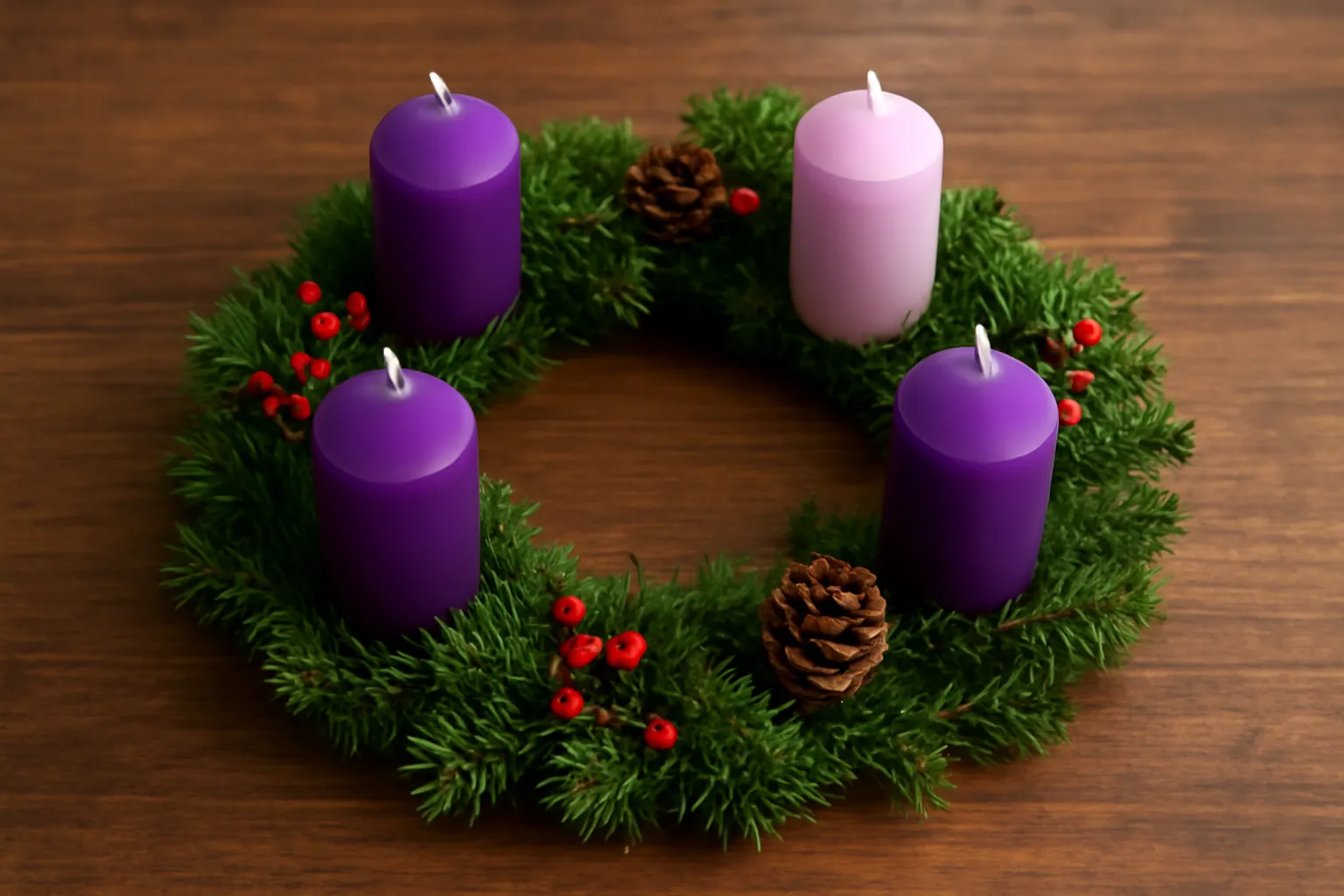
The Advent wreath symbolism rests on several interwoven ideas. The circular shape itself conveys the notion of eternity and eternal life, since a circle has no beginning or end. The evergreen branches that typically form the ring emphasize resilience, continuity, and the enduring presence of God through the passing of the seasons. The wreath’s evergreen needlework stands as a reminder that life persists even in winter, echoing the Christian belief in the persistence of faith amid hardship.
The actual lighting of candles brings the symbolism into a progressive, experiential rhythm. The candles symbolize the light that enters the world with the coming of Christ, and each flame on successive Sundays marks a period of spiritual awakening and moral preparation. The practice invites participants to reflect on the virtues associated with Advent: expectation, peace, joy, and love. In many contexts, the four candles are arranged around the ring, and a center candle—often called the Christ candle—is placed in the middle to be lit on Christmas Eve or Christmas Day. This central light represents Christ as the Light of the World and the culmination of Advent’s waiting.
The Candles and Their Meanings
In most modern practice, the wreath uses four candles, each with a particular association. The most common meanings are:
Hope (often represented by the first candle). This flame invites believers to remember the prophecies and promises that precede the Advent story.
Peace (the second candle). Lighting this candle calls attention to the harmonizing of God’s plan with human longing for reconciliation and calm amid turmoil.
Joy (the third candle, traditionally pink or rose in many traditions). This candle marks the shift from solemn expectation to celebratory anticipation as Christmas draws near.
Love (the fourth candle). This flame points to the culmination of Advent in the Incarnation and the world’s entrance into the saving act of God’s love.
The color of the candles can vary by tradition. In many Western churches, the first, second, and fourth candles are purple (symbolizing penance and preparation), while the third candle is pink (Gaudete Sunday, a day of rejoicing). Some communities, especially in Eastern Christian or modern inter-denominational contexts, may use blue or other colors, but the underlying symbolism of the four weeks remains consistent: preparation for Christmas and the gradual bringing of light into darkness.
The Christ Candle: A Central Light
The Christ Candle sits at the center of many Advent wreaths and is lit at the end of Advent, often on Christmas Eve or Christmas Day. This central flame represents the arrival of Jesus as the divine Light entering a world that longs for truth, mercy, and salvation. In households and some congregations, the Christ candle is reserved for the final celebration within the Advent season, making the moment of Christmas morning or evening that much more luminous and hopeful.
The Advent wreath history is a layered story that blends folk practices, liturgical development, and family devotion. While wreaths of evergreen used in Christian devotion by various cultures long predate the modern form, the structured Advent wreath as a recognizable practice is often traced to 19th-century Germany.
The most widely cited origin story attributes the invention of the large, formal Advent wreath to Johann Hinrich Wichern (1808–1881), a missionary and social reformer who founded the Rauhes Haus orphanage in Hamburg. In 1839, he created a large wheel-like arrangement with evergreen branches and many small candles to help poor children count the days of Advent and to symbolize the coming light of Christmas. This early version could include a substantial number of candles, sometimes grouped to represent weeks or days, and it served as a practical teaching tool as well as a devotional aid.
Over time, the design was scaled down for homes and churches and standardized into the more familiar circular ring of evergreen with four candles and, in many cases, a central Christ candle. The modern Advent wreath—with its four candles and a single, central flame—began to spread beyond Protestant circles in the late 19th and early 20th centuries and eventually became common in Catholic and Anglican worship as well.
How the Tradition Expanded and Adapted
The Mid-20th century saw widespread adoption in both church and home settings across Western Europe and North America, with many communities incorporating Advent wreaths into public liturgy and private devotion.
In many Protestant churches, the wreath became a standard element of Advent worship during the Sundays leading up to Christmas, often accompanied by readings, prayers, and hymns that align with the candle meanings.
Among Catholic communities, the Advent wreath gained regular use in parishes and homes after the Second Vatican Council encouraged active lay participation and the integration of familiar devotions into the liturgical year. Today, the wreath is commonly found in parish churches, schools, and households around the world.
Variations exist where some wreaths include a fifth candle—typically a white Christ candle placed in the center or sometimes as a separate fifth flame—to emphasize Christmas Day as the moment of light’s fullness.
Traditions and Practices: How People Keep Advent Wreaths Today
The Advent wreath traditions vary across denominations, cultures, and families, but several core practices are widely observed. The ritual of lighting, the accompanying prayers, and the reflective readings help participants enter a rhythm of waiting that culminates with Christmas.
Lighting Sequence and Worship Rhythm
A common practice is to light one candle on each of the four Sundays of Advent, with prayers or readings that correspond to the candle’s meaning. In some communities, the blue or purple candle is lit first, followed by the pink, and so on, in a progression that visually marks the approach of Christmas. The Christ candle is lit on Christmas Eve or Christmas Day and may be lit together with the final Advent candle in some households.
Color Significance and Variations
The color scheme of Advent candles is deliberate. The most common palette—purple and pink—reflects traditional liturgical colors, penance, waiting, and joy. In some churches or homes, you may find the wreath with three purple candles and one pink candle, while others use blue or alternate color schemes. The essential idea is to use color to signal progression through the season and to highlight the third Sunday (Gaudete Sunday) with a lighter, more celebratory hue.
Rituals Beyond Lighting
Advent wreaths often accompany prayers, Scripture readings, and hymns. Some families incorporate dedicated readings for each week, focusing on biblical prophecies, the expectations surrounding the Messiah, and the themes of hope, peace, joy, and love. Churches may include the Advent wreath in processions, liturgical greetings, or special services for the four Sundays of Advent. The wreath thus becomes a tangible anchor for communal or family devotion, inviting participants to pause, reflect, and anticipate.
In many households, the Advent wreath is a centerpiece of the family room or dining table. Placed within a stable or bowl and surrounded by candles or flowers, it becomes a daily reminder of the season’s intention: to slow down, prepare, and welcome the gift of Christmas. In churches, the wreath often appears near the lectern or altar, accompanied by a liturgy that highlights the Advent message of preparation and hope, as well as the social call to share the coming light with others.
Making and Caring for an Advent Wreath
Whether you buy a ready-made wreath or craft one yourself, the approach to Advent wreath making is a meaningful ceremony in itself. A well-made wreath invites ongoing contemplation and can become a family heirloom that travels from year to year.
Materials and Basic Design
Typical components include:
Evergreen branches (such as pine, fir, or spruce) to form a circular base.
Candles (four in a ring, plus optional Christ candle).
Candle holders or a sturdy central tray to keep the flames secure.
Decorative elements like pinecones, holly, berries, ribbons, or natural accents.
Safety and Care Tips
Place the wreath on a non-flammable surface and away from curtains, papers, and drafts.
Never leave burning candles unattended; extinguish flames if you must leave the room.
Trim wicks to about ¼ inch before lighting to minimize smoke and ensure steady flames.
Replace candles after they burn down to the holders; consider using LED alternatives for long-lasting safety.
Steps for a Simple Home Pattern
Gather evergreen branches and secure them into a circular form using floral wire or a sturdy wreath frame.
Arrange four candle holders evenly around the ring, with a central space for the Christ candle if desired.
Position the four candles in their holders and attach decorative elements to reflect the season.
Decide on a lighting plan: begin with one candle and progress to the fourth candle on each successive Sunday; reserve the Christ candle for Christmas Eve or Day.
Variations Across Cultures and Denominations
While the general concept remains consistent, Advent wreath practices differ in subtle and meaningful ways around the world. These variations reflect local liturgical customs, cultural aesthetics, and the particular needs or preferences of families and congregations.
Western Christian traditions often emphasize the four-week sequence and use purple and pink candles, with the Christ candle added for Christmas celebrations.
Catholic communities may highlight the Advent wreath during parish liturgies, with prayers chosen from the Lectionary or seasonal devotional books. Some households add a blessing of the wreath before Advent begins.
Anglican and Protestant practices frequently incorporate the wreath into Sunday services or youth programs, pairing lighting with readings on hope, peace, joy, and love.
Orthodox and some Eastern Christian contexts may incorporate Advent-like structures in different forms or align the wreath with other pre-Christmas devotions, sometimes using blue as an Advent color.
Home-centered variations can include artificial wreaths with battery-operated candles for convenience and safety, or larger public displays with community participation.
Contemporary Additions and Alternatives
Some people adapt the tradition by adding a fifth candle to symbolize a beacon of light for the world or by using LED candles to avoid open flames. Others integrate the wreath into broader Advent activities, such as service projects, charity drives, or family storytelling sessions that recount the nativity narrative. Regardless of the variant, the core intention remains: to illuminate the season through mindful anticipation and communal welcome.
Advent Wreath Meaning: A Reflective Conclusion
The enduring appeal of the Advent wreath meaning lies in its capacity to blend beauty, ritual, and spiritual intention. It is a living symbol: a circle that reminds us of God’s steadfast presence, a ring of evergreens signaling endurance, and a line of candles progressively brightening as Christmas approaches. This combination invites individuals and communities to slow down, reflect on preparation and virtue, and open their hearts to the transformative message of the season.
The circle represents eternity and God’s unending love.
The evergreen branches symbolize perseverance and life that persists through winter.
The candles stand for a journey from hopeful expectation to the radiant arrival of Christ, the Light of the World.
The center Christ candle (when used) marks the culmination of Advent in the celebration of Jesus’ birth.
Different traditions color the candles and structure the lighting in distinct yet meaningful ways, reflecting local liturgical calendars and cultural sensibilities.
Whether observed in a hushed living room or a bustling church nave, the Advent wreath continues to be a powerful language of waiting and illumination. Its symbolism speaks across generations: in the quiet moment of lighting a single flame, there is a shared confession that light comes into the world through a humble and hopeful act. In this sense, the Advent wreath meaning is not only about preparing for a holiday; it is about preparing the heart—and extending that preparation outward to families, communities, and neighbors in need.
Frequently Asked Questions about the Advent Wreath
What does the Advent wreath symbolize?
The Advent wreath symbolizes waiting for the coming of Christ, the light entering the world, and the spiritual preparation of the season. It blends ideas of eternity, hope, peace, joy, and love through its circular form and the progressive lighting of candles.
The four candles correspond to the four weeks of Advent, highlighting a cycle of anticipation leading up to Christmas. The arrangement emphasizes a step-by-step journey toward the celebration of Christ’s birth.
What is the Christ candle, and when is it lit?
The Christ candle is the central candle used in some wreaths. It is typically lit on Christmas Eve or Christmas Day, symbolizing the arrival of Jesus as the Light of the World and the fulfillment of Advent’s promise.
Can Advent wreaths be used in non-liturgical settings?
Absolutely. The Advent wreath is widely used in homes, schools, and community groups as a devotional practice. It offers a tactile rhythm of reflection and celebration that can complement family prayers, readings, music, and charitable acts during Advent.
Are there safety considerations for real candles?
Yes. When using real candles, place the wreath on a non-flammable surface, away from drafts and flammable materials, and never leave burning candles unattended. For safer alternatives, many families opt for LED candles or battery-operated lights that preserve the symbolic illumination without the risk.
Conclusion: The Meaningful Light of Advent
In its simplest form, the Advent wreath meaning centers on a hopeful pause before Christmas—a time to notice the growing light, to remember the promises of Scripture, and to live out the virtues celebrated in each candle’s glow. The tradition invites both individuals and communities to join in a shared practice of preparation: to welcome others, to nurture peace and joy, and to recognize that even in the darkest days, light is present and increasing.
Whether you admire a classic wreath in a church, participate in a family lighting ritual at home, or craft your own version as a seasonal art project, the Advent wreath remains a flexible, meaningful symbol. It embodies the transition from waiting to celebration, from quiet longing to joyful proclamation, and from personal devotion to communal generosity. In this way, the Advent wreath meaning continues to illuminate lives year after year, guiding hearts toward Christmas with intentional light and mindful hope.

 Por Laura Jara