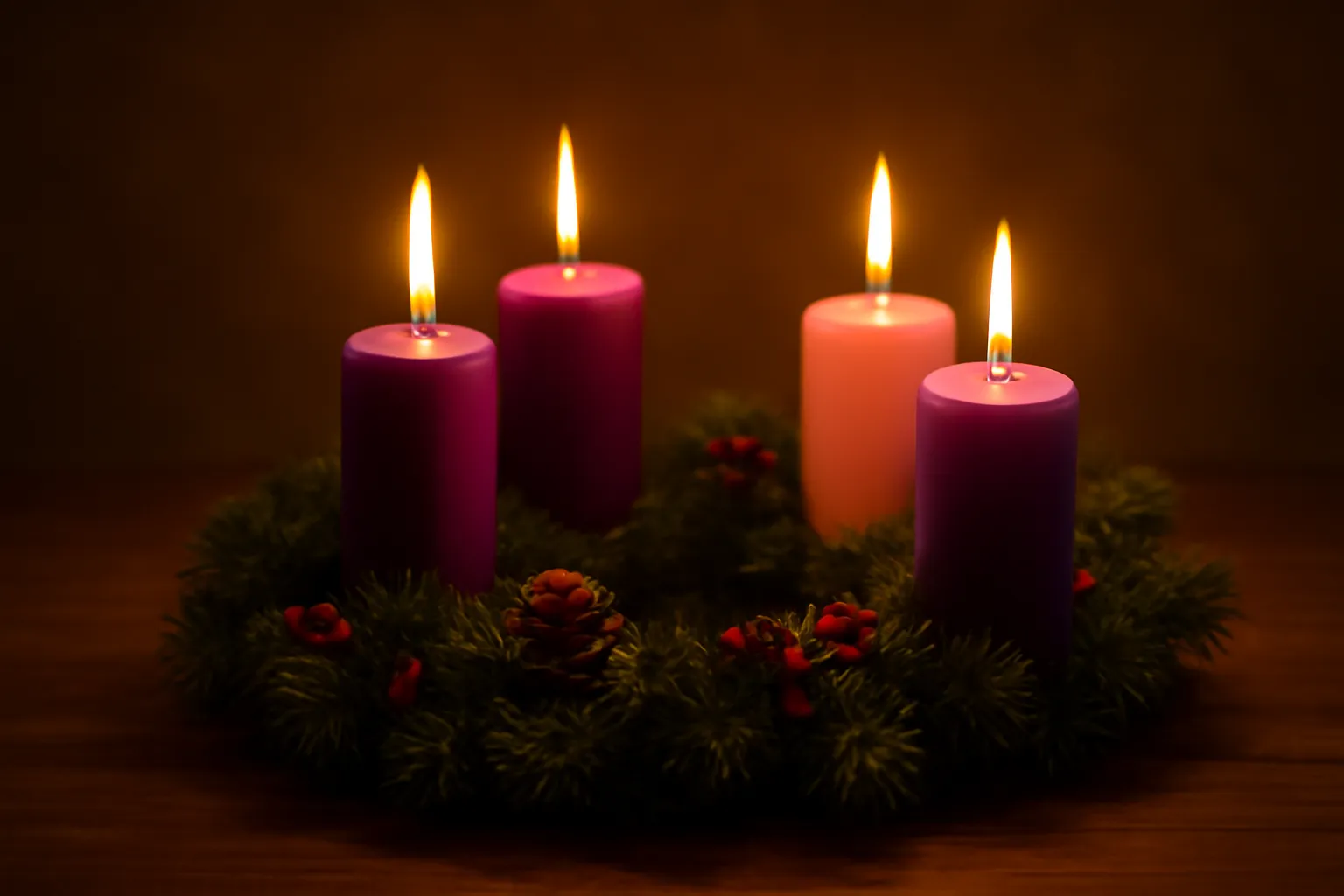
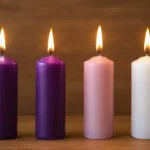
The phrase candle meaning Advent wreath invites a look into a timeless practice that blends symbol, liturgy, and personal reflection. An Advent wreath typically features four candles arranged in a circle, sometimes with a fifth white candle at the center. Each Advent candle carries a message that, over the four weeks of Advent, builds toward the celebration of Christmas. The candles are more than decorative lights; they are a language of anticipation, hope, and renewal that invites families, churches, and individuals to pause, reflect, and prepare for the coming light that Christmas signifies. In this article we explore the symbolism of the Advent candles, the symbolism of the wreath itself, the history behind the practice, and practical ways to engage with this meaningful tradition in contemporary life.
The Advent wreath as a symbol of waiting and preparation
At its core, the Advent wreath represents a circular eternity and the never-ending hope of God’s promises. The evergreen branches that form the ring symbolize enduring life, resilience, and the ongoing nature of faith. The circle has no beginning and no end, much like the divine love that Advent seeks to reveal in the birth of Christ. The lighting of candles over the Sundays of Advent marks progress through a season of expectant waiting, a rhythm that mirrors the way many people pace their lives with meaningful rituals rather than rushing toward a climate of consumerism. When we speak of the symbolism of the Advent candles, we are also speaking about the rhythm of light and shadow—the way each week brings a new brightness into a household or a worship space, and how the cumulative light culminates on Christmas Eve or Christmas Day.
The four Advent candles: meanings and themes
In most traditional Advent wreaths, four candles are placed around the ring. Each candle has a specific meaning tied to biblical themes, biblical prophecies, and the Christian story of salvation. The sequence typically follows a progressive lighting throughout the Sundays of Advent, with a focus on anticipation that grows stronger as Christmas approaches. The following sections describe each candle’s symbolic charge, as well as how different traditions understand and emphasize these meanings.
First candle: Hope — the expectation of redemption
The first Advent candle is commonly associated with hope, often described as the candle of prophecy or expectation. In biblical terms, this week invites us to remember the promises of God that sustained ancient Israel as they waited for the Messiah. The idea of hope in the Advent context is not merely wishful thinking; it is a resolute confidence that God’s faithfulness will be fulfilled in due time. This candle’s glow invites people to reflect on the ways in which hope anchors life amid uncertainty, loss, or hardship. For many households, the lighting of the first flame is a way to name personal or communal hopes—whether it is for peace in a troubled region, healing in a family, or a new sense of purpose in daily routines.
Hope as proactive waiting: The candle embodies the readiness to receive what is promised, not passive resignation.
Prophetic anticipation: It recalls the prophetic messages that prepared people for a coming Messiah.
Personal applications: Families may write or recite a line of hope, such as a prayer for someone in need or a wish for personal growth in the year ahead.
Second candle: Peace — the breaking of division
The second Advent candle is commonly linked to peace, sometimes described as the candle of peace or the message of reconciliation. In many traditions, peace is not merely the absence of conflict but the presence of right relationships—between people, nations, and within one’s own heart. Advent calls believers to consider how violence, division, and fear distort community and hinder the flourishing of life. The flame of the second candle invites a posture of peace-making, inviting individuals to become agents of reconciliation in their households, neighborhoods, and workplaces. Lighting this candle can include readings about peacemaking, prayers for those affected by conflict, or commitments to acts of kindness and listening across differences.
Peace as active care: It invites concrete actions toward harmony, such as listening more deeply to others’ stories or supporting those who are marginalized.
Reconciliation in practice: The candle calls for turning away from suspicion and toward trust-building conversations.
Communal impact: Churches and families may incorporate prayers for global peace or community healing during this week.
Third candle: Joy — the gladness of the season
The third Advent candle, often pink or rose-colored in many Western liturgical calendars, represents joy and the mid-season shift known as Gaudete Sunday in the Catholic tradition. The term gaudete means “rejoice,” signaling a lighter mood amid the expectant gravity of Advent. Joy here is more than happiness; it is a confident gladness rooted in the understanding that God’s promises are near. Joy acknowledges the sweet relief of hope while remaining mindful of the waiting still ahead. For families and congregations, lighting the third candle is a moment to celebrate the ways in which life and faith are already touched by grace, even as the Advent journey continues toward Christmas.
Joy as celebratory anticipation: This week invites expressions of gratitude, singing, and shared meals that mark the progress of Advent.
Pink to symbolize anticipation: The color variation signals a shift in mood from penitential to celebratory, without losing sight of the season’s seriousness.
Liturgical texture: Some communities pair joyful readings with hopeful prophecies, creating a layered tapestry of meaning.
Fourth candle: Love — the arrival of divine love in a human form
The fourth Advent candle is often linked to love, closing the arc with a focus on the greatest gift in the Christian narrative—the Incarnation itself. Love, in Advent, is not merely sentimental; it is costly, transforming, and outward-looking. The light from this candle points toward the humble manger and the shepherds, reminding believers that love moves toward the world to redeem it. Lighting this candle invites contemplation of how love is shown through acts of mercy, generosity, and service. It is a call to embody the love that is promised in the coming of Christ, letting that love shape daily decisions and relationships.
Love as self-giving: The fourth flame invites acts of service, hospitality, and kindness toward those who are overlooked.
Community embodiment: Families might share a service project or a simple act of neighborliness as part of the weekly ritual.
Preparation for Christmas: As Advent nears its end, love becomes a guiding light for how to greet Christmas with generosity and compassion.
The central candle: the Christ Candle
Many Advent wreaths include a fifth candle, the Christ Candle, placed at the center. This white candle is lit on Christmas Eve or Christmas Day in some traditions. The Christ Candle symbolizes the incarnation—the moment when divine light enters the world in human form. It represents the fulfillment of the Advent journey, when the long-awaited light shines in fullness. In some practice traditions, the Christ Candle is lit last, serving as a culmination to the season’s themes of hope, peace, joy, and love, and inviting believers to leave the season with a renewed sense of purpose and a commitment to living out the gospel in their daily lives.
Incarnation and light: The central flame marks the moment when the coming of Christ becomes visible to all.
Unity of the themes: The Christ Candle ties together the prior four themes, showing how hope, peace, joy, and love intersect in the person of Jesus.
Liturgical culmination: For many communities, Christmas Eve services place special emphasis on the Christ Candle as the Advent season closes.
Color symbolism and variations across traditions
The colors used for Advent candles carry symbolic weight in many Christian traditions. The most common palette includes purple (or blue), pink, and white (for the center candle). Here is what these colors traditionally signify and why they matter for the Advent candle meanings:
Purple or blue: Often associated with penitence, preparation, and royalty. The color underscores the sense of awaiting a royal arrival and invites introspection and reform.
Pink or rose: Signifies joy and Gaudete Sunday, the third Sunday of Advent. The color acknowledges a shift from waiting to hopeful celebration.
White: Used for the Christ Candle, highlighting purity, light, and triumph. It signals fulfillment and the divine nature of the coming incarnation.
In some churches or family traditions, additional color symbolism may appear, such as gold accents or variations in the shade of purple to differentiate dialectical or regional practices. The essential idea remains consistent: the Advent candle colors help communicators and participants connect with the distinct facets of the season—preparation, longing for peace, the gladdening of joy, and the gift of love in Christ.
The wreath itself: evergreen, circle, and cultural resonance
Beyond the candles, the Advent wreath’s design communicates another layer of meaning. The evergreen boughs that form the circle are a universal symbol of enduring life and resilience. In the darkest weeks of winter in many northern cultures, evergreens stand as a sign that life persists even in the cold, a visual reminder of hope that holds steady through hardship. The circular shape itself is a powerful theological symbol: eternity, unity, and the unbroken rhythm of God’s promises. The wreath integrates multiple meanings into one compact object—light in darkness, life in winter, and the promise of redemption shining toward a brighter dawn.
Evergreen branches: Symbolize perpetual life and the resilience of faith through hardship.
The circle’s continuity: Represents God’s everlasting covenant and the ongoing story of salvation.
Physical embodiment of waiting: The wreath invites people to participate in a seasonal rhythm that culminates in joy and arrival.
Historical roots: where Advent wreaths began
The Advent wreath is a relatively modern devotional object with roots in Germany in the 19th century. It is widely believed that the practice originated with Protestant communities, particularly among Lutherans, though there were parallel and overlapping practices in other branches of Christianity. The popular narrative credits Heinrich Wichern, a 19th-century German education reformer and founder of the Hamburg Mission, with developing a version of the wreath that featured a large wooden wagon wheel and 20 small candles—one for each day of Advent. This earlier form emphasized daily lighting and contemplation leading up to Christmas. Over time, European and North American churches adapted the idea into the four-candle Advent wreath that has become common in many congregations and homes around the world today.
Origins in catechesis: The wreath served as a visual catechism, teaching children and adults the sequence of Advent themes.
From wheel to ring: The original wheel gave way to a circular wreath with evergreen boughs, making the symbol more compact and accessible for households and small groups.
Global diffusion: As Christianity spread globally, the Advent wreath was adapted to fit different liturgical calendars and cultural expressions.
Different Christian traditions illuminate Advent with varied practices, yet they share a common purpose: to prepare hearts and communities for Christmas. The ritual act of lighting the candles—often on the four Sundays preceding Christmas—serves as a weekly reminder to slow down and attend to spiritual themes. Here are some common approaches across denominations:
Lutheran and Anglican/Episcopal: Emphasize liturgical readings, sung hymns, and a sense of penitence as the season begins, often with the color purple for most candles and pink for Gaudete Sunday.
Catholic: In Catholic parishes, Advent is a season of preparation that may include a Verging through the Liturgy of the Hours, Advent masses, and blessings of the wreath. The Christ Candle is lit on Christmas Eve in many communities.
Orthodox and other traditions: Some Eastern Christian communities have similar wreaths or lamp traditions, though the exact ritual may differ. The core idea of awaiting and preparing remains central.
In contemporary settings—both church and home—people can adapt the practice to fit their needs. Some families light the candles during a family meal, others during a worship service, and still others as a quiet morning routine. The core practice is deliberate lighting paired with readings, prayers, or reflections that connect the candle meanings to daily life.
Variations and modern adaptations of the Advent wreath
While the four-candle structure is common, many households and churches experiment with variations to fit their space, culture, or creative expression. Here are notable adaptations you might encounter:
Five-candle arrangements: The central Christ Candle in white is lit in addition to the four traditional Advent candles. Some traditions reserve the Christ Candle lighting for Christmas Eve or Christmas Day.
Color variants: In some churches, blue is used instead of purple to reflect a particular regional or theological emphasis on hope and expectation.
Non-traditional shapes: Some modern wreaths are oval or square to fit spaces like coffee tables, classroom desks, or entryways, while still preserving the four candles and a central white flame.
No-candle options with LED or battery lights: For safety or accessibility, LED candles or battery-powered lights can substitute for real flames, preserving the symbolic rhythm without the danger of open flame.
Outdoor or large-scale versions: In outdoor church yards or community spaces, larger wreaths or processional wreaths with more robust mounting are used to accommodate crowds and weather conditions.
Regardless of the format, the purpose remains the same: to guide participants through a process of waiting, reflection, and celebration as Christmas draws near.
Practical guidance: making or renewing your Advent wreath at home
Constructing an Advent wreath at home can be a meaningful family project or a peaceful solo practice. Here is a practical guide to help you create a wreath that reflects your own spiritual journey and aesthetic preferences. It is possible to make a simple, inexpensive design or to craft a more elaborate, ceremonial arrangement.
Materials you might need
Base ring or sturdy foam ring or a prepared wreath form
Evergreen boughs (real or artificial): fir, pine, holly, or a mix
Four (or five) candles: typically purple or blue for the first four, pink for Gaudete Sunday, and white for the Christ Candle if used
Wreath picks or candle cups or holders to keep candles upright
Floral wire or hot glue (if needed for securing elements)
Ribbon, pinecones, berries, dried oranges, or other natural decorations (optional)
Fire safety supplies: a candle snuffer, baking soda or a bucket of water nearby
Step-by-step assembly
Prepare the base: If you’re using a foam ring, soak it briefly to reduce its tendency to crumble and to help it hold water if you intend to light real candles regularly.
Arrange the greens: Wind evergreen branches around the ring to create a dense, lush base. Use floral wire or pins to secure them in place.
Place the candles: Position four holders evenly around the ring at equal distances. If using a central Christ Candle, place it in the middle, with a separate holder or a secure mount.
Secure the candles: Ensure each candle is upright and stable. If you’re using real candles, consider a non-flammable holder and keep a safe distance from the greens and decorations.
Add decorative elements: Accent with pinecones, holly berries, dried citrus slices, or ribbons, being mindful not to crowd the flames and ensuring nothing weighs down the candles.
Light and reflect: On the first Sunday of Advent, light the first candle; on subsequent Sundays, light one more candle as prescribed by your tradition. When using the Christ Candle, light it last to mark the conclusion of the season’s journey.
When lighting a real Advent wreath at home, safety should be a priority. Here are some practical safety notes:
Never leave lit candles unattended and keep them away from children and pets.
Use sturdy holders and place the wreath on a heat-resistant surface.
Avoid overcrowding the wreath with flammable decorations near the flames.
Have a plan in case of fire: keep a fire extinguisher or water nearby and blow out candles if you will leave the room for an extended period.
Consider LED alternatives for regular family use or in spaces where open flames present risk, while preserving the ritual lighting through safe artificial candles.
How Advent candle meaning translates into daily life
Beyond liturgical readings and church services, the symbolism of the Advent candles can influence daily life in tangible ways. Here are several approaches to help you translate the Advent candle meanings—hope, peace, joy, and love—into concrete actions and practices during the season.
Hope in action: Identify a personal or community need and offer a specific form of help, whether volunteering, writing a note of encouragement, or supporting a neighbor in crisis.
Peace through listening: Practice listening more than speaking in conversations, especially with someone who holds a different perspective. Seek misunderstanding or conflict resolution with patience.
Joy through gratitude: Keep a daily gratitude journal or share moments of joy with loved ones—small wins, acts of kindness, or simple pleasures.
Love as service: Choose one meaningful act of service each week, such as cooking a meal for someone in need, offering a listening ear to a friend, or contributing to a local charity.
In addition to personal practice, congregations often use Advent candle symbolism to structure sermons, Bible studies, and devotional guides. The ongoing lighting cycle becomes a spiritual discipline that helps people orient their schedules, family life, and charitable giving toward the Christmas narrative’s themes. The intention is not merely to observe a tradition, but to let the candle meanings illuminate choices, relationships, and communities in the weeks leading up to Christmas.
Frequently asked questions about Advent wreath candles
Why are Advent candles purple or blue? Purple or blue has long been associated with penitence, preparation, and royal expectation. These colors connect the wreath to a broader liturgical calendar that emphasizes reverence and anticipation.
What is the significance of lighting a pink candle? The pink (or rose) candle marks Gaudete Sunday, a day of rejoicing in the middle of Advent as the season turns toward celebration while still awaiting Christmas.
Is a Christ Candle always used? Not every tradition uses a Christ Candle, but many do. When present, the Christ Candle represents the Incarnation and is typically lit on Christmas Eve or Christmas Day.
Can I replace real candles with LED candles? Yes, LED candles are a safe alternative, especially for homes with young children or pets. Many LED options replicate the ambiance of real flames while reducing risk.
What if I have a small space? A compact wreath with four candles or a tabletop version can be designed to fit a desk, kitchen table, or small entryway. You can also use LED options or a simple single-branch arrangement with a small central candle.
Integrating the Advent candle tradition into different spaces
The beauty of the Advent wreath lies in its flexibility. Churches, classrooms, and homes can adapt the practice to fit their space, rhythm, and culture. In a church setting, the wreath might be placed near the lectern or pulpit, with weekly readings and hymns guiding the congregation’s reflection. In classrooms, the wreath can become a teaching tool—connecting the themes of hope, peace, joy, and love to literary texts, social studies projects, and service activities. At home, the wreath becomes a family ritual, a shared time for lighting candles, reading Scripture, reciting prayers, or sharing a moment of gratitude before meals or bedtime. The candle meaning Advent wreath in these contexts remains centered on anticipation and a turning toward the light that Christmas represents.
Conclusion: keeping the Advent candle meaning relevant today
In a world that often moves quickly through holiday commemoration, the Advent wreath with its symbolic candles offers a deliberate pause. The candle meaning Advent wreath invites people to name their hopes, seek peace amid division, celebrate the nascent joy of the season, and respond to love with acts of mercy and generosity. The circular form and the evergreen boughs remind us that faith is a living, enduring process—one that loops back to the core story every year, inviting renewal and deeper resonance with the Christmas narrative. Whether you are part of a formal church tradition or you are cultivating your own home practice, the Advent candles provide a tangible way to walk the weeks leading to Christmas with intention, community, and light.
As you consider the symbolism of Advent candles, you may also reflect on how light functions in your life: what it reveals, what it hides, and how it sustains you through darkness. The Advent wreath thus becomes not just an object of beauty or a devotional habit, but a yearly reminder that even in the darkest days, there is a longing for and a coming of light—and that this light has a name.

 Por Laura Jara