Advent candles meaning Catholic: Symbols, Traditions, and History — an in-depth exploration of how Catholic communities understand, celebrate, and teach the meaning of the Advent candles. In Catholic practice, the advent candles carry layers of symbol, devotion, and communal identity that connect scripture, liturgy, and everyday faith. This article surveys the rich world behind the Advent wreath, the colors and candles, and the customs that help families and parishes prepare their hearts for Christmas.
What are Advent candles in the Catholic tradition?
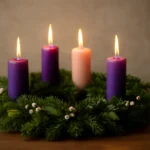
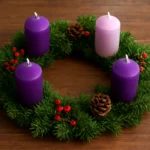
In Catholic life, the term Advent candles meaning Catholic describes a devotional practice centered on an Advent wreath, typically consisting of evergreen branches arranged in a circle with four candles. Each candle represents a week of Advent, the season of expectant waiting for the coming of Christ. While the essentials are shared with many Christian traditions, the Catholic understanding emphasizes liturgical symbolism, communal worship, and family prayer that accompany the lighting of the candles.
Historically, the practice blends devotion to Scripture, sacramental life, and popular piety. The ceremony is often joined by prayers, readings from the Bible, and reflections on themes like hope, preparation, joy, and peace. When Catholics speak of the meaning of Advent candles, they point to a layered message: the candles illuminate the spiritual darkness with divine light, the wreath encircles the life of the Church in unity, and the rhythm of lighting mirrors the rhythm of the liturgical year.
The language of the Advent wreath is itself symbolic: evergreen branches signify eternal life in Christ, while the circle denotes God’s infinite and unending love. The act of lighting candles in succession invites believers into prayerful anticipation, turning domestic space into a small, contemplative sanctuary. This home practice complements parish life, catechesis, and the catechumenate, reinforcing Catholic teachings about Christ’s first coming and the expectation of his second coming.
Symbols behind the Advent candles
In Catholic spirituality, the advent candles symbolize more than light. They embody the core messages of the season and the arc of salvation history. The symbolism can be organized around several key ideas that are common to Catholic teaching and devotional life.
The four weeks, four candles, and the Christ candle
Week one candle: usually purple and symbolizes hope and preparation. It invites believers to await the coming of the Messiah with hopeful expectation.
Week two candle: also often purple, continuing the theme of preparation and longing for God’s deliverance.
Week three candle: traditionally a pink (rose) candle, representing joy as the Church approaches Christmas with a lighter mood amid penitential Advent.
Week four candle: returns to purple and culminates in the closer approach to Christmas, heightening the sense of anticipation.
In some Catholic homes and parishes, a fifth, central candle—the Christ candle—is placed in the center and lit on Christmas Eve or Christmas Day. This white candle is not universally present in every Catholic Advent wreath, but where it appears, it stands for the Incarnation—God becoming human in Jesus Christ. The lighting of this central candle marks the fulfillment of Advent and the beginning of Christmas. In Catholic teaching, the Christ candle embodies the mystery of God’s Word taking flesh among us, a pivotal theme of the season.
Colors and their meanings
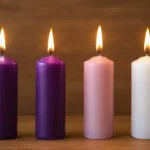
Purple (violet): signifies penitence, prayer, and preparation. It is the primary color of Advent in many Catholic contexts, echoing the season’s penitential character as believers prepare to receive the Lord.
Rose (pink): signals joy and a moment of relief midway through Advent, typically on Gaudete Sunday (the third Sunday of Advent). The rose candle acknowledges a shift from solemn preparation to a more hopeful and joyful anticipation.
White (center candle, when present): stands for Christ, the Light of the World, and the culmination of the Advent journey in the coming of Christ at Christmas.
The evergreen wreath around the candles is a sign of eternal life in Christ and God’s unending love.
The circle of the wreath echoes the eternal nature of God, who has no beginning and no end.
Lighting the candles over successive weeks mirrors the progressive revelation of God’s plan in the Scriptures—from the prophets to the coming of the Messiah in the Gospel narratives.
Traditions surrounding Catholic Advent candles
The Catholic community embraces a variety of customs that enhance the meaning of Advent candles. These traditions emphasize family prayer, parish devotion, catechesis, and a communal sense of preparation for Christmas.
Weekly lighting and accompanying prayers
Each Sunday in Advent, families light one additional candle and recite prayers that reflect the themes for that week: hope, preparation, joy, and peace.
The prayers often include readings from Scripture and short reflections on the Gospel passages or the lives of saints who exemplify Advent virtues, such as faith, humility, and charity.
Liturgy and parish life
Parishes may bless the Advent wreath during a prayer service, inviting parishioners to participate in the renewal of their devotion during the season.
In some communities, schools or catechetical programs use Advent wreaths as a teaching tool to explain the season’s meaning to children and young adults.
Advent processions or light-centered processions may accompany the lighting of the candles, linking the home practice to the larger liturgical life of the Church.
Family and cultural variations
Families differ in how they arrange their wreaths, how many candles they light, and which prayers they use. Some households place the wreath on a table, while others hang it near a window or on a wall as a visible sign of faith.
In some cultures, additional family devotions include readings from the life of Mary and Joseph, reflecting on their journey to Bethlehem and the trust they placed in God’s plan.
Some Catholic homes include small embellishments or nativity scenes around the wreath, forming a visual narrative that complements the candles’ symbolism.
History of Advent candles in Catholic practice
The history of Advent candles in Catholic life straddles liturgical innovation, popular piety, and the broader Christian tradition of Advent devotion. While the Advent wreath originated outside the Catholic Church, Catholic communities eventually embraced and integrated it into their own practice, enriching both family life and parish devotion.
Origins: the Advent wreath’s roots in the broader Christian world
The practice of using an evergreen wreath with lights or candles to mark the Advent season is widely associated with German Christian communities in the 19th century. A notable figure often cited in the origin story is Johann Hinrich Wichern, a Protestant missionary who in 1839 established the Rauhes Haus home for orphans in Hamburg. He used a large wooden wreath with a great number of lights to teach children about the 24 days of Advent and the coming Christmas feast. This Advent wreath, with its therapeutic blend of light and expectancy, proved powerful as a devotional tool, and the idea spread through the German-speaking world and beyond.
From the Protestant and popular piety to Catholic adoption
Across Christian traditions, the basic concept—preparation for Christmas through light and prayer—found receptive audiences among Catholic families and parishes. The Catholic Church does not mandate a single form of Advent devotion, but it warmly accepts and fosters practices that help the faithfulobserve the liturgical season. In the late 19th and early 20th centuries, Catholic communities began using the Advent wreath in homes, schools, and parishes, adapting the form to Catholic liturgical norms. The colors, the sequential lighting, and the devotions were harmonized with the Church’s catechesis and liturgy.
The mid-20th century brought renewed attention to lay devotion in Catholic life, particularly after the Second Vatican Council (1962–1965). The Council encouraged active participation of the laity in the life of the Church and in family prayer. As a result, the Advent wreath and its candles gained popularity as accessible, meaningful signs of the season in homes and parish communities. Catholic liturgists and catechetical materials from the post-conciliar era commonly present the Advent wreath as a practical and symbolic aid to prayer, study, and celebration.
Today, Catholic parishes and families may vary in their exact configuration, but the core meaning remains consistent: the Advent candles signal a pilgrimage of faith toward Christmas. The practice has become a familiar feature of Catholic home devotion, school activities, and parish catechesis. Some communities emphasize the sacramental dimension of light—Christ as the Light of the World—while others focus on the scriptural themes of hope, preparation, joy, and peace. The flexibility of the tradition allows for culturally diverse expressions while preserving the essential Catholic message: God’s promises are fulfilled in the coming of Jesus, and believers are invited to respond in faith, hope, and love.
Liturgical context: colors, readings, and prayer life
The Advent candles in Catholic practice sit within a broader liturgical framework that shapes how the season is perceived and lived out. The colors, prayers, and scriptural readings reinforce a coherent spiritual message that aligns with Catholic doctrine and pastoral practice.
Liturgy and color symbolism
Purple (violet) is the dominant instrumental color during Advent in many Catholic communities. It signals penitence, prayer, and preparation. The shift in tone from ordinary time to Advent is reflected in the color usage, reminding the faithful to turn their hearts toward God and to prepare for the mystery of the Incarnation.
Rose (pink) is used on Gaudete Sunday, the third Sunday of Advent. This color marks a brief respite in the season’s penitential character, a moment of joy in the midst of waiting. It invites worshipers to rejoice in the approach of Christ’s coming.
The occasional use of white for a central Christ candle, when present, introduces a festive dimension that culminates in Christmas, highlighting the radiant reality of the Incarnation.
Scripture readings and devotional focus
Weekly Advent themes find biblical articulation in the readings assigned to the Sunday Masses. The themes often center on prophecy and anticipation (Old Testament), fulfillment in Christ (Gospels), and guidance for living as people of light in the world (Epistles and prayers).
In the home, families may pair the candle-lighting with short Bible passages that correspond to the week’s theme. For example, readings about the hope of the Messiah, the call to repentance, or the joy that accompanies God’s promises can anchor the reflections accompanying each candle’s lighting.
Prayers and devotions commonly associated with Advent candles
Prayers for hope, patience, and conversion align with the Advent spirit and reinforce a Catholic understanding of repentance as a path toward greater fidelity to God.
Marian devotion is often interwoven with Advent practices, given Mary’s role in the Incarnation and the Church’s celebration of the Nativity.
Simple liturgical responses, such as brief collects or antiphons, are sometimes used to accompany the lighting, reinforcing the sense of belonging to the universal Church while maintaining the intimate home devotion.
Practical guide: using Advent candles in Catholic homes and parishes
For Catholics seeking to enrich their season, here is a practical guide to using Advent candles in a way that respects liturgical norms, nurtures family faith, and honors parish life.
Setting up the Advent wreath or centerpiece
Choose a sturdy wreath base, preferably evergreen, that can safely hold candles and resist moisture or tipping.
Arrange four candles around the wreath, with a central Christ candle if desired. In many Catholic homes, the outer four candles are purple and occasionally the third is rose for Gaudete Sunday.
Place the wreath in a location where family members can gather for prayer, ideally in a visible spot shared by the home’s daily life and by guests who visit during the season.
Sample sequence for lighting and prayer
Week 1: Light the first purple candle and offer a short prayer about hope and preparation for the coming of Christ.
Week 2: Light the second purple candle, with a prayer focusing on faith and readiness for God’s mystery to unfold in our lives.
Week 3: Light the rose candle, accompanied by a prayer of joy as the Church recognizes the nearness of Christmas and the Incarnation.
Week 4: Light the final purple candle, with a prayer that acknowledges the final phase of waiting and the expectation of Christ’s birth.
Optionally, on Christmas Eve or Christmas Day, light the Christ candle in the center, accompanied by a festive blessing and gratitude for the Word becoming flesh.
Use short Catholic prayers that reflect the weekly themes—hope, preparation, joy, and peace. Adapt them to family needs, ages, and languages, ensuring that children and adults can participate meaningfully.
Read a brief scriptural passage relevant to the week’s theme. For example, verses from Isaiah or Luke that anticipate the Messiah can help connect the candle’s lighting to Christ’s Advent narrative.
Include a family reflection or a small act of service, such as writing postcards of encouragement to those in need or performing a small charitable gesture that embodies the Advent spirit.
Safety, accessibility, and inclusivity
Place candles on a heat-resistant surface away from curtains, papers, or flammable decorations. Never leave burning candles unattended, and keep them out of reach of small children.
Consider LED or battery-operated candles as a safe alternative for households with young children or pets, while preserving the visual rhythm of weekly lighting.
Make the devotion inclusive by inviting grandparents, neighbors, or parishioners to participate in family prayers or to share a short reflection about what Advent means in their lives.
Common questions and clarifications about Advent candles meaning Catholic
Many readers seek clarity about how Advent candles fit into Catholic worship and daily life. Here are some frequently asked questions and straightforward answers that reflect Catholic teaching and practice.
Is the Advent wreath a Catholic invention?
The Advent wreath originated in German Protestant circles in the 19th century, with Wichern and his charity work. Catholics adopted the practice and adapted it to Catholic pedagogy and liturgical life. So, while the Advent wreath is not exclusively a Catholic invention, it has become a widely accepted and meaningful part of Catholic homes and parishes worldwide.
Why are the candles purple and a rose used on Gaudete Sunday?
Purple is the liturgical color of Advent in many Catholic settings, symbolizing penitence and preparation. The rose candle, used on Gaudete Sunday, signals a temporary shift toward joy—the liturgical mood lightens as Christmas nears. This color symbolism is consistent with Catholic liturgical norms and helps the faithful mark the season’s progression.
What about a central Christ candle?
A central Christ candle (white) is not mandatory in Catholic Advent wreaths, but when present, it emphasizes the Incarnation and the fulfillment of Advent’s waiting. Parishes and families can choose whether to include it based on their tradition and space, always keeping the sacred meaning in view.
How does Advent candles meaning Catholic connect to Scripture?
The candles illuminate the journey described in Scripture: the prophetic hope of the Old Testament, the annunciation and birth narratives in the Gospels, and the call to conversion and light in the Epistles. Catholics see the candles as a tangible way to walk through the liturgical year, letting the liturgical rhythm of Advent deepen understanding of Christ’s coming and mission.
Conclusion: Advent candles and Catholic faith in daily life
For Catholics, the practice of lighting Advent candles grows out of a long tradition of liturgy, devotion, and catechesis. The symbolic meaning of Advent candles in Catholic life encompasses a spectrum of truths: Christ as Light coming into darkness, the Church as a community that waits together, and the heart’s transformation that accompanies genuine preparation for Christmas. Whether observed in a quiet family home, a parish sanctuary, a school setting, or a community group, the Advent wreath remains a powerful sign of hope, mercy, and the Advent call to holiness.
In a world that often moves quickly toward Christmas, the Catholic approach to Advent candles invites believers to slow down, reflect, and pray. The candles’ gentle glow—one by one with each week—reminds Catholics that faith grows through patient preparation, shared worship, and acts of love for neighbor. By embracing the symbols, traditions, and history of Advent candles meaning Catholic, individuals and communities can cultivate a climate of expectation that is both reverent and transformative, leading to a fuller celebration of the Nativity and a more attentive life of faith throughout the year.

 Por Laura Jara