Choosing the right bible box or scripture box is an important step in protecting a cherished book for generations. Whether you are safeguarding a family heirloom, a modern study Bible, or a rare archival edition, the container you select can influence long-term preservation as much as the care you give the pages themselves. This guide explores the options, features, and practical steps you need to know to pick the best bible storage box for safe, respectful, and lasting preservation.
A dedicated Bible box is more than a decorative container. It acts as a controlled environment that minimizes conditions known to cause deterioration, such as fluctuating humidity, UV light, dust and pests, and the acids found in some common packing materials. The right Bible container helps maintain the integrity of ink, paper, leather bindings, and parchment by slowing chemical reactions, reducing abrasion, and limiting exposure to damaging elements. In many circles, a high-quality scripture box is part of responsible library care and personal stewardship of sacred texts.
Types of Bible boxes and containers
There are several broad categories of containers that people use to store Bibles and other sacred scriptures. Each type has advantages and trade-offs depending on your priorities—cost, aesthetics, portability, and environmental control. Here are the main varieties you will encounter.
Wooden Bible box
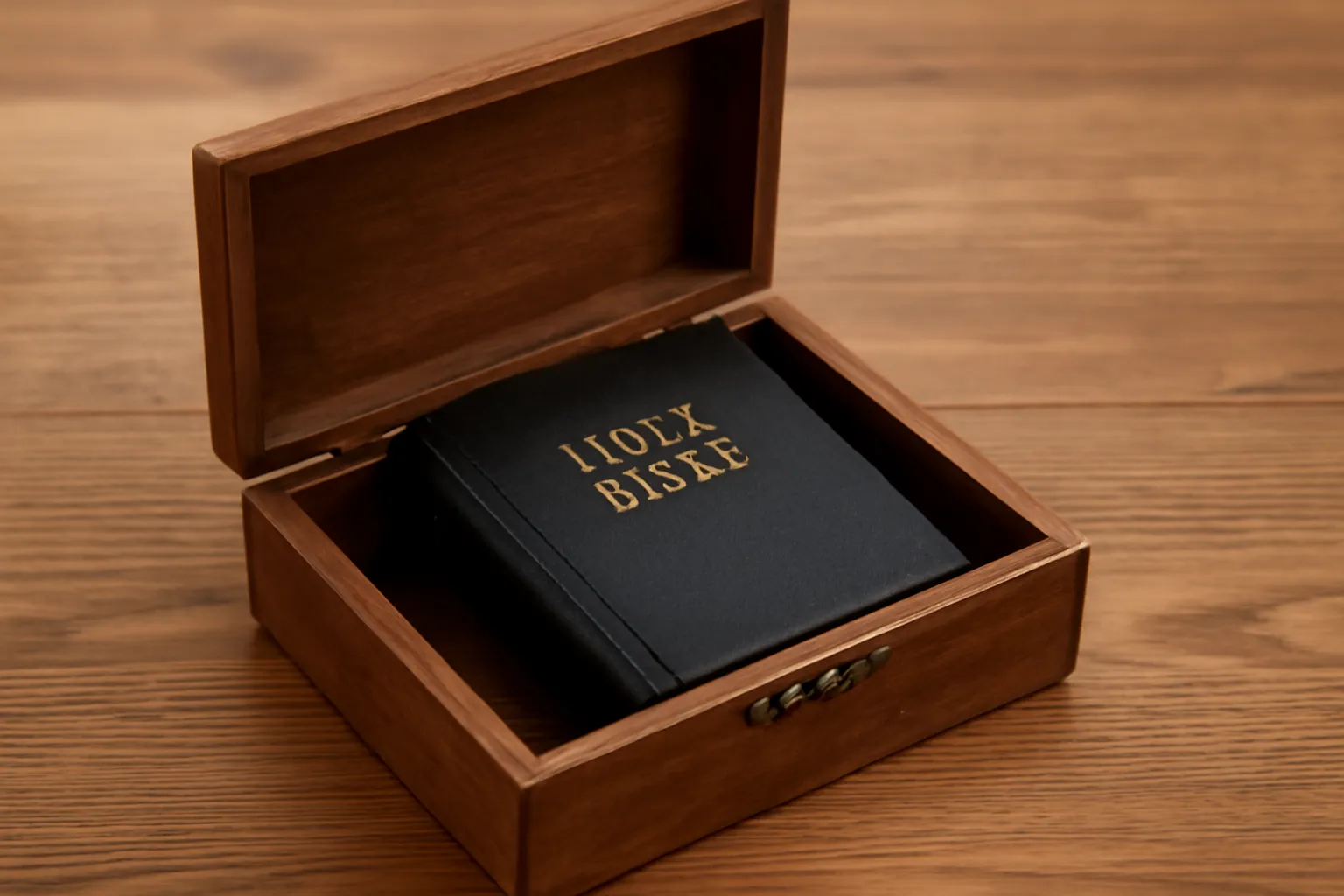
A wooden Bible box or bible storage chest is a traditional choice. Wood offers natural insulation, a warm appearance, and a sense of permanence. Options range from plain, unfinished pine or oak to richly carved or veneered pieces. When choosing a wooden box, consider:
Wood type and finish: Hardwoods with tight grain (oak, maple, cherry) tend to be more durable and less prone to warping with humidity shifts. Look for boxes with a stable finish that resists staining and is not prone to peeling or cracking.
Interior lining: A soft, pH-neutral lining (often felt, cork, or cotton) can cushion the Bible and protect leather bindings. Avoid linings that shed fibers or shed tannins.
Seal and ventilation: Some wooden boxes have a simple seal or gasket, which can help reduce dust intrusion but may complicate future opening for inspection. Decide if you need a tight seal or a more breathable design.
Weight and durability: A heavy, well-constructed box is less susceptible to tipping and physical damage, but it may be less portable for travel.
Metal Bible box
Metal Bible boxes—often steel or aluminum—offer excellent durability and a high level of security. They can be rust-resistant and feature strong hinges. Considerations include:
Finish and corrosion resistance: Powder-coated or anodized finishes resist corrosion better in humid environments.
Seals and gaskets: Metal boxes may incorporate seals that protect against dust and moisture, but ensure they don’t trap moisture inside.
Locking options: A lockable box can add security for valuable or fragile editions, but ensure you have a key management plan.
Plastic or composite storage boxes
Plastic or composite options are often lightweight and affordable. They can be ideal for travel or temporary storage, but they require careful material choice to avoid acid migration or chemical off-gassing. Key points include:
Acid-free interiors: Look for boxes with acid-free liners or compatible inserts to minimize chemical transfer.
UV barriers: Some plastics offer UV-blocking properties; avoid translucent plastics that let light through.
Temperature stability: Plastics can deform with heat; ensure the box is rated for the environment where it will be stored.
Travel and portable Bible boxes
For readers who transport Bibles to services, seminars, or study groups, portable scripture boxes provide a balance of protection and mobility. Look for:
Secure closures (elastics, clasps, or sturdy latches) to prevent accidental opening.
Lightweight materials combined with adequate padding to cushion the book during movement.
Compact internal dimensions that leave room for notes or accompanying items without forcing the Bible to press against hard edges.
Some collectors or churches opt for custom-made boxes that match a particular aesthetic or fit a specific Bible size. Custom options may include inlays, carved motifs, or leather-wrapped exteriors. When commissioning a decorative or ceremonial bible chest, ensure that functional preservation considerations remain central:
Archival-grade materials inside and out to resist acidic transfer.
Appropriate interior padding to cradle the Bible without constraining it.
Documentation space for notes, dates, or provenance that can accompany the Bible through future generations.
Key features to look for when choosing a box for safe Bible storage
Beyond the broad category, several features determine how well a bible box will protect a sacred text over time. Here is a practical checklist of elements to evaluate before you buy or commission a container.
Environment and climate control
Humidity control: Relative humidity (RH) affects paper stability. A box with minimal humidity fluctuations or an integrated desiccant system can help maintain a stable environment. Ideal RH for most paper-based texts sits roughly in the 30–50% range, with the exact target depending on the Bible’s materials and bindings.
Temperature stability: Avoid boxes that trap heat or expose the Bible to temperature swings. A room with consistent ambient temperature is preferable; the storage box should not become a heat trap.
Moisture barriers: Lidded or gasketed lids, and moisture-impermeable interiors, reduce the risk of condensation forming inside the box during rapid ambient changes.
Light exposure and UV protection
Light-blocking surfaces: UV-absorbing finishes, opaque interiors, or coverings that limit light exposure help prevent fading and embrittlement of inks and bindings.
Light entry considerations: If you display or occasionally open the box, consider models with overlapping lids or interior partitions that limit direct light on the Bible.
Materials and acid control
Acid-free interiors: Lining materials such as acid-free cotton, linen, or chemically stable felt can cushion the Bible without imparting acidity that harms page edges.
Low-lignin components: Lignin in wood-based interiors or fillers can contribute to yellowing over time. Seek materials with stabilized lignin content or those explicitly labeled lignin-free.
Breathability vs. seal: A box that breathes slightly can prevent mold in some climates, but it may allow dust ingress. Balance is key for your local conditions.
Security and safety
Locks and access control: If the Bible is irreplaceable or highly valued, a lockable container with a simple, reliable mechanism can be important. Plan for key or code management to avoid losing access.
Shock resistance: Rigid walls and padding reduce mechanical damage from bumps or drops, which can be especially important for large or heavily bound editions.
Pest prevention: Some boxes employ materials that deter insects and rodents; ensure the interior is clean and free of fibers that attract pests.
Size, fit, and adaptability
Dimensions: Measure the Bible’s height, width, and thickness, and add a comfortable margin so it’s not pressed against hard edges. Consider future acquisitions or oversized study Bibles.
Internal configuration: A plain box, a box with a padded tray, or a box with adjustable supports can accommodate a range of Bible sizes and leather types.
Portability needs: If you transport the Bible often, prioritize lighter materials and secure closures without compromising protection.
Maintenance and longevity
Ease of inspection: Boxes with removable liners or easily accessible interiors allow you to check the Bible for signs of moisture or mold.
Repairability: Some wooden or leather-wrapped boxes are repair-friendly, enabling you to replace a lining or reseal the lid without replacing the entire container.
Cleaning compatibility: The interior should be easy to clean gently if dust collects or if you notice a spill. Avoid interiors that degrade with moisture or harsh cleaners.
How to measure your Bible for a perfect box fit
Before purchasing a bible box, you need accurate measurements and a plan for how you intend to store it. Here is a practical approach to ensure a proper fit:
Measure length, width, and thickness: Use a ruler or measuring tape to find the maximum exterior dimensions of the Bible when closed. Include a small clearance (e.g., 0.5 to 1 inch) on each side for padding and easy handling.
Consider spine and curvature: Some Bibles have curved spines or gilded edges that protrude slightly. Note any irregularities that could affect fit.
Assess leather growth and binding: Leather bindings may expand with humidity. Allow a bit more space if you expect seasonal humidity swings.
Account for accessories: If you plan to store bookmarks, notes, or a dust cover with the Bible, measure their combined thickness to ensure the interior has adequate room.
Mock placement: If possible, lay the Bible in an existing box to test ease of insertion and removal. If you don’t have the box yet, use cardboard sleeves or padding to simulate the size and padding needs.
Even with a sturdy bible organizer, careful handling and environmental control are essential. Here are widely recommended practices for long-term preservation:
Internal materials and acid-free care
Acid-free padding and archival-grade interleaving help prevent ink transfer and acid migration to pages.
Non-abrasive supports keep pages from rubbing against rigid edges. Silk, cotton, or museum-grade textiles are often suitable.
Archival desiccants (silica gel or clay-based systems) can control humidity inside the box as part of a broader climate strategy. Use according to manufacturer directions and avoid over-drying the pages.
Handling and routine care
Clean hands: Wash and dry hands before handling to minimize oils and dirt.
Support when handling: When turning pages, support the spine to prevent cracks in bindings, especially for old or fragile editions.
Avoid direct contact with dyes, oils, and chemicals that could stain or degrade page edges.
Storage location and environmental targets
Stable climate: Choose a storage location away from windows, doors, radiators, and places with rapid temperature or humidity swings. A climate-controlled room is ideal.
Light management: Keep Bibles out of direct sunlight and bright artificial light. If you display the box, use low-UV lighting or indirect illumination.
Dust and pests: Use a sealed or gasketed interior, and periodically inspect for signs of pests like insects or rodents. A clean room with regular housekeeping reduces risk.
Handling and display considerations
Limited exposure: Do not open and inspect the Bible too frequently. Periodic checks are enough to monitor condition without increasing risk.
Dusting practices: If needed, gently dust the exterior with a soft, dry brush. Do not dampen the interior or padding.
Special cases: leather, parchment, and rare editions
Leather bindings require humidity control to prevent warping and cracking. Leather should be conditioned by qualified conservators, not at-home oils that can cause staining.
Parchment or vellum pages are especially sensitive to humidity and oil. Boxes for these materials often use tightly controlled humidity and low light to minimize embrittlement.
Rare or antique editions benefit from professional appraisal and, in some cases, archival enclosure by a conservator. A custom, archival-quality Bible box may be warranted for such items.
Practical tips for selecting your Bible box in different contexts
Different readers have different priorities. Here are practical recommendations tailored to common scenarios:
Choose a durable wooden box with a soft interior and a secure lid. This blends traditional aesthetics with solid preservation potential.
Ensure there is adequate extra space for future additions or lids that do not press against the edges of the Bible.
Opt for a simple interior that minimizes chemical exposure and is easy to inspect periodically.
For modern study Bibles and frequent access
A portable scripture box with reliable latches and a compact footprint allows transport between study rooms or places of worship while protecting the Bible during travel.
Incorporate a breathable interior with padding that protects but does not cling to pages during handling.
Consider an interior that can accommodate a few notepads or bookmarks without crowding the Bible.
For libraries, churches, and collections
Invest in a high-quality archival-grade storage box with long-term durability, corrosion-resistant hardware, and a proven track record in preservation contexts.
Ensure the box is compatible with climate-control systems or onsite monitoring equipment for RH and temperature.
Document provenance, condition notes, and storage location to support consistent care across staff or volunteers.
Budgeting and value: what to expect when buying a Bible box
Prices for Bible boxes vary widely based on materials, workmanship, size, and features. Here is a practical framework for budgeting:
Budget-friendly options may include simple plastic or basic wooden boxes without integrated seals. They can be suitable for casual storage but may require additional climate controls elsewhere in the home or library.
Mid-range choices often blend wood or metal with better interiors and more durable lids. They frequently include padded interiors and slightly improved humidity management.
premium selections may feature custom fit interiors, archival-grade materials, sealed climates, locks, and even decorative craftsmanship. For priceless or irreplaceable volumes, investing in a high-quality solution is a prudent choice.
When evaluating value, consider not just the upfront cost but the long-term protection offered. A box that preserves the Bible’s binding, ink, and paper reduces the risk of expensive restoration later. Think of the investment as part of a comprehensive preservation plan that includes proper handling and a stable environment.
Safety, ethics, and best practices for Bible storage
Preserving a Bible responsibly also means considering ethical and safety implications. Here are some guiding principles:
Respect for the sacred text: Treat the Bible with care appropriate to its significance, whether it is a home shelf item or a museum-quality edition.
Consent and provenance: If your box holds a treasured copy with historic or familial significance, document its story and ensure you follow any cultural or communal expectations regarding handling and display.
Maintenance responsibility: Regular checks and proper maintenance plans ensure that future generations have access to the same text in good condition.
Maintenance checklist for Bible storage boxes
Establishing a routine helps protect the Bible and the container. Here is a practical maintenance checklist you can adapt to your circumstances:
Quarterly inspection: Check for signs of damp, mold, pests, or unusual odors. Inspect interior padding and liners for wear.
Humidity control assessment: If you rely on desiccants, replace or recharge them according to the manufacturer’s guidance. Monitor RH with a simple, accurate hygrometer.
Cleaning protocol: Wipe the exterior with a soft, dry cloth. Do not use solvents on finishes that contact book surfaces. Interior cleaning should be minimal and gentle.
Light exposure review: If the box is near a window, consider relocation or additional light protection to prevent fading.
Security review: If the box is locked, check that keys or access codes are properly stored and accessible to authorized individuals.
Common myths about Bible storage boxes
Myths can lead to poor decisions. Here are a few to watch out for, with factual clarifications:
“Any box with a lid is fine.” Not all lids seal against moisture or dust. Look for boxes with appropriate seals or barriers for your conditions.
“Plastic is never good for archival storage.” Some plastics designed for archival use are perfectly suitable, especially for travel or temporary storage, as long as they are inert and do not off-gas chemicals.
“More padding is always better.” Excess padding can cause stress on the Bible or trap moisture. Use appropriate padding that provides support without pressure points.
Frequently asked questions about Bible boxes
What is the best material for a long-term Bible box? Materials with low chemical reactivity, good dimensional stability, and archival-grade interiors are preferred—often a combination of wood with acid-free lining or metal with an interior that minimizes moisture exchange.
Should I store a Bible in a box with a humidifier or desiccant? In many environments, desiccants help maintain stable RH. If your climate is humid, desiccants or a sealed interior can be beneficial; in very dry environments, you may need a small amount of humidity buffering.
Is UV protection essential for all Bible types? For most modern paper bibles, controlling UV exposure reduces fading and embrittlement. Leather and parchment bindings are especially sensitive to light, so UV protection is highly recommended where exposure is possible.
Conclusion: making an informed choice for enduring care
Every Bible deserves careful stewardship that blends thoughtful choice of container with disciplined maintenance. A well-chosen bible box—whether a classic wooden storage chest, a rugged metal box, or a purpose-built archival Bible case—serves as a protective ally against the forces that threaten longevity: humidity fluctuations, light, dust, pests, and physical wear. By considering the Bible’s size, binding type, and material composition, you can pick a storage solution that not only looks appropriate in your home or church space but also actively contributes to preservation. Coupled with proper handling, stable environmental conditions, and periodic checkups, the right scripture box helps ensure that today’s sacred text remains accessible and legible for future generations to read, study, and cherish.

 Por Laura Jara