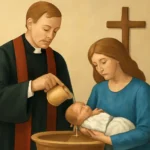
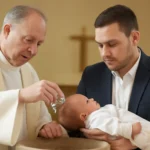
Baptism is a rite that has shaped faith communities for centuries. Its meanings unfold differently across cultures, traditions, and individual lives, yet many find in baptism a clear, transformative message: a doorway into a living faith, a sign of grace, and a call to follow. This article explores three broad reasons Baptism matters—each one unpacked from historical, theological, and practical angles—to illuminate the meaning and significance of this ancient practice. While the details of how baptism is performed or who receives it may vary—from infant baptism to believer’s baptism, from immersion to sprinkling—the core questions remain: What does baptism signify, and why does it matter for the person, the faith community, and the world?
Reason 1: Initiation and Identity within the Faith Community
One of the most prominent and enduring meanings of baptism is initiation into the community of faith. It marks a transition from being outside the people of God to being received into a new family with a shared story, responsibilities, and aspirations. This sense of initiation is not merely ceremonial; it creates a tangible new identity that shapes how a person understands themselves and their place in a larger spiritual narrative.
What initiation means in historical and theological contexts
Historically, baptism has functioned as the primary ritual that signals entrance into the Christian community. It is often linked to the old covenant and the new covenant, where the act of water becomes a visible sign of an inward transformation. The public reception into the church conveys a trust that the person is now part of a fellowship that shares in a common confession, a common discipline, and a common mission. For many traditions, baptism is not merely a private moment but a communal declaration: “This one belongs here.”
In theological terms, baptism serves as a doorway into a life shaped by grace, hope, and accountability. It is a concrete step that says, in effect, I am aligning my life with the story of Jesus and with the community that follows that story. This alignment does not erase past struggles or questions, but it situates them within a covenantal relationship in which the community will accompany and challenge one another toward faithfulness.
Diverse practices, shared aspiration
Infant baptism or believer’s baptism reflect different understandings of when a person can consciously affirm faith, yet both bear the same hopeful aim: to welcome a person into the body of Christ and to mark the beginning of a lifelong journey of discipleship.
Immersion, sprinkling, or affusion point to varied theological emphases—whether the emphasis is on burial and resurrection symbolism (dying and rising with Christ) or on cleansing and purification—yet all convey the entry into a community that sustains, educates, and holds one another accountable.
Church membership and ongoing participation—baptism often becomes the first public act within a wider life of service, worship, and communal care.
Practical and existential impact on identity
For many baptized individuals, the act becomes a reference point for identity formation. Consider these strands:
Belonging: Baptism creates a shared membership that enables mutual support, mentorship, and belonging in the church family.
Responsibility: With belonging comes responsibility—to grow in faith, to contribute to the community, and to participate in settings that build up others.
Continuity: Baptism connects generations, linking the believer with those who have come before and those who will come after, creating a lineage of faithfulness.
Beyond the ritual, baptism invites a person into a life-oriented practice. In many communities, the week-by-week rhythm of worship, prayer, service, and study becomes part of a rhythm inaugurated at baptism. The “new identity” is not a static label but a dynamic orientation toward love, justice, mercy, and truth. This orientation often unfolds in practical choices—how one treats neighbors, how one uses resources, how one responds to suffering, and how one participates in the healing and renewal of the world.
Reason 2: Spiritual Cleansing, Renewal, and the Beginning of a Transformed Life
A second central meaning of baptism centers on spiritual cleansing, renewal, and the beginning of an ongoing process of transformation. Across traditions, water is a powerful symbol: it cleanses, it marks purification, and it points toward new life. The language of washing away sin, dying to the old self, and rising to a new life recurs in sermons, creeds, and hymns, creating a shared vocabulary for a deeply personal experience.
Symbolic elements: water as cleansing and birth
Water in baptism is more than a physical act; it is a symbolic act that communicates a deep inner change. The imagery of washing represents forgiveness, purification, and renewal, while the language of burial and resurrection depicts a death to the old life and a rebirth into a new existence in Christ. This symbolism resonates at multiple levels: the cleansing of guilt, the renewal of motivation, and the new direction of one’s choices and priorities.
Forgiveness, grace, and human responsibility
Different theological streams describe the relationship between baptism and grace in nuanced ways. Some traditions emphasize baptism as the moment at which grace is imparted and sins are forgiven, while others view baptism as the sign that already-granted grace is received, or as a response to grace already at work within a person. What remains consistent across these views is that baptism is central to a life oriented toward grace, repentance, and ongoing transformation.
Forgiveness: In many Christian frameworks, baptism is linked with the forgiveness of sin, not as a substitute for personal repentance but as the visible sign that forgiveness has begun to reset the relationship with God and with others.
Rebirth: The language of rebirth signals a new beginning—an inner renewal that leads to different impulses, desires, and directions.
Sanctification: The baptismal life is the starting block for sanctification—a lifelong process of becoming more like the center of the faith, with the Spirit guiding growth in virtue, compassion, and truth.
Practical implications for spiritual formation
In daily practice, baptism challenges believers to cultivate habits that align with their baptismal identity. This might include:
Regular worship and prayer that deepen awareness of grace and gratitude for God’s work in one’s life.
Scripture engagement and reflection to understand how the baptismal call shapes decisions, relationships, and vocation.
Service and justice as outward expressions of inward renewal, especially in acts of mercy toward the vulnerable and marginalized.
For many, baptism becomes a spiritual memory that anchors hope in the midst of life’s uncertainties. It is a reminder of the transformative power available through grace and of the ongoing invitation to participate in God’s work in the world. The sense of renewal is not only about the past act but about what the present moment can become—an opportunity to live with greater integrity, compassion, and courage.
Reason 3: Public Confession of Faith, Witness, and Mission
A third major reason baptism matters is its role as a public confession of faith, a visible witness to one’s relationship with God, and a commissioning into a life of mission. Baptism is a communal act of testimony that conveys both devotion and responsibility: what one believes is now to be lived out in a world that watches and responds. This public dimension distinguishes baptism from many other spiritual experiences, anchoring belief in a shared practice that requires accountability, courage, and ongoing commitment.
Public witness and the language of confession
In baptism, the believer speaks in a language that others can hear and a ritual that communicates across time and culture. The act says, in effect, “I belong to Christ and I am joining his people to live out this faith publicly.” The witness is threefold: a witness to God’s faithfulness, a witness to the community about what is believed, and a witness to the world about the values and priorities that guide a baptized life.
Obedience to Jesus’ command and the discipline of discipleship
In many traditions, baptism is directly tied to Jesus’ commissioning of his followers. The imperative to go and make disciples, baptizing them in the name of the Father, the Son, and the Holy Spirit, frames baptism as an act of obedience that accompanies discipleship. This obedience is not coercive but participatory: it invites the baptized person into a shared project of growth, learning, service, and witness.
Missional implications: living as salt and light
The public nature of baptism has implications for how a believer participates in their community and the world. Baptism becomes a call to embody values such as justice, mercy, humility, and peace, and to engage in acts of love that reveal the faith to others. The baptized life often includes a rhythm of proclamation and service—telling the story of God’s faithfulness and demonstrating that story through acts of compassion, advocacy, and reconciliation.
Community accountability: A baptized person enters a network where spiritual maturity is both encouraged and scrutinized in healthy, supportive ways.
Stewardship: The baptismal covenant invites responsible use of gifts, time, and resources to contribute to the flourishing of neighbors and creation.
Public mercy and witness: As a member of a faith community, the baptized participate in a shared mission to alleviate suffering, nurture hope, and promote human dignity.
Public baptism asks believers to navigate the tension between religious conviction and pluralistic civic life. This means honoring diverse beliefs while remaining faithful to one’s own convictions in a way that is respectful, humble, and constructive. In practice, baptism as public witness invites ongoing dialogue, mutual learning, and collaborative service that seeks the common good beyond institutional boundaries.
Integrated reflections: connecting the three reasons
Although presented as three separate reasons, baptism’s meanings are deeply interconnected. Initiation into a faith community provides the context for spiritual cleansing and renewal to take root in a person’s life, while that renewal empowers a robust public confession and mission. In other words, baptism is a multifaceted sign that simultaneously marks belonging, invites transformation, and propels a life of witness. For individuals and communities alike, the practice fosters a coherent and lived faith that can resist shallow or purely sentimental interpretations of spirituality.
To help reflect on the meanings of baptism in a structured way, consider the following prompts:
What aspects of baptism feel most meaningful to you—entry into community, cleansing and renewal, or public witness—and why?
How does your baptism shape your everyday choices, such as how you treat others, how you spend time and resources, and how you engage with your neighborhood or workplace?
What responsibilities come with baptism in your faith tradition—how does the community support growth, accountability, and mission?
Closing thoughts: the enduring relevance of baptism
Across cultures and eras, baptism has remained a central act through which Christians articulate who they are, what they believe, and how they intend to live. The three reasons explored here—initiation and identity within the faith community, spiritual cleansing and renewal, and public confession of faith and mission—offer a framework for understanding the depth and breadth of baptism’s meaning. While each tradition may emphasize different facets or practice different forms, the core messages endure: baptism welcomes, purifies, and commissions; it binds people together in a shared story, renews hearts for living, and sends them into the world with a hopeful vocation.
Whether considering baptism for an infant, a young adult, or a new believer, the questions remain the same: What does this ritual signify about the relationship between God, the person, and the community? How will baptism shape a life of discipleship? And how can a faith community accompany those who are newly joined so that the act continues to be not only a mark of faith but also a movement toward love, justice, and mercy in the world?
In the end, baptism is more than a moment in time. It is a living invitation to participate in a story of grace that invites the baptized into a reality of belonging, transformation, and purpose that echoes through generations.

 Por Laura Jara