The word at the center of this topic is Sukkot (often transliterated sukkot) or sukkah in its singular form. In Hebrew, the root letters signify a booth, hut, or shelter, and the basic idea is a temporary dwelling. The biblical concept of sukkah or booth is tied to the memory of divine shelter and freedom: the Israelites lived in shelters during the wilderness wandering and were commanded to build them at harvest time as a literal reminder of God’s protection and deliverance. In English translations, you will encounter a range of terms—Feast of Tabernacles, Feast of Booths, and simply Tabernacles—each highlighting a facet of the festival’s meaning. This multiplicity of terms is not merely linguistic; it reflects how the festival sits at the intersection of history, worship, and agricultural life in ancient Israel.
Different transliterations and translations appear in Hebrew and Greek sources, and several semantic meshes emerge when you trace the term through biblical usage. Some variants you may encounter include:
sukkah (singular dwelling or booth)
sukkot or sukkoth (plural booths)
the phrase the Feast of Tabernacles (a festival title used in the prophets and later Christian Scripture)
the biblical word for the place name Succoth (Succoth as a location near the Jordan, not a festival)
In the biblical narrative, the shelter theme is both literal and symbolic. The shelters are not permanent homes but temporary places of dwelling that emphasize dependence on God and hospitality among the community. The ritual language shapes how the holiday is understood: it is about dwelling with God, about gratitude for harvest, and about the journey from bondage to freedom. In this sense, Sukkot embodies a revolutionary blend of memory and hope—a ritual that looks back to the Exodus and forward to a future in which all nations recognize the sovereignty of the Lord in Jerusalem.
Historical Background and Theological Significance
The biblical institution of Sukkot sits within the broader framework of Israelite festivals commanded by the Torah. It belongs to the calendar of divine appointed times that mark both agricultural cycles and covenantal obligations. The festival’s historical arc stretches from the wilderness wanderings of the exodus generation, through the era of the Tabernacle (the portable sanctuary), into the era of the First and Second Temples, and onward into the life of the Jewish diaspora after the destruction of Jerusalem. Across these periods, sukkah-dwelling becomes a liturgical sign of trust, reverence, and communal memory.
The Wilderness, the Tabernacle, and the Promised Land
In the wilderness, the people learned to rely on God’s care as they lived in temporary shelters. The memory of wandering forms a theological backbone for the festival: to dwell in sukkot is to recall the fragile, dependent position of the Israelite community under divine protection. The later construction of the Mishkan (the Tabernacle) in the wilderness, and then the more permanent Temple structure in Jerusalem, did not erase the symbolic meaning of booths. Rather, the festival’s geography—a pilgrimage to a center of worship—maps a journey from nomadic dependence to settled dependence on God’s provision. The physical shelters during the festival thus become a rhythm that binds memory, faith, and daily life.
Agriculturally, Sukkot coincides with the harvest of the autumn crops. The biblical instructions in Leviticus invite participants to gather fruit from trees, palm fronds, and willows, and to rejoice before the Lord for seven days. In the agricultural imagination, the shelters are not merely reminders of the past; they are signs of gratitude for the land’s generosity and symbols of the community’s dependence on divine mercy for daily bread. This harvest-themed dimension sits alongside the covenantal frame: the festival’s practices are designed to teach every generation about the Lord’s salvific acts—especially the deliverance from Egypt—and to shape a shared sense of identity and hope for the people of God.
A core way to study Sukkot is to examine the principal biblical texts that regulate and describe the festival. The biblical corpus presents a composite picture: legal prescriptions, historical recollections, prophetic visions, and narrative reminders of Jesus’ participation in the festival. The following passages are central to understanding the biblical lighting of this festival.
Laws and Commandments in Leviticus and Deuteronomy
Leviticus 23:33-44: The festival is inaugurated on the fifteenth day of the seventh month and extends for seven days with the people dwelling in sukkot (booths). The declaration to dwell in booths is explicitly tied to the memory of God’s deliverance from Egypt and the provision of shelter during the wilderness journey. The text emphasizes rejoicing before the Lord for seven days and keeping the festival as a timeless ordinance for generations.
Leviticus 23:40: The assembly on the first day involves taking the fruits of trees, palm branches, the branches of thick trees, and willows of the brook—a liturgical description that undergirds the symbolism of harvest, joy, and ritual procession.
Deuteronomy 16:13-15: The festival is framed as a seven-day feast in which the people rejoice before the Lord. The text also situates the festival in the larger pattern of the three annual pilgrimage feasts (the other two being Passover and Shavuot) and emphasizes the social and communal dimensions of worship in the presence of the Lord.
Temple Observances and Pilgrimage
During the times of the Temple, Sukkot was a central pilgrimage festival. The people traveled to Jerusalem to offer sacrifices and to participate in liturgical processes that celebrated both national memory and divine generosity. The Temple’s rituals with the holiday carry a sense of cosmic festival—an occasion when the community encounters the auctoritas of the divine presence in the midst of the gathered nation. The precise ritual elements—such as processions, offerings, and liturgical readings—are elaborated in later sources and rabbinic tradition, but the biblical core remains the command to dwell in sukkah and to rejoice before the Lord.
Prophetic and Eschatological Context
In the prophetic literature and in later Jewish thought, Sukkot acquires a forward-looking dimension. The promise of universal participation and the hope of a time when all nations will come to Jerusalem to observe the festival is articulated in the prophetic book of Zechariah (14:16-19). The text envisions a future era in which the nations participate in the festival of tabernacles, linking national repentance, justice, and the recognition of the Lord’s sovereignty with the cyclical rhythm of the harvest festival. This eschatological layer deepens the festival’s significance beyond national memory and turn it into a compelling instrument for imagining world-wide worship of the one God.
The language of the Bible, and later Christian and Jewish translations, uses a bundle of terms that illuminate different facets of the festival. The same root grows into several English designations, each emphasizing a distinct dimension of the celebration. Understanding these variants helps avoid conflating distinct ideas and clarifies how Sukkot is perceived in different biblical and interpretive streams.
Sukkah or sukkah (singular shelter or booth) emphasizes the physical structure used for dwelling.
Sukkot or sukkoth (plural booths) highlights the plural, communal dimension of the shelters and the festival as a collective experience.
Tabernacles (a traditional English rendering) foregrounds the memory of the portable sanctuary and the divine presence among the people during the wilderness era.
Booths or booths feast (the term used in several English Bible translations) underlines the temporary nature of the dwellings and the rustic, agricultural flavor of the festival.
Succoth (a place-name rendering) appears in biblical geography, reminding readers that the same consonantal root can designate both ritual space and physical place.
The Sukkah, the Shelters, and the Ritual Architecture
A sukkah is often described as a structure with roof adornments made from natural materials. In biblical and post-biblical imagination, the roof is to provide shade but also to allow stars to be seen at night, emphasizing the fragile shelter beneath the sky. The architecture is not primarily about comfort but about a symbolic act—leaving permanent dwelling for a temporary one in fellowship with the divine presence. The ritual architecture of Sukkot thus becomes a pedagogy: it teaches the community about dependence, memory, gratitude, and the longing for a future in which the world recognizes the sovereignty of God under the canopy of the sky.
In the biblical record the emphasis is on the people dwelling in the sukkah in the land of Israel. However, the festival is not merely rural or agricultural; it has a national, covenantal dimension. The commandment binds households and communities to participate in the movement from bondage to freedom, and it integrates the social fabric—neighbors, families, and strangers—under a shared banner of worship and remembrance.
Observance in the Ancient Israelite Kingdom and in the Diaspora
With the construction and occupancy of the First and Second Temples, Sukkot gained a centralized ritual framework. Pilgrims from various regions gathered in Jerusalem to present offerings, to participate in processions, and to engage in the ambiguous but festive atmosphere of the city during this season. The festival thus becomes not only a liturgical act but also a social and political expression of unity among Israelite tribes and communities.
After the destruction of the Temple, the festival continues in a diasporic key. Jewish communities outside of the land of Israel observed the festival by building sukkot in courtyards, on rooftops, and in communal yards. The memory of the wilderness journey and the harvest festival persisted as a living tradition, even as the physical central sanctuary was no longer available. This continuity demonstrates how religious memory adapts to changing historical circumstances while retaining its core meaning: to acknowledge divine protection, celebrate harvest, and welcome guests into the shelter of communal worship.
New Testament and Later Christian Reception
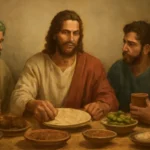
In the New Testament, Sukkot surfaces in the Gospel of John as a significant Jewish festival during which Jesus visits Jerusalem. John 7 presents the setting as the Feast of Tabernacles, with the narrative moving through debates about Jesus’ authority, the crowd’s reactions, and the culminating moments when Jesus speaks of living water. The Gospel narrative uses the festival as a backdrop for Jesus’ teaching and self-disclosure, revealing how early Christian communities read and interpreted Jewish ritual calendars. The exchange around the festival exposes key themes—identity, revelation, and the shaping of faith within a particular historical and religious milieu.
Prophetic and wisdom traditions within the Hebrew Bible lay the foundation for a broader theological reading of the festival, while New Testament writers situate Sukkot within the eschatological expectation of the Messiah and the renewal of creation. The festival’s imagery of a sheltering canopy, of harvest gratitude, and of pilgrimage toward a sacred center helps illuminate how both ancient and later readers perceived God’s presence in history and in future expectations.
Language, Rituals, and the Four Species
A notable feature connected with Sukkot in later Rabbinic interpretation is the emergence of the Four Species ritual—the lulav (palm), etrog (citron), hadassim (myrtle), and aravot (willow). While the biblical text does not prescribe the full Four Species ceremony, Leviticus 23:40 does speak of taking «the fruit of goodly trees, branches of palm trees, and the branches of the thick trees, and the willows of the brook» on the first day of the festival. This verse becomes the seed for later ritual elaboration in rabbinic literature, which specifies the Four Species and their waving in four directions as a sign of universal worship and dependence on God.
Four Species symbolism in Jewish tradition points to a composite community: each species represents a different kind of Israelite, and together they symbolize unity in diversity. The act of binding and lifting these items in procession and ceremony becomes a tactile, visual language for the covenant community’s relationship with God. It is a bridge from the biblical mandate to contemporary practice, illustrating how a ritual can evolve in interpretation while preserving core meanings—gratitude for harvest, recognition of God’s sovereignty, and hospitality toward others during the festival season.
Today, the biblical festival of Sukkot continues to be celebrated by Jewish communities around the world. The sustenance of this ancient practice lies both in ritual memory and in living observance. Modern practice typically includes:
Building a sukkah—a temporary shelter constructed in homes, courtyards, or synagogues, often with a roof of branches that permits the stars to be visible at night.
Dwelling in the sukkah for the seven days of the festival, aligning with the biblical command to dwell in booths.
Carrying and using the Four Species (lulav, etrog, hadassim, aravot) during processions and prayers, a later Rabbinic elaboration that enriches the ritual landscape.
Reading and studying passages from Leviticus and Deuteronomy that relate to the festival, along with liturgical prayers specially composed for Sukkot.
Participating in community feasts and charitable acts, reflecting the harvest-forward aspect of the holiday and the social dimension of worship.
Scholarly discussions about Sukkot frequently focus on several themes. First, the historical memory embedded in the command to dwell in sukkot ties the festival to a proto-ritual of national identity shaped by the Exodus experience. Second, the festival’s agricultural cadence—harvest celebration joined to a spiritual memory—demonstrates how biblical religion intertwines daily life with covenantal faith. Third, the prophetic and eschatological readings of Sukkot, especially in Zechariah, reveal the festival as a theater of hope: a horizon in which universal worship under the Lord’s sovereignty becomes visible in a tangible ritual, not only as a memory but as a lived expectation.
Succoth as a Place Name and Biblical Geography
It is important to distinguish the festival from references to Succoth as a place in the biblical geography. In Genesis 33:17, Jacob encamps at a place called Succoth, where he builds booths for his livestock. This usage has led to helpful geographic-linguistic connections: the root sukkah points to shelter, while Succoth as a place name anchors the term in real terrain. The dual usage reminds students of the layered nature of biblical language, where a single root can express a ritual concept and simultaneously designate a geographic site that once hosted worship and settlement.
From Biblically Mandated Practice to Doctrinal and Liturgical Reflection
The evolution of Sukkot from a direct divine command to a living, multi-genre tradition demonstrates the dynamic nature of biblical religion. It reveals how a ritual can retain its core meanings across centuries, adapting to political changes, diasporic realities, and cross-cultural dialogue. The festival remains a case study in how ancient memory becomes a framework for ongoing worship and community formation. Across the biblical texts, the New Testament witness, and the medieval and modern Jewish experience, Sukkot provides a recurring invitation: to recall deliverance, to celebrate provision, and to imagine a future in which all peoples gather in reverent worship before the God who guides history.
As an area of study, Sukkot invites readers to engage with several interdisciplinary questions: how ritual memory shapes communal identity; how agricultural cycles influence religious calendars; how the biblical and post-biblical sources converge and diverge in the interpretation of divine action; and how a single set of practices can sustain faith communities through upheaval and change. The festival’s resilience—its ability to adapt to new contexts while preserving essential symbol and message—speaks to the power of ritual to sustain memory and hope across generations.
In sum, Sukkot in the biblical record is more than a calendar note or a set of instructions. It is a living, breathing expression of faith that binds people to their God, to one another, and to the land they inhabit. By dwelling in sukkot, the ancient Israelites rehearsed a theology of dependence and trust; by rejoicing in the harvest, they declared gratitude for God’s provision; and by remembering the Exodus, they oriented their history toward a future when the divine presence would be recognized and exalted by all nations. The textual witnesses—laws, narratives, prophetic visions, and gospel reflections—together illuminate a festival that remains meaningful for readers today, inviting us to consider how memory anchors identity, how shelter offers security, and how gratitude shapes communal life.

 Por Laura Jara