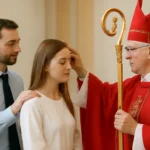
What is Catholic Baptism? The Sacrament of Initiation
In the Catholic tradition, baptism stands as the first and foundational sacrament of initiation. It is the moment when a person is welcomed into the Church and joined to Christ through the grace of God. Known formally as the Sacrament of Baptism, it marks the entry of a believer into the life of the Trinity and into the fellowship of the faithful. Catholics refer to baptism as a sacrament because it conveys a sacred reality beyond what human hands alone can achieve; it communicates grace that God freely gives to the baptized.
Baptism is also described as the moment when a person is freed from the power of sin, receives new life in Christ, and becomes a member of the mystical Body of Christ, the Church. In Catholic theology, this grace is inseparable from the ritual itself: the water used during the rite, the invocation of the Trinity, and the signs accompanying the celebration all work together to effect what the Church believes the sacrament accomplishes.
Theological Foundations and Sacred Significance
Scriptural Foundations
The Catholic understanding of baptism is rooted in Scripture. The Gospels recount Jesus’ urging to his disciples to go and baptize all nations, and the early Church understood baptism as an essential step in following Christ. The most familiar summation is the command, “Go therefore and make disciples of all nations, baptizing them in the name of the Father and of the Son and of the Holy Spirit”, which provides the biblical basis for the structure of the baptismal rite in Catholic practice.
Throughout the New Testament, baptism is presented as more than a symbolic act. It is a means by which God’s grace is imparted: cleansing from sin, new life in Christ, and incorporation into the people of God. Catholic teaching consistently emphasizes that baptism unites the believer to Christ’s death and resurrection, making the baptized a new creation in Him.
Theological Significance
Sanctifying grace is conferred in baptism, meaning the soul is infused with a share in the life of the Holy Trinity. The sacrament also makes the person a member of the Church, a participant in the communion of saints, and a temple of the Holy Spirit. In Catholic belief, baptism is the doorway to all other sacraments; without baptism, participation in the other mysteries of grace is not ordinarily possible.
The sacrament also conveys several effects that are considered permanent. Once conferred, baptism imparts a permanent, indelible mark on the soul, often referred to as a character or spiritual seal. This means the baptized person is configured to Christ in a way that cannot be erased, and the person’s identity as a child of God is established forever.
Who Should Be Baptized? Eligibility and Conditions
Catholic teaching holds that baptism is appropriate for those who have not yet received it, whether they are infants, children, or adults. The Church recognizes three main categories: infant baptism, child baptism with later confirmation, and adult baptism (often through the Rite of Christian Initiation for Adults, or RCIA).
Infant baptism: A common and long-standing practice in the Catholic Church. Parents and godparents take on the responsibility of guiding the child in the faith as the child grows. The rite emphasizes the generosity of God’s grace and the reception of a new life in Christ at the earliest appropriate moment.
Baptism of children beyond infancy: As children grow, they may prepare for Confirmation and Eucharist, typically within a catechetical program that supports a deliberate reception of the full sacramental life.
Adult baptism: Adults who wish to enter the Catholic Church typically participate in RCIA, a structured process of catechesis, prayer, and discernment that culminates in baptism, Confirmation, and the Eucharist at the Easter Vigil or another appropriate liturgical moment.
The Catholic Church also recognizes special cases, such as baptism by desire (for those who would have chosen baptism if they knew its necessity) and baptism by blood (martyrdom for the faith, which Christians who die for the faith may be considered to have achieved baptism through their witness). These concepts show the Church’s emphasis on God’s universal salvific will and the mystery of grace beyond the visible ritual.
The Rite of Baptism: What Happens During the Celebration
The actual ritual of baptism is carefully structured and liturgically rich. While minor variations exist in different dioceses and parishes, the essential elements remain consistent across the Catholic world. The rite can be celebrated in the church, a chapel, or even at a baptismal pool, but it maintains the same core actions: a profession of faith, the sacramental act with water, and the anointing with sacred chrism.
Core Elements of the Rite
Renunciation of sin and profession of faith: The parents and godparents, or the adult candidate, publicly profess the Catholic faith and renounce sin and all that is opposed to the faith.
Prayer of the Church: The celebrant prays for the grace of the Holy Spirit to descend on the candidate, preparing the heart for reception of the sacrament.
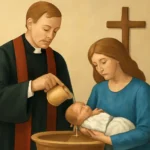
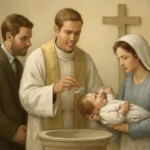
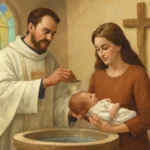
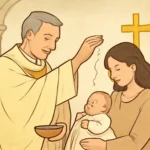
Water as the sign of cleansing: The essential action of the rite is the pouring of or immersion in water in the name of the Father, and of the Son, and of the Holy Spirit.
The Trinitarian invocation: The words of the baptism explicitly invoke the Three Persons of the Trinity.
Anointing with sacred chrism: After the baptism, the celebrant anoints the crown of the head with the sacred chrism, signifying the reception of the Holy Spirit and the call to a priestly, prophetic, and kingly vocation in Christ.
White garment and candle: The candidate is clothed in a white garment, symbolizing new life in Christ and innocence, and a baptismal candle is lit from the Paschal candle and given to the family to signify the light of Christ living in the baptized.
Step-by-step Overview
Preparation: The candidate or family members meet with the priest or deacon and the baptismal sponsor and gather essential information.
Profession of faith: The baptismal celebrant leads the congregation in renewing the baptismal promises; parents and godparents answer on behalf of the child if the child is not yet able to respond.
Water ritual: The minister pours water over the head three times or immerses the candidate while saying, I baptize you in the name of the Father, and of the Son, and of the Holy Spirit.
Anointing with chrism: The officiant uses sacred chrism to anoint the crown of the head, symbolizing the conferment of grace and the mission in Christ.
Clothing and light: The white garment is placed on the candidate, and the baptismal candle is given to a sponsor or parent to light from the Paschal candle and to be kept as a sign of the new life in Christ.
Ritual Symbols and Accessories
Catholic baptism is deeply symbolic. Each element has a purpose and a doctrinal significance that helps the faithful understand what God is doing in the life of the baptized:
Water: Cleansing from sin and new life in Christ; a sign of death to the old self and rising to new life with Christ.
Trinitarian formula: The explicit invocation of the Father, the Son, and the Holy Spirit underscores the Christian belief in the Triune God as the one source of life and grace.
Chrism: The sacred oil used for anointing at baptism and later at Confirmation and Holy Orders; it signifies the seal of the Holy Spirit and the mission to bear witness to Christ.
White garment: Purity and the new status as a child of God, now clothed in the righteousness of Christ.
Candles: The light of Christ, encouraged to be kept burning as a sign of ongoing discipleship and fidelity to the gospel.
Baptism is not a solitary event. It is a communal act that involves the whole church and, particularly in infant baptism, the family and the parish community. The Catholic Church calls those who stand ready to support the baptized in faith to be godparents (sponsors). These roles carry lifelong responsibilities:
Parents: They commit to raising their child in the Catholic faith, providing instruction, example, and regular participation in the sacramental life of the Church.
Godparents: They accompany the parents in their duty, encourage spiritual growth, and serve as witnesses to faith for the child.
Community: The local parish community prays for the baptized, supports catechetical instruction for children, and welcomes new members into full communion with the Church.
In RCIA pathways for adults, sponsors and catechists play a similar but more formal role. They guide the candidate through a process of discovery, doctrinal learning, and spiritual formation so that the individual may confidently profess the Catholic faith and participate fully in the sacramental life.
Infant Baptism vs. Adult Baptism: Practical Distinctions
Although the theology of baptism is consistent across ages, the practical approach varies depending on whether the candidate is an infant or an adult.
Infant baptism: The emphasis is on the family’s faith and the child’s incorporation into the life of the Church. Parents undertake catechesis and commit to transporting the child to the sacraments as they grow. The ritual is often followed by a baptismal catechesis that guides the family in living out the baptismal promises.
Adult baptism: The adult candidate engages in a more extensive period of discernment and catechesis through RCIA. The journey is designed to ensure the person fully understands and embraces the Catholic faith, the meaning of the sacraments, and the obligations of life in Christ.
Rite of Christian Initiation for Adults (RCIA): A Pathway to Baptism
For adults who wish to become Catholic, the RCIA process provides a structured and communal pathway toward baptism, Confirmation, and the Eucharist. The process typically includes several stages:
Inquiry: A time of initial questions and exploration of the faith.
Catechumenate: In-depth instruction in Catholic doctrine, Scripture, and worship. Catechumens are formed to live as disciples of Christ.
Purification and Enlightenment: A period of reflection in the liturgical season of Lent when the Church prays for and with the catechumens.
Sacraments of Initiation: At the Easter Vigil, catechumens are baptized, confirmed, and receive the Eucharist for the first time; the candidates, who are already baptized in another Christian tradition, are confirmed and receive the Eucharist.
The RCIA journey emphasizes catechesis, spiritual formation, and pastoral accompaniment, ensuring that those entering the Catholic Church do so with informed faith and a sense of belonging to a worshiping community.
Below are answers to frequently asked questions that families often bring to parishes.
Can Catholics baptize infants? Yes. Infant baptism is a long-standing practice in the Catholic Church, reflecting the belief that God’s grace is offered to every generation and that parents have a responsibility to usher their children into the faith.
What if a child is not baptized right away? Delays may happen for various reasons, but the Church urges that baptism occur as soon as practical, since the sacrament is foundational for the Christian life.
Is immersion required? The Catholic Church permits both immersion and pouring of water (affusion). The pastoral circumstances and the local liturgical practice often determine the mode.
What happens if a person dies without baptism? The Church teaches about “baptism of desire” and “baptism by blood” as possible expressions of grace for those who could not be baptized, yet who sought or suffered for the faith. Ultimately, the Church entrusts such souls to God’s mercy, rooted in the mystery of salvation in Christ.
Must godparents be Catholic? Generally, one or both godparents should be Catholic and in good standing with the Church, though there may be allowances for Christians of other traditions who sincerely commit to supporting the baptismal promises.
Post-Baptism: Living the Faith After the Sacrament
Baptism marks the beginning of a lifetime of growth in the Christian life. The life of grace begun in the sacrament should be nourished through regular participation in the Eucharist, reconciliation, prayer, and ongoing catechesis. The Church invites the newly baptized and their families to continue to learn about the faith, to participate in parish life, and to bear witness to the Gospel in daily life.
The Ongoing Journey: Spiritual Formation and Community
Regular attendance at parish liturgy helps the newly baptized grow in faith and fidelity.
Participation in sacraments, especially the Eucharist, strengthens the bond with Christ and the community.
Continued catechesis deepens understanding of doctrine, prayer, and moral life.
Active involvement in service and outreach echoes the missionary call of baptism.
Pastoral Considerations for Baptism
The celebration of baptism in a parish involves careful pastoral preparation. Priests and deacons work with families to ensure that the rite is meaningful and understood. This preparation may include:
Parental catechesis: Sessions that explain the meaning of baptism, the responsibilities of parents, and the growth path for the child in faith.
Godparent formation: Guidance on the role of sponsors, including their duties and the religious commitment required.
Liturgy planning: Choosing readings, prayers, and the order of the ceremony in a way that reflects the community’s liturgical norms and the family’s needs.
Common Myths and Clarifications
Several misconceptions surround Catholic baptism. Clarifying these helps families approach the sacrament with clarity and reverence:
Myth: Baptism guarantees automatic entrance into heaven. Reality: Baptism is essential and grace-filled, but ongoing faith and cooperation with grace are required for salvation.
Myth: Only infants can be baptized. Reality: Adults and older children may also be baptized, and RCIA provides a path for them to enter fully into the Catholic Church.
Myth: If you have been baptized in another Christian denomination, you are automatically Catholic. Reality: Catholics recognize baptism in other churches if it was valid but still require reception into full communion through the sacrament or rite of reception as appropriate.
Liturgical Calendar and Baptism
Baptisms often align with the liturgical calendar. While many parishes celebrate baptisms on Sundays after Mass, the Easter Vigil remains a traditional and spiritually significant time for baptisms, especially for adults joining the Church. During Advent and Christmas, some families request baptisms as part of the season’s emphasis on incarnation and new life in Christ.
How to Arrange a Catholic Baptism
If you are planning a baptism, here are practical steps to guide the process:
Contact the parish office to schedule a baptism date and to confirm requirements for parents and sponsors.
Attend pre-baptismal preparation sessions, which often include the catechetical discussion about the meaning of the sacrament, the obligations of families, and the liturgical details of the ceremony.
Complete any required documentation, such as certificates of birth, godparent declarations, and consent forms.
Choose readings and prayers for the ceremony in collaboration with the parish priest or deacon to reflect the family’s faith journey.
Final Reflections: The Sacred Gift of Baptism
The Catholic sacrament of baptism is a profound entry into the life of Christ and the Church. It is a gift that God freely offers and a responsibility that families and communities are entrusted to nurture. Whether the baptism occurs for an infant, a child, or an adult, the essential truth remains: God’s grace is poured out in the waters of baptism, making all who are baptized members of the body of Christ and part of a lifelong journey of faith.
By understanding the sacred symbolism, the liturgical richness, and the practical steps involved in Catholic baptism, families can participate more deeply in this holy sacrament and support one another in living out the baptismal promises day by day.

 Por Laura Jara