Candle Order for Advent: Tips to Arrange Advent Candles — an in-depth guide to planning, arranging, and lighting Advent candles in a way that honors tradition while allowing for thoughtful variation. This article explores the symbolism behind Advent candles, practical steps for arranging a traditional wreath, and several authentic variations on the candle order that you can adapt to your own faith community or home practice. Whether you follow a classic four-week wreath or opt for a cherished five-candle setup with a Christ candle, the goal is to create a meaningful rhythm that grows brighter each week as the season of anticipation approaches Christmas.
Advent is a season of waiting, preparation, and spiritual expectation that culminates in the celebration of Christmas. The candle colors, the order in which they are lit, and the overall arrangement of the wreath or centerpiece all carry symbolism designed to awaken hope, peace, joy, and love in a practical, tangible ritual. In most Western Christian traditions, the classic setup involves four candles arranged around a wreath: three purple (or blue in some traditions) candles and one pink (rose) candle. Each candle corresponds to a Sunday of Advent, with the lit candle inviting reflection on a different aspect of the season.
The Traditional Four-Candle Advent Wreath
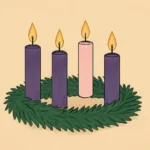
The traditional Advent wreath is circular, symbolizing the eternal life of God, with evergreen branches representing growth and endurance. The four candles (three purple and one pink) sit on the wreath or in a frame surrounding it. A central Christ candle may be placed in the center and lit on Christmas Eve or Christmas Day in many households and churches. Below are the core elements of the traditional arrangement and the typical lighting order that accompanies it.
Candle colors and their significance
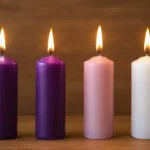
Purple candles symbolize repentance, preparation, and anticipation.
Pink (rose) candle represents joy and the midpoint of Advent, often observed on Gaudete Sunday (the third Sunday of Advent).
White Christ candle (optional) stands at the center and is lit on Christmas Eve or Christmas Day to signify Christ’s birth.
The standard lit sequence by week
Week 1: Light the first purple candle. This marks the coming of the Light into the world, inviting contemplation on hope and preparation.
Week 2: Light the second purple candle. The focus often broadens to faith and expectation as the season deepens.
Week 3: Light the pink (rose) candle. Gaudete Sunday brings a pause of joy in the midst of penitence and anticipation.
Week 4: Light the final purple candle. With Christmas drawing near, the mood shifts to readiness and renewal.
How to arrange the candles around the wreath
Place the candles equidistantly around the wreath, leaving space for a central white Christ candle if you use one.
Position the pink candle in a consistent place so you can easily tell which week corresponds to which light. A common approach is to place the pink candle clockwise after the first two purples, but you can also place it in a diagonal or opposite position for symbolic balance.
Consider labeling the weeks on a small card or tag attached to the base so family members or participants can see the week’s focus at a glance.
Variations in Candle Order for Advent
While the four-candle wreath is the most familiar form, there are several meaningful variations on the candle order that people use around the world. These variations preserve the core intent of Advent—anticipation, reflection, and joy—while adapting to local liturgical customs, family traditions, or congregational preferences. Here are several variations you can consider, each with practical notes for how to implement them.
Variation A: Traditional four-candle order with pink on Gaudete Sunday
This is the classic arrangement used in many Catholic, Anglican, and Protestant contexts. The colors are typically purple-purple-pink-purple around the ring, and the pink candle is lit on the third Sunday. This variation emphasizes the turning point in Advent from penitential anticipation to joyful expectation.
Tip: If you prefer a particular sequence, you can choose a clockwise or counterclockwise layout and keep the pink candle in the same physical seat each year for consistency.
Variation B: Left-to-right color progression for visual emphasis
Some households arrange the candles so that the color progression is obvious to the eye as you move around the wreath. This can be helpful for children or for teaching the broader audience about the weeks of Advent. A common left-to-right sequence would still use three purples and one pink, but you can place the pink in a position that creates a visually distinct arc as you read the weeks.
Leftmost: Purple
Next: Purple
Next: Pink
Rightmost: Purple
Note: The lit order remains the same as Variation A; the only difference is the clockwise labeling and how you present the weeks during discussion or worship.
Variation C: Five-candle Advent wreath with a central Christ candle
In many homes and churches, a fifth candle, the Christ candle, is placed in the center and lit on Christmas Eve or Christmas Day. The outer ring often has four candles, as in the traditional arrangement, with the center candle serving as a culminating light at the end of Advent. This variation strengthens the symbolism of Christ’s coming as the culmination of the season.
Outer ring: Purple, Purple, Pink, Purple (or alternate order as desired)
Center: White Christ candle
Lit sequence in the weeks: light the outer ring candles as usual; on Christmas Eve/Day, light the Christ candle in the center and reflect on the incarnation. Some households light the Christ candle after the outer candles have been lit for the final time in Week 4, creating a moment of culmination.
Variation D: Advent blue or alternate colors (Lutheran, Anglican, or other traditions)
Some Christian traditions use blue candles to represent the season of Advent instead of purple. When blue is used, you can still follow the same weekly pattern—but the meaning shifts toward expectation and preparation in a different color vocabulary. In this variation, you might have two or three blue candles and one pink candle, or adjust as your local liturgy prescribes. This can be especially meaningful in congregations that have a long-standing use of blue in Advent.
Blue candles as the primary color
Pink/coralline pink candle for Gaudete Sunday
Optional white Christ candle in the center
Tip: When adopting a new color scheme, consider coordinating with seasonal wreath decor to preserve harmony in your space and avoid visual clutter.
Variation E: Minimalist or contemplative setup with single weekly lighting
In contemplative households or churches seeking a simpler ritual, you may light a single candle per week in a quiet, reflective manner. This can be achieved with a single purple candle or a single blue candle, followed by the next week’s candle in the sequence. This approach reinforces the sense of anticipation through a pared-down ritual that can be easier to manage in small spaces or for families with younger children.
Week 1: Light one candle
Week 2: Light the second candle (or replace the lit candle with the second color) allowing the space between weeks to reflect stillness
Week 3: Light the next candle (pink or blue, depending on your color scheme)
Week 4: Light the final candle (completing the outer ring)
Practical Tips for Arranging Advent Candles
Beyond choosing a color scheme or candle order, practical considerations will help ensure your Advent candle arrangement is safe, beautiful, and meaningful. The following tips cover layout, timing, and care so you can enjoy a consistent, meaningful ritual throughout the season.
Choosing a container, stand, or wreath base
Choose a sturdy wreath base or circular base that can hold four or five candles securely without tipping.
Ensure the surface is heat-resistant if you’re placing the arrangement on a wooden table or shelf. A tray or centerpiece plate can protect surfaces from hot wax.
If using a standing holder, make sure the candles sit in a stable base with enough space to burn evenly and prevent wax spills from reaching other candles.
Spacing, symmetry, and visibility
Spacing should keep candles evenly distributed around the ring, ideally with at least a few inches between each candle to allow for heat dissipation and easy access for lighting.
Consider the visibility from seating areas. Place the pink candle or the center Christ candle in a position that is easy for participants to see and identify.
For families with children, consider marking the outer ring with a map of the weeks, so younger participants can participate actively in the lighting routine.
Attach a small card near each candle describing the week’s focus (hope, peace, joy, love) or the specific aspect of Advent you’re reflecting on.
Keep a simple schedule posted where all participants can see it. For example:
Week 1: Hope and expectation
Week 2: Peace and preparation
Week 3: Joy and rejoicing
Week 4: Love and the coming of Christ
Safety considerations and candle care
Never leave burning candles unattended. Keep a fire extinguisher or water nearby, and ensure children and pets are a safe distance away.
Place candles away from curtains, papers, or decorations that could catch fire. Use non-flammable mats or trays to contain wax drips.
Trim wicks to about ¼ inch before lighting to reduce smoke and maintain a steady, even burn.
Keep candles upright and away from drafts to prevent uneven burning or wax leaks.
Planning and Variations by Tradition
Advent candle practices vary across Christian traditions, and understanding these differences can help you tailor your candle order to fit a local liturgy or family tradition. Below are brief overviews of how candle order and colors are used in several common contexts, with practical notes for implementation.
Catholic and Anglican traditions
In many Catholic and Anglican settings, the Advent wreath follows the four-candle model with purple and pink candles, and Gaudete Sunday is marked by lighting the pink candle. The structure may be embedded in the liturgy with specific readings and hymns associated with each week. The Christ candle central to the wreath emphasizes the anticipation of Christ’s birth.
Protestant and Lutheran traditions
Protestant and Lutheran communities often adopt the blue or purple color scheme and may customize the order slightly to align with local worship patterns. Some congregations emphasize the violet hues as a reminder of penitence and preparation, while others favor blue for a calm, contemplative Advent. The optional Christ candle center remains a meaningful focal point for many houses of worship and family observances.
Home decor and family practice variations
For families observing Advent at home, the candle order can be adapted to fit family routines, school calendars, or personal reflections. Some families place the wreath on a kitchen table or living room shelf, integrating daily or weekly devotional readings with the candle lighting. Others incorporate a Jesse Tree or a small devotional card for each week, aligning scripture readings with the candles to reinforce the narrative arc of Advent.
Common Mistakes and How to Avoid Them
Even well-intentioned planners can stumble when arranging Advent candles. Here are common pitfalls and practical remedies to ensure your Advent candle order remains meaningful and safe throughout the season.
Overcomplication or confusion about color order
While variation can be enriching, too many color choices or an unfamiliar sequence can distract participants. To avoid confusion, keep a simple color scheme (e.g., three purple and one pink, or blue and pink, depending on tradition) and clearly label the weeks in a visible, consistent way.
Inadequate safety measures
Unsafe candle placement is a frequent concern. Address this by using heat-resistant bases, keeping candles away from flammable materials, and never leaving burning candles unattended. If you have pets or small children, consider flameless LED candles as a safe alternative that preserves the ritual atmosphere while reducing risk.
Inconsistent lighting schedule
Inconsistent lighting can weaken the sense of a weekly rhythm. Create a simple schedule and post it where all participants can see it. If you’re sharing the ritual with a group, assign a weekly “lighting captain” to lead that Sunday’s lighting and reflection.
Putting It All Together: A Practical Plan for the Advent Season
To help you implement an organized, thoughtful candle order, here is practical, step-by-step guidance that you can adapt to your setting. This plan assumes a traditional four-candle wreath with optional Christ candle in the center. You can mix and match with the variations described above as you see fit.
Choose a format: Decide whether you will use a four-candle wreath or a five-candle arrangement with a central Christ candle. Decide on color scheme (purple/pink, blue/pink, or another tradition-based combination).
Prepare the wreath or centerpiece: Gather the base, candles, holders, and a tray or safe surface. If necessary, trim wicks and label cards for each week.
Place the candles: Arrange the outer four candles evenly around the wreath. Place the pink candle in a consistent position to indicate the Gaudete Sunday, if applicable. If using a central Christ candle, position it in the center.
Write week-by-week reflections: Prepare short reflections or prayers for each week that connect with the candle lighting (hope, peace, joy, love).
Write a simple plan for lighting: Create a schedule (e.g., Week 1: light outer purple; Week 2: light outer purple; Week 3: light pink; Week 4: light final purple; Week 4 or Christmas Eve: light Christ candle).
Set up safety and reminders: Place a candle snuffer nearby, ensure wind protection if the arrangement is near a window, and set reminders for lighting times if you use a shared space.
To help you implement the ideas discussed, you can use or adapt the following ready-to-use planning aids. They are designed to be simple and adaptable for home use, church classrooms, or small groups.
Weekly planning checklist
Confirm outer ring candle colors and positions
Attach week label cards describing the focus: Hope, Peace, Joy, Love
Prepare short Scripture verses or prayers for the week
Check lighting routine and assign a weekly lead
Sample weekly reflections for a four-candle Advent wreath
Week 1 – Hope: Reflect on the promise of what is to come. Light the first purple candle and read a passage such as Romans 15:13 or Isaiah 9:2.
Week 2 – Peace: Consider peace with God and the peace we offer to others. Light the second purple candle; prayers may focus on reconciliation and calm in the world.
Week 3 – Joy: Rejoice in the good news of the coming birth. Light the pink candle; include a song, a hymn, or a gratitude moment.
Week 4 – Love: Anticipate the incarnation and emulate love toward neighbors. Light the final purple candle; reflect on concrete acts of love in daily life.
Conclusion: Embracing the Candle Order for Advent
The candle order for Advent—whether you follow the traditional four-candle pattern, adopt a five-candle Christ-centered approach, or experiment with blue or other color schemes—provides a meaningful framework for anticipation and worship during the weeks leading up to Christmas. The ritual of lighting candles each week fosters a sense of rhythm, community, and spiritual focus that can enrich family life, classroom settings, and church services alike. Remember that the central goal is not merely to perform a ritual, but to cultivate a posture of hopeful waiting, mindful preparation, and generous love that culminates in the celebration of Christ’s coming.
As you plan your Advent candle order, you may find it helpful to document your approach for future seasons—what worked well, what sparked conversation, and which variations helped you connect more deeply with the season. By using clear lighting sequences, thoughtful colors, and practical safety measures, you can create a sustainable and meaningful Advent practice that grows brighter week by week and resonates with generations of worshippers and families alike.
Appendix: Quick Reference Guide to Candle Order Variations
The following quick reference guide summarizes the main variations discussed in this article. Use it as a practical checklist when planning your Advent candle arrangement for a home, classroom, or church setting.
— Purple, Purple, Pink, Purple; pink on Gaudete Sunday; optional center Christ candle.
Variation B: Left-to-right color progression — Keep the same lit sequence, emphasize week labeling in a left-to-right layout for clarity.
Variation C: Five-candle arrangement with Christ candle — Outer ring as Variation A; add center white Christ candle for Christmas Eve/Day.
Variation D: Advent blue or alternate colors — Use blue or alternate color schemes in place of purple; keep pink for Gaudete Sunday if preferred.
Variation E: Minimalist contemplative setup — Light one candle per week, a simpler ritual that still preserves the advent rhythm.
By choosing a candle order and color scheme that resonates with your traditions and your current season, you can transform a simple decorative element into a powerful spiritual practice. The Advent candles—whether lit in a grand church procession or on a quiet kitchen table—offer a symbolic path that invites every participant to reckon with anticipation, reflect on the journey of faith, and celebrate with joy as Christmas draws near.

 Por Laura Jara