The Reformed view of baptism is a rich and nuanced topic that sits at the intersection of biblical exegesis, historical theology, and pastoral practice. In this article we survey the key beliefs and practices that shape how Reformed communities understand the sacrament, its relationship to faith, and its place in the life of the church. Though there are varieties within the broader Reformed family, a common thread runs through classical Reformed doctrine: baptism is a sign and seal of the gracious covenant, entrusted to the church as part of the ordinary means of grace. It is not merely a private rite or a cultural observance; it is a corporate act that publicly marks God’s covenant people and points forward to the reality of God’s promise in Christ.
To grasp the reformed view of baptism, it helps to begin with its historical roots. Reformers in the 16th century inherited much from the early church and the medieval church, yet they reinterpreted baptism through the lens of covenant theology and the authority of Scripture. In this stream, baptism is intimately connected to the gospel promise and to the community of faith rather than being viewed as an purely individual act. Distinctive confessional documents, such as the Belgic Confession and the Westminster Standards, articulate how baptism relates to grace, faith, and the church’s mission.
Among the most influential figures, John Calvin emphasized that the sacrament is God’s own gift, a sign that directs believers to Christ and confirms the promises of the covenant. The historical pattern in Reformed churches has been to understand baptism alongside the preaching of the Word, the administration of the sacrament as part of corporate worship, and catechetical instruction for all ages. For many Reformed traditions, the practice grows out of a robust doctrine of the covenant of grace, in which households are seen as contexts in which God’s promises are transmitted and nurtured through generations.
Scriptural Basis and Covenant Theology
Key biblical foundations
The Reformed view of baptism is anchored in a robust use of Scripture. Some of the passages most commonly cited include:
Genesis 17:7 and the sign of the covenant given to Abraham—often understood as the scriptural antecedent to infant inclusion in the covenant people.
Colossians 2:11-12—the old covenant imagery of spiritual circumcision given new meaning in baptism, tying circumcision to baptism as the sign of the new circumcision of the heart.
Matthew 28:19-20—the Great Commission, which commands disciples to baptize as part of making disciples of all nations.
Acts 2:38-39—the apostolic pattern where baptism accompanies the proclamation of the gospel to the household of faith and the promise is for all who are far off and for all whom the Lord calls to himself.
1 Corinthians 12:13—the one Spirit uniting diverse believers into the body, echoing baptism as the initiation into the saved community.
1 Peter 3:21—the baptism that corresponds to a pledge of a good conscience toward God; interpreted by Reformed theologians as signaling grace through the covenant sign.
The covenant framework
In classical Reformed thought, covenant theology is central. Baptism is a sign and seal of the covenant of grace, marking the boundary markers of God’s people just as circumcision once did. In this framework, the church is the visible sign of the new covenant, and baptism indicates inclusion within that covenant community. The expectation is not that baptism itself saves, but that it points toward the saving gospel and invites faith to take hold of the promises offered in Christ.
The Covenant Sign and Seal: Baptism as a Means of Grace
The wording “sign and seal” captures a twofold function. A sign points outward to a reality, while a seal guarantees or confirms what is signified by the promise of God. In the Reformed view, baptism is both of these: it signifies the covenant promise of grace and acts as a seal of God’s pledge toward the baptized person and their household. The sacramental act is thus inseparable from the Word preached, the faith of the community, and the Spirit’s work in regeneration, conversion, and ongoing sanctification.
Because the Reformed tradition emphasizes the continuity between the old and new covenants, baptism is read as replacing or completing what circumcision signified, now extended to both children and adults within the church. The emphasis on the Spirit’s work means that baptism is not an empty ritual; it is a divine appointment in which God uses the sign to communicate grace and to call believers to faith and perseverance.
Infant Baptism and Credobaptism: A Reformed Perspective
Infant baptism as the standard in classical Reformed churches
In the great tradition of Reformed confessions, infant baptism (pedobaptism) has been the prevalent practice. The reasoning rests on the continuity of the covenant community and the corporate nature of the church. If households in the biblical narrative were included in the covenant promises, many Reformed theologians argue, children of believers belong within the covenant community and should be recipients of the covenant sign. The practice is grounded in the interpretation that God invites children into the covenant community and that the church bears responsibility to nurture them through catechesis, family worship, and pastoral care.
Believer’s baptism and the Reformed family
There is, however, a small but present stream within the broader Reformed family that emphasizes credobaptism (believer’s baptism). This position is often associated with denominations or movements that identify with Reformed soteriology and confessional standards while practicing baptism only for those who have professed personal faith. Proponents might point to the explicit profession of faith in the New Testament baptismal accounts or to the presupposition that baptism signifies an individual response to the gospel. Critics within the broader Reformed world typically respond by reaffirming the continuity of the covenant and the settled place of infant baptism in the life of the church, while recognizing the legitimacy of diverse pastoral expressions in separate denominational contexts.
In workplaces and congregations where credobaptism is practiced by some Reformed groups, catechetical preparation remains central. The practice is often accompanied by a robust emphasis on the conversion of individuals and the public declaration of faith, while still acknowledging the historical and theological reasons for infant baptism in the historic Reformed tradition.
Mode of Baptism: Immersion, Sprinkling, or Pouring
Historically common methods in Reformed churches
The mode of baptism has varied across time and place. In the Reformed tradition, pouring (affusion) and sprinkling have been the most common practices, especially in contexts where infant baptism is standard. These modes are often chosen for practical reasons, including the care of infants and the logistical realities of worship spaces. The theological significance, for Reformed theologians, lies in the meaning of the sign rather than the physical method; what matters is that the act visibly represents the washing of regeneration and the inclusion in the covenant community.
Immersion and contemporary debates
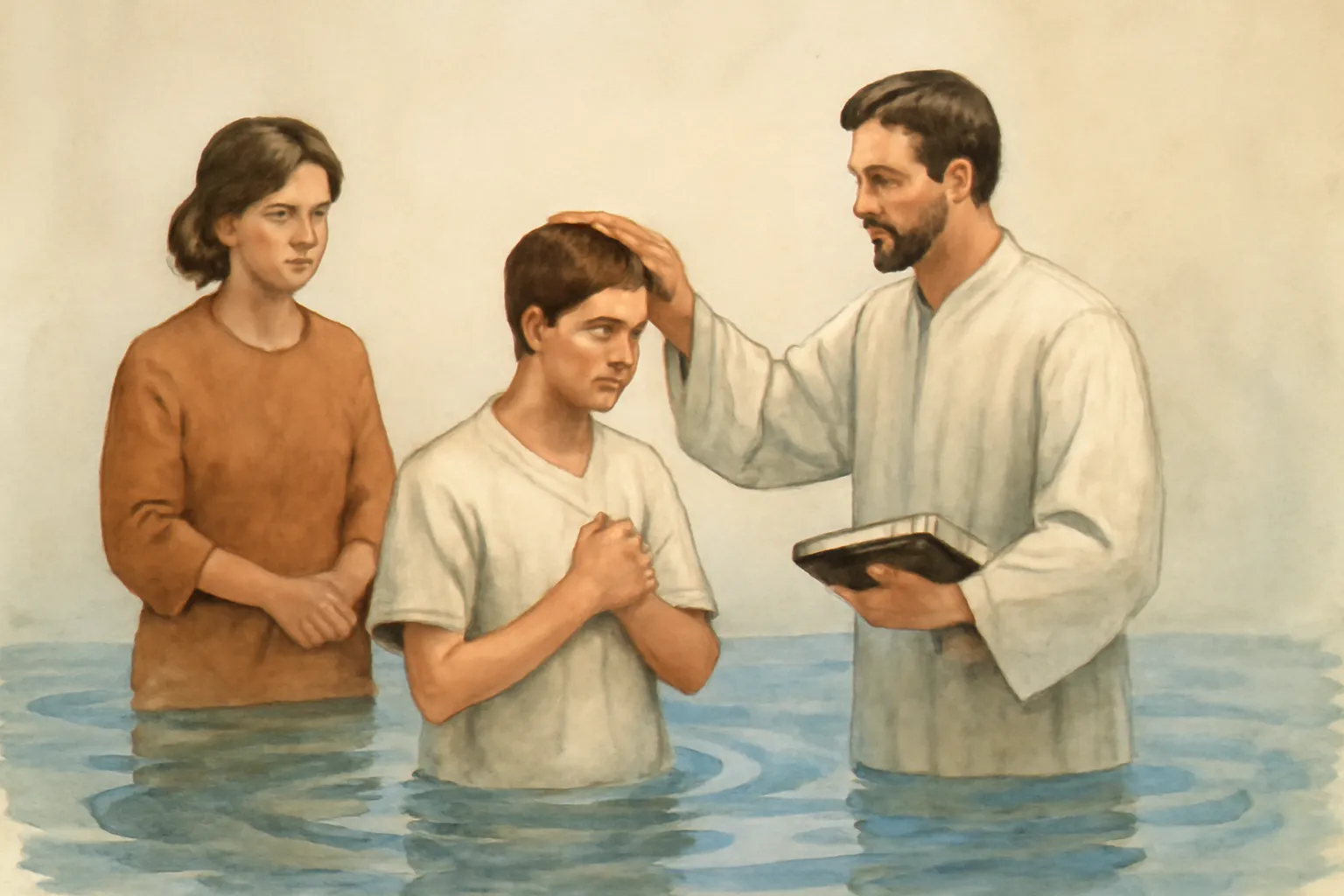
Some Reformed churches have adopted or allowed immersion as a valid form, stressing the symbolic fullness of burial and resurrection language in Romans 6 and Colossians 2, which some interpret as compatible with immersion. Yet the dominant practice in most historic Reformed churches remains affusion or sprinkling. The confessional documents tend to emphasize the symbolic significance and the covenantal meaning rather than prescribing a single physical posture. In pastoral practice, local congregations often choose the mode that best serves catechesis, community life, and the pastoral needs of families and individuals.
Means of Grace: Word, Spirit, and the Sacrament
In Reformed theology, baptism is never isolated from the other means by which God dispenses grace. The Word preached is the primary instrument through which faith is created and sustained; baptism serves as its visible counterpart. The preaching of the gospel, the administration of the sacrament, and the work of the Spirit together foster reliance on Christ. Baptism invites participants into the narrative of the gospel and aligns their identity with the visible church. For many Reformed theologians, baptism thus functions as part of the triad of means by which God communicates grace, alongside the Word and the Spirit, in the context of community worship and disciplined Christian nurture.
Faith, Baptism, and the Church’s Public Profession
The Reformed understanding emphasizes that faith is the instrument through which baptism’s benefits are received. In infant baptism, the faith of the covenant community—parents, sponsors, and the local church—stands as a proxy for the child’s trust in Christ until the child is able to confess faith personally. This does not imply that faith is optional or that baptism saves apart from faith; instead it situates baptism within a corporate setting in which God’s promises are proclaimed and nurtured until personal faith is professed. In believers’ baptism, the individual’s own profession of faith is the central witness, with baptism functioning as the first public act of obedience to Christ and as a sign that the gospel has taken root in the life of the believer.
Church Practice, Catechesis, and Confirmation
The Reformed approach to baptism is usually accompanied by ongoing catechesis. Baptism is not a one-off event but the beginning of a catechetical journey that includes instruction in the gospel, the Reformed confession, and the responsibilities of life in the covenant community. In many circuits, children who are baptized are then nurtured through family worship, church-based catechesis, and eventually a confirmed or mature profession of faith. The practice of confirmation, where available, serves as a formal public acknowledgment that the baptized has come to personal faith and is now an accountable member of the church.
Ecclesial Context and Covenant Community
Within the Reformed worldview, baptism is inseparable from the concept of the church as a covenant family. The church is the visible manifestation of God’s people on earth, a community in whom the gospel is proclaimed, the Spirit works, and the life of faith is lived out. Baptism thus serves to incorporate a person into a local body of believers who share in the same confession and participate in the same mission to the world. This ecclesial dimension gives baptism a social and ethical weight: members pledging themselves to live according to the gospel, to pursue holiness, and to bear witness in word and deed to the faith they confess.
Even within the Reformed family, there are ongoing conversations about a few key topics related to baptism. Areas of discussion include:
Infant baptism vs. believers’ baptism within Reformed circles, and how to balance theological continuity with pastoral flexibility in diverse contexts.
Mode of baptism and the acceptability of immersion versus affusion, with attention to the church’s historical practice.
Covenantal inclusion of children who come from non-Christian families or multi-faith households, and how to apply baptism in mission contexts.
Pastoral responsibilities for catechesis, parental instruction, and the spiritual nurture of baptized children as they grow in faith.
Baptismal discipline and the role of continuing membership vows, church discipline, and pastoral care in shaping a baptized person’s life within the church community.
These debates reflect a shared conviction that baptism is deeply formative for individuals and churches, even as practical and pastoral questions vary across denominations and cultures.
Contemporary Practice among Reformed Denominations
Across the globe, Reformed churches exhibit a spectrum of practice shaped by confessional standards, cultural settings, and local congregational life. In many classic Reformed churches, such as those aligned with historic confessions (Belgic, Heidelberg, Westminster), infant baptism remains standard, accompanied by ongoing catechesis and the regular administration of the sacrament in corporate worship. In other circles—often labeled as Reformed Baptist or Reformed Baptist-adjacent groups—the emphasis shifts toward credobaptism and robust catechetical preparation for adult baptism. Regardless of the mode or age of baptism, the aim remains consistent: to witness to the gospel, to nurture faith, and to reaffirm God’s covenant with his people in the body of Christ.
For congregations seeking to reflect a thoughtful and faithful Reformed practice of baptism, several practical principles emerge:
Catechesis should precede baptism for unbaptized children and ensure that parents and sponsors understand the covenantal meaning of baptism and their responsibilities in nurturing faith.
Clarity of theology about baptism as a sign and seal, not a means of salvation in itself, to avoid conflating baptism with human merit or ritual magic.
Pastoral sensitivity to diverse family backgrounds and to the spiritual needs of both infants and adults, recognizing that baptism is a pastoral anchor in the life of faith.
Liturgical integrity in the baptismal rite, ensuring that the act is integrated into the preaching of the Word, the recital of the vows, and the prayers of the church.
Pastoral care and ongoing nurture for baptized individuals, including rites of passage, confirmation where appropriate, and continual discipleship in the church’s mission.
Consistency with confessional standards to maintain doctrinal coherence with the Reformed tradition, while recognizing the need for local pastoral adaptations in different contexts.
Frequently Asked Questions about the Reformed Baptismal Theology
Because baptism touches both theology and practice, churches often encounter practical questions. Here are some commonly raised questions, with concise answers rooted in the Reformed tradition:
What is the primary purpose of baptism in the Reformed view? It is a covenant sign and seal that points to the gospel, marks inclusion in the covenant community, and invites faith, while cooperating with the Spirit’s work in regeneration and growth in grace.
Does baptism save? In Reformed theology, baptism saves by itself? No. Salvation is by grace through faith in Christ. Baptism signifies and seals God’s promises to believers and their children, but faith is the instrument by which benefits are received.
Why practice infant baptism? Because the church sees the infant as part of the covenant community, with parents and the church taking responsibility to raise the child in the faith and in obedience to Christ, within the context of the covenant community.
Is immersion allowed? Immersion is not typically the standard in classic Reformed practice, which has favored affusion or sprinkling for practical and doctrinal reasons. Some modern congregations examine immersion as valid, provided it is theologically consistent with baptism’s meaning as a sign and seal.
How does baptism relate to faith? Baptism and faith are tightly linked in the sense that the covenant promises are received through faith. For infants, the faith of the community and the parents serves as a conduit for grace until the child can profess personal faith.
Conclusion: The Ongoing Relevance of the Reformed Baptismal Doctrine
In sum, the reformed view of baptism is a coherent synthesis of biblical, confessional, and pastoral elements. It treats baptism as a divinely instituted covenant sign and seal that binds the church to God’s promises, invites faith, and commits the community to nurture new members in the gospel. Across generations and cultures, Reformed communities have retained a shared conviction that baptism is neither a private ritual nor a mere ceremony; it is a spiritual and ecclesial event that unfolds within the larger drama of God’s saving work in Christ. While differences of practice and emphasis exist—from infant baptism to believer’s baptism, from sprinkling to immersion—these differences arise within a common framework that prizes the gospel, the corporate life of the church, and the steadfast confidence that God’s promises to his people endure through all ages.
As churches seek to live out the Reformed baptismal ethos today, they aim to harmonize doctrinal fidelity with pastoral wisdom. They labor to teach the covenantal significance of baptism, to form families and households in the gospel, and to celebrate the sacrament in ways that witness to the grace of God in Christ Jesus. In doing so, they carry forward a tradition that has shaped Christian faith for centuries and continues to speak to the church’s calling in every generation.

 Por Laura Jara