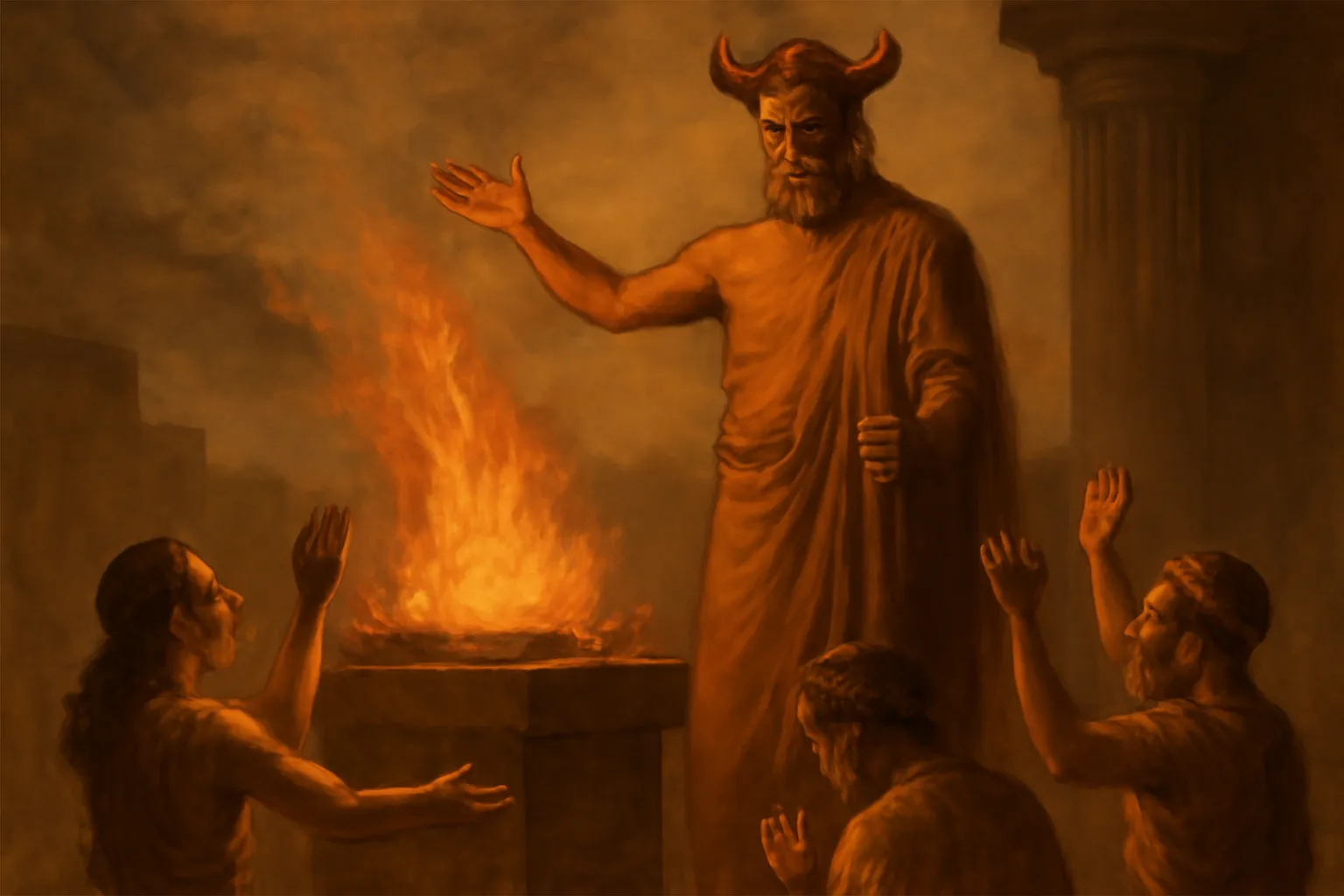
Baal Worship Practices: History, Rituals, and Cultural Context
Baal is not a single, monolithic deity but a family of related divine figures whose names and roles shift across time and place in the ancient Near East and the broader Mediterranean world. The word “Baal” itself means “owner,” “lord,” or “master” in Northwest Semitic languages, a title attached to weather, fertility, and sovereignty gods rather than to one fixed personality. In different cities and cultures, Baal was identified with particular local traits: Baal Hadad as a storm god in the Levant, Baal Hammon as a fertility and kingship deity in North Africa and particular Phoenician locales, and Baal Melqart in the Tyre-to-Caesarea axis, where the cult merged with heroic-mythic identities. Because of this plurality, the study of Baal worship must emphasize both shared religious motifs and distinctive local adaptations. This article surveys the historical development, ritual practices, and cultural context of Baal worship, with attention to the sources historians and archaeologists rely on and the debates that surround interpretation of ancient evidence.
Throughout the ancient world, the Baal cults were embedded in urban religious life, agricultural calendars, royal ideology, and regional networks. In many areas, worship centered on seasonal cycles—rainmaking, harvest bounty, and fertility of the land—and on political claims to legitimacy, abundance, and protection. Readers should approach the topic with nuance: Baal worship varied widely from city to city, and the term “Baal” appears in texts as both a generic title and a label for specific local deities. Below, we explore key dimensions of Baal worship, including origins and identifications, centers and geography, historical development, ritual life, social contexts, and the ways later traditions reinterpreted or contested Baal worship in the ancient world.
Origins, Names, and Identifications
Scholars emphasize that Baal began as a title rather than a fixed identity. In the earliest records, the term is used for various weather and fertility gods who demanded attention through ritual acts tied to rain, storms, and agricultural cycles. The most prominent figures commonly associated with the Baal concept include:
Baal Hadad — a storm and rain god whose cult was central in several Levantine polities, especially in Syria and Canaan. He embodies the essential link between divine power and agricultural vitality.
Baal Melqart — a Tyrian or Phoenician hero-god associated with fertility and urban prosperity, later identified with a episodes of hero-worship in the western Mediterranean, often linked to the figure of Heracles by Greek interpretatio graeca.
Baal Hammon — a deity connected with fertility, sovereignty, and the agricultural calendar, widely worshipped in Carthaginian and other North African contexts. In some depictions, Baal Hammon appears as a kingly or protective figure.
In biblical literature, Baal often appears as a generic label for rival cults to Yahweh, used polemically to underline the tension between Israelite monotheism and older Canaanite religious patterns. The complexity of the Baal motif—encompassing fertility, weather, sovereignty, and hero-cult elements—helps explain why the term was applied to multiple deities and why its worship drew substantial attention from neighboring cultures and later historians.
Geographic Spread and Centers
Evidence for Baal worship comes from inscriptions, temple architecture, iconography, and textual references spread across a broad geographic arc. The main centers and spheres of influence include:
Levantine city-states such as Ugarit, Hazor, Jericho, and various Phoenician coastal cities where Baal Hadad and related forms featured in state rituals and seasonal ceremonies.
Phoenician and Punic urban networks (including Tyre, Sidon, Byblos, and Carthage) where Baal Melqart and Baal Hammon played significant roles in urban religious life, temple economies, and royal ideology.
Israel and Judah where Baal imagery appears in prophetic condemnations, temple reforms, and narrative histories emphasizing loyalty to Yahweh and conflict with competing cults.
North Africa and the western Mediterranean through Carthaginian influence, where Baal Hammon and related forms appear in royal cults, ritual complexes, and temple iconography.
Despite vast geographic spread, Baal worship consistently shared a core set of features: temple or high-place devotion, ritual offerings, seasonal rites tied to agricultural cycles, and the presence of symbolic Statues or cult devices—often called divine agents or representations—through which worshipers sought to secure the deity’s favor.
Historical Timeline and Evolution
Understanding Baal worship requires tracing changes from the Bronze Age through Late Antiquity, with transformations caused by political upheavals, changing empires, and evolving religious sensibilities. Key phases include:
Bronze Age foundations—in which Baal-like figures emerge in urban complexes, typically as storm or fertility deities linked to local agricultural calendars and the sovereignty of city-states.
Iron Age configurations—here Baal appears in more elaborate temple networks, with increasing royal patronage and integration into state ritual life, especially in Phoenician and Canaanite contexts.
Israelite and Judean interaction—the Hebrew Bible presents Baal as a rival cult, leading to reforms and repeated polemics that shaped later Christian and Jewish anti-idolatry narratives.
Hellenistic and Roman periods—Ba’al forms were reinterpreted through Greco-Roman lenses, sometimes merging with heroic or imperial motifs, while in some places local cults persisted with distinctive features.
Across these phases, the religious vocabulary around Baal often emphasizes three entwined concerns: fertility and agriculture, weather and rain, and sovereignty and protection. These concerns explain why Baal worship frequently appears at critical moments in the life of a city: harvest festivals, storm threats, military campaigns, and the coronation or renewal rites of kings.
Ritual life around Baal was varied, yet certain symbolic and practical features recur across regions. The following sections outline broad categories of practice, acknowledging local adaptation and differences among Baal divisions.
Offerings, Sacrifices, and Sacred Libations
Offerings to Baal typically included animal sacrifices, grain, and wine or oil libations poured at altars or in temple precincts. In many cults, the ritual expression of gratitude and petition took the form of offerings designed to guarantee rain, bountiful harvests, and victory in conflict. Specifics varied by locale, but common elements included:
Burnt offerings (holocausts) in which the animal or portion of it was wholly burned on the altar as a sign of devotion and severance from ordinary life;
Meal offerings or grain offerings representing the first fruits of the harvest and a way to favor the soil and sowing prospects;
Libations of wine, oil, or water poured as a symbolic sustenance for the deity and to seal covenants or treaties with the divine power;
Animal sacrifices often featured in major festival days or crises, sometimes accompanied by processions, banners, and public feasting.
In some centers, ritual meals and the sharing of offerings with priests or temple households were an essential component, reinforcing communal ties and the social economy of the temple precinct. Temples often functioned not only as places of cult but as centers of exchange, education, and administrative control, linking religious life to urban governance and tribute relationships with ruling authorities.
Fertility and Seasonal Rites
As a class, Baal cults frequently aligned their ritual calendars with agrarian cycles. The cycle of rain and drought, seed time, and harvest required divine intervention to ensure continued food production. Typical features included:
Rain fetes and supplications during dry spells or drought, sometimes invoked weather deities associated with Baal Hadad or comparable storm figures;
Seasonal processions around temple precincts to commemorate the turning of the year and the renewal of fertility in the land;
Agricultural prayers delivered by priests or kings to secure favorable harvests and to ward off crop failure;
Interplay with harvest festivals that linked temple life with the economic foundation of the city—the grain stores, vineyards, and orchards that sustained the population.
In this context, Baal worship was often inseparable from state power. Rulers used ritual calendars to legitimize their authority, secure rain and fertility for crops, and display benevolence toward the populace. The temple, in many cases, functioned as a microcosm of the city’s fate—prosperity depended on divine favor, which could be demonstrated through public acts of worship and the visible wealth of the cultic economy.
Some ancient sources, and later scholarly debates, describe practices associated with sacred sexuality in Baal-related cults. The idea of ritual prostitution or sacred sexuality has appeared in classical and biblical literature as part of the critique against Baal worship. It is important to note that evidence for this practice is uneven and heavily debated among historians and archaeologists. In some contexts, cultic networks included priestesses, initiates, or ritual specialists who performed sex-related rites as a symbolic or actual act intended to ensure fertility or divine favor. However, the interpretation of this as a universal or uniform practice across all Baal cults would be an oversimplification. In many places, fertility rites relied primarily on sacrificial offerings, processional rites, and agricultural prayers rather than sexual practices. When sexual rites are discussed in scholarship, they are often framed as contested or exceptional within a broader spectrum of ritual activities rather than a standard template for Baal worship.
Iconography, Sacred Spaces, and Temple Geography
Visual and material culture played a crucial role in Baal worship.Iconography and temple architecture communicated theological ideas and political power to worshippers. Common elements included:
High places (bamot) or sanctuaries perched on hills or city outskirts, designed to be visible within the urban landscape and to accentuate the deity’s reach over the land and weather;
Cult statues or representations of Baal in stone, metal, or wood, sometimes accompanied by symbolic symbols such as storm symbols, thunderbolts, or agricultural motifs;
Altar precincts and altars for sacrifices, often arranged in courts or open-air spaces that could host large crowds during festivals;
Temple economies that included storerooms, water channels, and workshops for ritual implements, with priests managing offerings and ritual calendars.
The religious landscape around Baal was also interwoven with other deities—most notably Asherah or other mother goddess figures in many Canaanite andPhoenician religious networks. In some traditions, Baal might be seen as part of a divine pantheon in which reubenic or consort deities played complementary roles in governance, fertility, and rulership. The dynamic between Baal figures and maternal or earth goddesses helps explain the broader religious ecology in which Baal worship operated.
Cultural Context: Social, Political, and Economic Dimensions
To understand Baal worship, it is essential to situate it within the social and political fabric of ancient urban life. Baal cultic practices were not isolated religious acts; they connected divine favor with political legitimacy, economic wealth, and communal identity. Some salient aspects include:
Political legitimation—Kings and city-states used Baal rites to articulate divine endorsement of rulers, to dramatize sovereignty, and to secure loyalty among subjects and elites alike. Royal offerings, processions, and dedication of new buildings were often framed as acts of piety toward the appropriate Baal form in a given city.
Economic influence—Temples controlled lands, produced goods, and served as hubs of trade. The temple economy supported artisans, scribes, priests, and laborers; offerings and tithes funded municipal projects and defense capabilities.
Urbanization and ritual geography—The concentration of ritual activity in select sanctuaries and high places created a visible religious geography within cities, reinforcing social hierarchies and communal memory around sacred spaces.
Intercultural exchange—As Phoenician city-states and later imperial powers interacted, Baal worship was shaped by contact with Egyptian, Mesopotamian, Greek, and Roman religious ideas. In some periods, Baal figures were identified with or reinterpreted through these external frameworks, a process that sometimes diluted or repackaged local Baal portrayals.
Iconography and Sacred Texts: How Baal Is Represented
Artifacts, inscriptions, and texts provide windows into Baal belief systems. Common motifs include storm symbols, thunderbolts, wheat or barley ears, and images of kings or divine riders that signal the deity’s protective and fertilizing function. In prophetic and wisdom literature of neighboring cultures, Baal is often depicted in tension with Yahweh (in biblical sources) or with other deities that personify war, sea, or underworld powers. The interpretive lens historians use—whether literal, symbolic, or polemical—affects how we understand ritual practice and the lived religious experience of Baal worshipers.
As with many ancient religious phenomena, Baal worship has a long afterlife in cultural memory and scholarly discourse. The term “Baal” appears repeatedly in later religious and literary traditions, where it is often cast as a symbol of idolatry or as a foil to monotheistic worship. In the Hebrew Bible, for instance, Baal is a recurring opponent to worship of Yahweh, a narrative device to articulate and critique competing religious economies within and beyond ancient Israel. In classical and later periods, Greco-Roman authors reshaped Baal forms to fit their epistemic frameworks, sometimes equating Baal Hadad or Baal Melqart with Zeus or Hercules in their own mythological systems. The modern scholarly conversation, however, emphasizes historical context, regional diversity, and the need to distinguish between specific cult practices and the broader phenomenon of “Baal worship” as a rhetorical category used by ancient authors.
In contemporary popular culture, Baal has become a shorthand for ancient warfare with religious overtones, or for the broad idea of “pagan” religious life in antiquity. While popular depictions can be compelling, they often oversimplify a centuries-long tapestry of local cults, city-state politics, and evolving beliefs. For students of history and religion, careful attention to archaeological data, inscriptions, and ancient texts is essential to avoid flattening a dynamic and multifaceted religious landscape into a single narrative. Baal worship—in its many local avatars—offers a case study in how ancient peoples tied divine power to natural forces, civic identity, and the daily work of agricultural labor.
Key Takeaways: Summarizing the Core Elements
Multiplicity of forms—Baal is not a single god but a title used for several related deities across different regions and time periods.
Shared motifs—Fertility, weather, and sovereignty are central themes across Baal cults, with ritual life designed to secure divine favor for crops, rain, and political protection.
Ritual complexity—Offerings, seasonal rites, temple economies, and sacred spaces collectively illustrate how Baal worship functioned in urban religious life.
Historical adaptability—Ba’al forms persisted and transformed under changing political regimes, from Canaanite cities to Phoenician empires and beyond, adapting to Greco-Roman, and later interpretations.
For readers seeking deeper study, primary sources include inscriptions from Levantine and North African sites, temple dedications, royal inscriptions, and prophetic books in the Hebrew Bible. Secondary scholarship covers a broad spectrum: archaeology, epigraphy, comparative religion, and the study of ancient Mediterranean religious networks. The tapestry of Baal worship is rich and nuanced, and its study reveals how people negotiated power, nature, and the divine in everyday life and in moments of crisis.
In closing, Baal worship practices illustrate how ancient communities expressed awe, gratitude, and fear in the face of unpredictable weather, fertile land, and volatile political landscapes. The rituals, centers, and narratives around Baal reveal a religious ecosystem in which divine favor was both a cosmic and a civic matter—one that linked the heavens and the harvest to the legitimacy and prosperity of city-states, rulers, and their people. By examining the history, ritual life, and cultural context of Baal worship, scholars and curious readers gain a more nuanced appreciation for how ancient societies organized meaning around weather, fertility, and sovereignty—and how those patterns persisted, adapted, or were resisted across centuries and cultures.

 Por Laura Jara