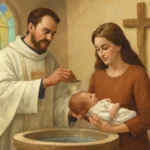
Catholic Infant Baptism Explained: A Comprehensive Guide for Parents offers an in‑depth look at why Catholic families choose to baptize their babies, what the rite entails, and how parents, sponsors, and parish communities support a child’s life in Christ. This article presents a clear overview of the theology, practical steps, and ongoing formation connected with infant baptism, so that families can approach the sacrament with both confidence and reverence.
Infant baptism in the Catholic Church is the sacred act by which a child is incorporated into the Body of Christ and welcomed into the Catholic community. It is founded on the conviction that baptism is the primary means by which a person is freed from original sin and begins a new life in Christ through the inflow of divine grace. In Catholic teaching, water becomes the sign that God’s grace is given to the child, and the Trinitarian formula—“I baptize you in the name of the Father, and of the Son, and of the Holy Spirit”—names the Triune God who effects this new birth.
Although the celebration is often associated with infants, Catholic theology emphasizes that baptism is not simply a family ritual or a social ceremony. It is a sacrament instituted by Christ and entrusted to the Church. In the case of infants, the child’s entry into the life of faith is accomplished through the faith of the parents and Godparents (sponsors), who pledge to raise the child in the Catholic faith until the child can articulate a personal profession of faith. This is why infant baptism is frequently described as a joint act of grace and responsibility shared by family, parish, and church community.
The theological foundations of infant baptism
To understand why Catholic families choose infants for baptism, it helps to consider several core theological ideas that underpin this sacrament. These ideas explain both the necessity and the beauty of baptizing a child who cannot yet speak for herself or himself.
Original sin and the gift of grace
According to Catholic teaching, all human beings are born with original sin and an infinite longing for union with God. Baptism is the official entry point into Christ’s life and the Church’s ministry of salvation. It confers sanctifying grace, which heals the wounded nature of the human person and enables participation in the life of the Church. The infant, though not yet capable of personal faith in the same way as an adult, is nonetheless washed clean of sin through the grace that God freely offers in the sacrament.
The Church as the Family of God
Another central idea is that baptism makes the child a member of the Church, the Body of Christ. This is not merely a private rite but a public incorporation into a community that witnesses to faith in Jesus. The parent’s and godparent’s faith commitments become a bridge for the child into this living, communal life. The Catholic understanding of baptism emphasizes that faith is nurtured within a church family that accompanies the child on the journey of formation in virtue, prayer, and service.
Legitimate reception of grace through the Church
The Church teaches that God’s grace is mediated through the visible signs of the sacrament. The rite for infants is designed so that the child’s reception of grace is clear, meaningful, and connected to a life of ongoing catechesis. The community—the parish, the family, and the sponsors—has an essential role in sustaining the child’s growth in the faith after baptism.
Who should be baptized and who can be a godparent?
Understanding eligibility helps families prepare properly for the rite and ensures that the sacrament is celebrated in accord with Church law and pastoral practice.
Who may be baptized?
Typically, the child for whom the sacrament is desired is baptized with the consent of the parents who intend to raise the child in the Catholic faith.
If there is a concern about health or safety, the pastor may offer guidance on whether baptism should be postponed or celebrated under special circumstances. The Church seeks to accompany families with practicality and pastoral care in such cases.
In Catholic practice, infant baptism is most commonly celebrated within the context of a parish community, with preparation and catechesis that reflect the child’s needs and family life.
A baptismal sponsor must typically be a confirmed Catholic, who has already received the All of the sacraments of initiation (Baptism, Confirmation, Eucharist) and who leads a life of faith in harmony with the Church’s teaching.
In practice, many parishes require at least one sponsor to be Catholic and in good standing with the Church, and it is common to have two sponsors (one male and one female) who represent the Church’s witness and support for the child’s faith formation.
If a sponsor is a baptized non‑Catholic Christian, that person may not serve as a sponsor in the Catholic rite, but they may participate in a different capacity if the parish allows, and in some circumstances, a «Christian witness» may be recognized in certain liturgical forms. Always check local parish guidelines.
Importantly, the role of the godparents is to be a faithful example of life, to support the child’s upbringing in the faith, and to participate in the child’s spiritual formation as part of the larger community. This is why most pastors ask sponsors to understand and commit to their responsibilities, including helping the child grow in Catholic practice and prayer over the years.
The rite of baptism for infants: what to expect
The infant baptism ceremony is a liturgical act that combines words, gestures, and symbols to convey the meaning of God’s grace given to the child. While the exact sequence can vary by parish, the essential elements remain consistent across the Catholic Church.
Preparation and prerequisites
Parents typically participate in a baptism preparation class or meeting with a priest or deacon to review the meaning of the sacrament and the responsibilities involved.
Prior to the ceremony, families may need to submit documents such as the child’s name, birth date, and parent information for the parish records.
Choosing and confirming the godparents is a central part of the preparation. The priest will confirm eligibility according to canonical requirements and local practice.
The ceremony steps
Processional and welcome: The family, godparents, and priest enter, and the rite of welcome acknowledges the child’s entrance into the church community.
Renunciation of sin and profession of faith: The parents and sponsors publicly renounce sin and profess faith on behalf of the child, answering questions about belief in God, Jesus, and the Church.
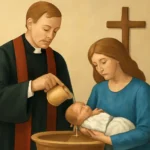
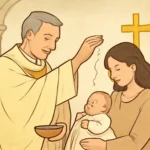
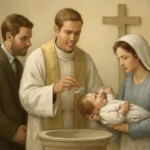
Trinitarian baptismal water ritual: The priest waters the infant three times, typically by pouring water over the child’s head. Each pour is accompanied by the words, “I baptize you in the name of the Father, and of the Son, and of the Holy Spirit.” The water and the threefold invocation emphasize the Triune God and the cleansing grace conferred.
Anointing with Sacred Chrism: After baptism, the priest or bishop anoints the infant on the crown with sacred chrism, signifying the child’s belonging to Christ and receiving a royal priesthood in the sense of service to God and neighbor.
White garment and baptismal candle: The child is clothed in a white garment as a symbol of new life in Christ, and a baptismal candle, lit from the Paschal candle, is given to the parent or godparent to signify the light of Christ now present in the child’s life.
Prayer of the Church and blessing: The assembly offers prayers for the child and asks God’s blessing on the family and their home as the child begins a life of faith.
In many parishes, the ceremony also includes a short exhortation to the family about the importance of ongoing catechesis and religious formation. The parish community recognizes that baptism initiates a lifelong journey of faith, which requires support, instruction, prayer, and active participation in the life of the Church.
What happens after the baptism?
The effects of baptism on the child’s life are profound, and the Church emphasizes ongoing formation to help the child live out the gift of grace received at baptism. This section outlines practical steps for families in the months and years after the ceremony.
Immediate effects
The child becomes a member of the Catholic Church and begins a life in Christ as part of the Church’s family.
The mark of baptism seals the child with an indelible spiritual character. This means the sacrament leaves a lasting spiritual identity, even if the child is not yet able to express personal faith.
The child receives the gift of sanctifying grace and is invited to participate in the life of the faith community through prayer, worship, and the sacraments, especially the Eucharist when appropriate.
Parents are called to be the first teachers of the faith for their child. Regular prayer, family life around the faith, and opportunities for catechesis help form a durable spiritual foundation.
Parish programs, catechetical classes, and family-focused liturgies provide structured ways for children to learn about God, Jesus, the Holy Spirit, and the Church’s life.
Godparents play an ongoing role by modeling a life of faith and by collaborating with parents and the parish to foster the child’s spiritual growth.
Rites and milestones after baptism
As the child grows, there are important moments in Catholic life that reinforce baptismal grace, including:
The celebration of the First Holy Communion after proper preparation and confirmation of age or formation, depending on local practice.
The sacrament of Confirmation, wherein the child or young person deepens their baptismal grace and receives the gifts of the Holy Spirit.
Regular participation in Sunday Mass and the liturgical life of the parish, along with personal and family prayer, daily service, and charity.
The role of community, catechesis, and ongoing formation
Infant baptism is not a one-time event but a doorway into a lifelong journey of faith. The Catholic Church emphasizes the importance of a supportive community, continuous catechesis, and meaningful worship tailored to the child’s growth at different stages of life.
Pastoral preparation and ongoing education
Parish programs offer practical guidance on how families can integrate prayer and faith into daily life, manage family schedules around Sunday worship, and teach Catholic doctrine in age-appropriate ways.
Parents receive resources on how to explain baptismal promises to their child as they mature, including simple prayers, stories from Scripture, and family service projects.
Godparents are encouraged to maintain close contact with the family and to be active participants in the child’s spiritual formation, including attendance at religious education and family prayer times.
Common questions and common misunderstandings
Many families have questions about infant baptism, its meaning, and its implications for everyday life. The following frequently asked questions address some of the most common concerns.
Why baptize babies instead of waiting until they are older?
The Catholic tradition emphasizes that baptism is a gift of grace for all, and for infants, it is not dependent on the child’s personal decision. The faith of the parents and godparents, who promise to raise the child in the faith, makes the baptism meaningful and effective. The Church teaches that infants can receive the grace of baptism immediately, providing them with a share in Christ’s life from the earliest moment.
Is baptism necessary for salvation?
The Church teaches that baptism is necessary for salvation in the sense that Christ instituted it as the means of entering into the life of grace within the Church. There is also consideration given to the baptism of desire or baptism of blood for those who, through no fault of their own, do not know the gospel or the sacrament but would have desired baptism if they had known its necessity. In everyday pastoral life, the Church trusts in God’s mercy while inviting families to embrace the grace offered through baptism.
What if a child dies before baptism?
In cases of extreme danger or emergency, baptism by water is administered as quickly as possible. If a child dies before baptism could occur, the Church prays with the belief that God’s mercy is beyond our full comprehension and entrusts the child to God’s loving care. The concept of baptism of desire or the possibility of charitable acts of faith surrounding a person’s death are part of Catholic teaching and pastoral practice, invoked with hope and pastoral care.
Can a family delay baptism?
Parishes typically encourage prompt baptism, especially since it introduces the child to the life of faith from a young age. However, pastors may allow reasonable delays if there are extraordinary circumstances, provided the family shows genuine intention and readiness to participate in the preparation and the life of the parish community.
Practical guidance for parents and families
Preparing for Catholic infant baptism involves practical steps, spiritual preparation, and ongoing commitment to nurture faith in the home. The following checklists help families plan and participate well in this essential sacrament.
Practical steps to take before the baptism
Meet with your parish priest or deacon to discuss the baptism and the prerequisites for the ceremony.
Choose and confirm the godparents and ensure they meet the Church’s eligibility requirements.
Attend a baptism preparation class or session offered by the parish to understand the meaning and responsibilities of the rite.
Submit any required documents, such as the child’s birth certificate, the parents’ information, and the plan for the liturgical date and time.
Begin or continue a routine of family prayer, scripture reading, and participation in parish life to support the child’s faith formation.
Engage in catechesis appropriate to the family’s level of faith and the child’s age as they grow.
Celebrate the child’s milestones in the faith, such as First Holy Communion and Confirmation, according to the local schedule and catechetical plan.
Guidance for godparents and sponsors
Make a personal commitment to live according to the faith you profess during the baptism ceremony.
Maintain regular contact with the child’s family and participate in spiritual activities that reinforce faith.
Be prepared to support the family during challenging times and to encourage the child’s spiritual growth over the years.
While the core elements of the baptismal rite are consistent, there can be variations in practice depending on the local diocese, parish tradition, and cultural context. The following notes describe some common distinctions you might encounter while preparing for baptism.
Form and posture
Most commonly, water is poured on the infant’s head three times, in a formal act that is part of the liturgical rite.
Some communities may have slightly different wordings or gestures, but the core meaning remains the same—the child’s entry into the life of grace through the Father, Son, and Holy Spirit.
Use of chrism and other signs
The sacred chrism anointing on the crown is a standard element of infant baptism in the Catholic Church, symbolizing anointing into a life of service to God.
The baptismal candle and the white garment are common symbolic signs in many celebrations, though some locale-specific variations may exist.
For clarity, here is a quick glossary of key terms often used in discussions about infant baptism in the Catholic tradition:
Baptism: The sacrament by which a person is cleansed of sin and born into new life in Christ.
Original sin: The fallen state inherited from Adam and Eve, which baptism removes in Catholic understanding.
Grace: God’s free and unmerited gift given through the sacrament.
Trinitarian formula: The words spoken during baptism invoking the Father, Son, and Holy Spirit.
Godparents: Sponsors who vow to help raise the child in the faith.
Chrism: Sacred oil used in anointing, symbolizing consecration to God.
White garment: A sign of new life in Christ and baptismal innocence.
Baptismal candle: A symbol of the light of Christ given to the baptized.
Additional resources and next steps
Families looking for more guidance may consult a variety of resources, including parish catechetical centers, diocesan offices, and trusted Catholic publishing houses. In addition to local parish programs, consider these approaches:
Review the catechetical materials provided by your parish for at-home engagement with your child’s faith formation.
Participate in family-friendly liturgical experiences, such as monthly family masses or youth events that welcome young children.
Engage with the parish’s sacramental preparation schedule to anticipate future steps in the child’s faith journey (First Reconciliation, First Communion, Confirmation, etc.).
Overall, infant baptism is the Church’s joyful invitation to a child to begin life in Christ within a supportive faith community. It marks the start of a journey that continues through family prayer, parish life, and ongoing catechesis. Parents, sponsors, and parish leaders collaborate to form a stable foundation of faith that can grow and mature as the child gets older.
Closing reflections for parents and families
For families preparing to welcome a new member into the Church through infant baptism, this sacramental moment is both a personal grace and a communal commitment. Embrace the symbolism and grace of the rite, and participate actively in the ongoing formation that accompanies baptism. By nurturing a home where prayer, Scripture, service, and worship are part of daily life, families can help ensure that the child experiences baptism not merely as a ceremony, but as the start of a lifelong journey of faith, hope, and love.
If you are exploring this path for your family, consider scheduling a conversation with your local parish to discuss dates, requirements, and the specific practices of your community. The Catholic tradition offers a beautiful, coherent framework for welcoming a child into the life of faith, with the hope that each baptized child grows into a mature, practicing, loving disciple of Christ.

 Por Laura Jara